


Official Treatment
March 7, 2014
A book I quoted in this space three times last November – How: Why HOW We Do Anything Means Everything by Dov Seidman – has me thinking about sports officiating.
One premise of the book is that the Internet era has made the world so transparent and connected that there is no such thing anymore as “private” behavior or a “minor” mistake. Everything can become a public matter – instantly. Anything can become a major problem – overnight. Worldwide.
So, when our local real estate agent, who officiates junior varsity basketball, misses a call that an invested spectator captures with his or her smart phone camera, and sends to his or her relatives and a local media outlet that night, there is no limit to where that video could appear by the next morning.
And while major college and professional officials may now receive four-figure fees to work under those conditions, officials at the junior high/middle school and high school levels – sometimes working for little more than gas money - wonder if it’s worth the hassle.
There are many obstacles to recruiting and retaining officials for school sports, including poor business practices by assigners and bad sportsmanship by coaches and spectators; but a significant factor not to be overlooked is the adverse potential of immediate worldwide criticism for a call that had to be made in the blink of an eye.
The human factor of sports is now subject to inhuman expectations. In an enterprise that strives for fairness, it appears that it’s the official who is being treated least fairly.
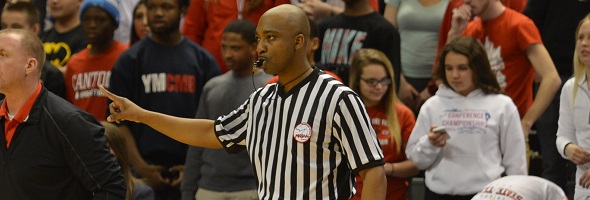
Be the Referee: Recruiting Officials
January 14, 2016
This week, MHSAA assistant director Mark Uyl talks about the challenge of recruiting new officials, but also benefits of becoming one.
Be The Referee is a series of short messages designed to help educate people on the rules of different sports, to help them better understand the art of officiating, and to recruit officials.
Below is this week's segment - Recruiting Officials - Listen
One of the most challenging tasks for the MHSAA is the recruitment and retention of game officials and referees. In many cases, the job of the referee can be a thankless one. It’s an avocation where others expect an official to be perfect on their very first day on the job, and then improve on that performance.
Officials must be fit, knowledgeable on the rules, decisive and most importantly, have good people skills in handling competitive situations with emotional players, coaches and fans. While this can be a great challenge, many of our officials find this experience to be incredibly rewarding.
There is no better feeling than to officiate a game where the rules are fairly enforced, judgment calls are made decisively and the teams involved determine the outcome of the game. If you are interested in becoming a part of this great team, go to MHSAA.com to learn more about officiating and how to get started in this rewarding avocation.
Past editions:
Jan. 7: Wrestling Weight Monitoring - Listen
Dec. 31: Respect for Referees - Listen
Dec. 24: Basketball Instant Replay - Listen
Dec. 17: Basketball Communication - Listen
Dec. 10: Basketball Excessive Contact - Listen
Nov. 26: Pregame Communication - Listen
Nov. 19: Trick Plays - Listen
Nov. 12: 7-Person Football Mechanics - Listen
Nov. 5: Make the Call: Personal Fouls - Listen
Oct. 29: Officials Demographics - Listen
Oct. 15: Make the Call: Intentional Grounding - Listen
Oct. 8: Playoff Selection - Listen
Oct. 1: Kick Returns - Listen
Sept. 24: Concussions - Listen
Sept. 17: Automatic First Downs - Listen
Sept. 10: Correcting a Down - Listen
Sept 3: Spearing - Listen
Aug. 27: Missed Field Goal - Listen