


Officiating’s High Calling
October 28, 2016
One of the sports world’s better wordsmiths is Referee Magazine publisher Barry Mano. He’s also a fine thinker, as these artful lines demonstrated at the 2016 Officiating Industry Luncheon in San Antonio:
“Let me provide, in all subjectivity, some observations about our environment, about our fellow citizens. We are:
-
“More generous but less forgiving.
-
More open but less discriminating with that openness.
-
More informed but less knowledgeable.
-
More litigious but less willing to abide by the rules.
-
Quick to seek an expert opinion, then just as quick to get a second opinion, one that agrees with ours.”
Barry is president of the National Association of Sports Officials (NASO) which helps contest officials at all levels aspire to be discriminating and knowledgeable adjudicators of fair and healthy competitive athletics.
At a time when the number of registered officials with the Michigan High School Athletic Association has sunk to a 30-year low, Barry’s words are a clarion call to young men and women of character to consider sports officiating as an avocation, or even vocation, that will enrich their lives immensely.
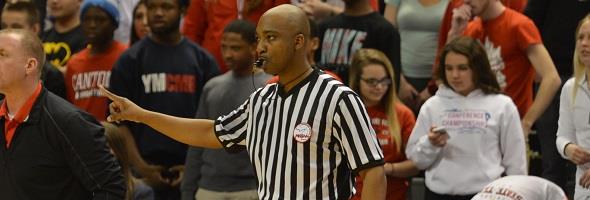
Be the Referee: Ejections
February 9, 2017
This week, MHSAA assistant director Mark Uyl explains the MHSAA's ejection rule.
Be The Referee is a series of short messages designed to help educate people on the rules of different sports, to help them better understand the art of officiating, and to recruit officials.
Below is this week's segment – Ejections - Listen
Good sportsmanship is at the foundation of what high school sports is all about. Whenever a coach or player is ejected for unsportsmanlike conduct or behavior, that individual is suspended for the rest of that day of competition.
In some sports, that means that they’re done for the rest of that game on that day; or in sports where there are doubleheaders or tournament play involved, the person is disqualified from that entire day of competition. The rule then also requires that the coach or player is ineligible for the subsequent day of competition, essentially being a one-day suspension for anyone who is ejected.
Past editions
Feb. 2: Wrestling & Technology - Listen
Jan. 26: Post Play - Listen
Jan. 19: Ice Hockey Overtime - Listen
Jan. 12: Free Throw Change - Listen
Jan. 5: Ratings - Listen
Dec. 22: Video Review - Part 2 - Listen
Dec. 15: Video Review - Part 1 - Listen
Dec. 8: Registration - Part 2 - Listen
Dec. 1: Registration - Part 1 - Listen
Nov. 24: You Make the Call - Sleeper Play - Listen
Nov. 17: Automatic 1st Downs - Listen
Nov. 10: Uncatchable Pass - Listen
Nov. 3: The Goal Line - Listen
Oct. 27: Help Us Retain Officials - Listen
Oct. 20: Point After Touchdown - Listen
Oct. 13: Untimed Down - Listen
Oct. 6: Soccer Penalty Kick Change - Listen
Sept. 29: Preparation for Officials - Listen
Sept 22: You Make the Call: Returning Kickoffs - Listen
Sept. 15: Concussions - Listen
Sept 8: Equipment Covering the Knees - Listen
Sept. 1: Play Clock Experiment - Listen
Aug. 25: Clipping in the Free Blocking Zone - Listen