


Parent Problem
October 29, 2013
For years when I have paused in presentations to ask coaches and school administrators to identify the biggest problems we have in school sports, two problems are far most frequently mentioned:
-
Too little money; and
-
Too many misdirected parents.
Other problems are cited; but far and away, the most frequently mentioned problems are under-funding of programs and over-involvement of parents.
In many aspects of the lives of youth, there is too little parent involvement and direction; but such is not the case in most places when it comes to sports. “Helicopter parents” not only hover, they also seek to rescue their children from the very situations – adversity – that sports uses to teach life lessons.
Parents have no role in decisions regarding playing time and game plans. Should parents ever believe that their child has been put at risk in a sports program, there are prompt and appropriate ways to address those situations, directly and with discretion, not gossip and guile.
And the job description of school administrators today must include the staunch defense of the jobs our committed coaches are doing.
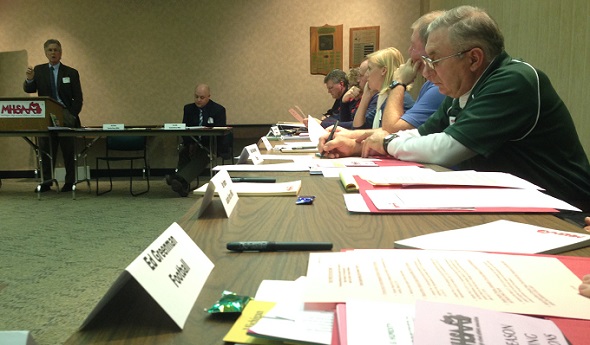
Presidents Converge on MHSAA Office
January 29, 2015
By Geoff Kimmerly
Second Half editor
Coaches serving over three seasons and in a variety of different sports can have a variety of perspectives when it comes to most topics, including MHSAA rules.
 The Coaches Association Presidents Meeting, an annual event hosted Monday at the MHSAA office in East Lansing, allows an opportunity to gather that valuable input as our staff works through pressing issues at the start of each new year.
Presidents from high school coaches associations representing nearly all of our MHSAA-sponsored sports met in East Lansing for an inside look at some of our latest efforts and how that work could affect their sports and the coaches they serve.
On the menu this time was an update on the MHSAA's drive to increase coaches health and safety training, followed by updates on recent research into how the association might better serve junior high and middle schools.
The entrée was discussion on out-of-season coaching rules, and how or if they should be altered to allow high school coaches more contact with athletes during offseasons than currently allowed.
This meeting allows for input on these topics, with the key, again, that the input comes from various sources who face differing circumstances but are all tied together under the umbrella of interscholastic athletics. Input from our coaches associations will be valuable as MHSAA staff and its Representative Council consider potential rules changes over the rest of this school year, and beyond.