


Risk Minimization Reaches More
May 9, 2014
Every season – fall, winter and spring – the MHSAA launches a series of sport-specific rules/risk management meetings, completion of which has been a requirement for high school varsity head coaches and MHSAA registered officials who want to coach or officiate in the MHSAA tournament for that sport. Two significant changes will occur for the 2014-15 school year.
For the first time in 2014-15, all assistant and subvarsity high school coaches must complete the same meeting requirement as the high school varsity head coach or, in the alternative, they must complete one of seven free online health and safety courses that are posted on MHSAA.com and designated to fulfill this requirement. High school athletic directors must certify each season, three times a year, that all their assistant and subvarsity coaches for that season have completed that requirement.
Also, for the first time in 2014-15, the MHSAA will be posting content for officials that differs from the content for coaches. While coaches are being given a review of select Handbook regulations, for example, officials will be reminded of key elements of effective officiating, regardless of the sport or level of competition.
These new policies are intended to bring more relevant content to a greater number of those who work with student-athletes and to further emphasize risk minimization in educational athletics.
In 2013-14, slightly more than 20,000 coaches and officials completed the MHSAA rules/risk management meeting requirement. The number will greatly exceed 100,000 in 2014-15.
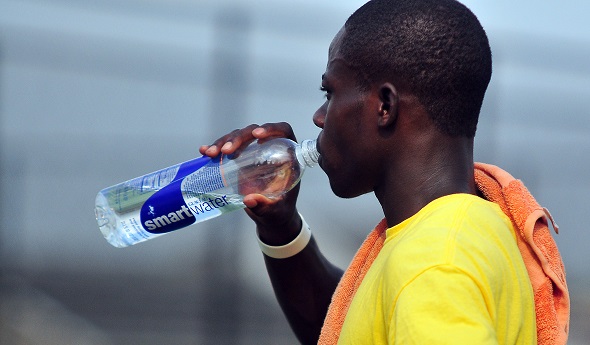
Schools Continue to Manage the Heat
July 16, 2015
By Rob Kaminski
MHSAA benchmarks editor
It certainly was not the MHSAA’s intent to spur the most historically frigid back-to-back winters the state has seen. Nor did the Association wish for one of the mildest summers in recent memory during 2014.
Seemingly, it’s just Mother Nature’s way of reading into MHSAA efforts for managing heat and humidity and acclimatizing student-athletes for warm-weather activities.
Since guidelines were put in place (recommended for regular-season sessions and required for postseason tournaments) before the 2013-14 school year, there have been relatively few days during which psychrometers have had to be implemented.
“The key is, we’ve got plans in place for when the climate returns to normal trends for return-to-school practices and contests in August and September, as well as early June events,” said MHSAA Executive Director Jack Roberts. “It is a bit ironic that there have been relatively few days since the guidelines were established that they’ve actually come into play.”
In a nutshell, the guidelines provide instruction for four ranges of heat index: below 95 degrees; 95-99 degrees; 99-104 degrees, and heat indexes above 104 degrees, with increasing precautions in place as heat indexes rise. An index above 104 calls for all activity to cease.
Certified athletic trainers Gretchen Mohney and James Lioy agree that recent requirements in heat and hydration guidelines are a step in the right direction and encourage that – when possible – an athletic trainer oversee the implementation. Simply taking a reading from just outside the AD’s office or at home does not simulate on-site conditions.
“This doesn’t take into account the radiant heat at the site, which can drastically affect the conditions that athlete plays in. It is essential that all parties involved in making decisions to play collaborate with one another,” Mohney said.
Heat-related deaths in athletics rank only behind cardiac disorders and head and neck injuries, but such fatalities might lead the way in frustration for families and communities of the victims. The reason? Heat-related illness is totally preventable.
Another source of mild frustration is the lack of recording within the state for those practice and game situations which warrant heat protocols.
When the Representative Council was formulating the Heat and Humidity Policy, it was also mindful of ways in which the MHSAA could assist schools in putting the plan into practice. Coaches, athletic directors and trainers needed a method to record information for athletic directors to view and for the MHSAA to track. The MHSAA developed interactive web pages on MHSAA.com which allow registered personnel to record weather conditions as practices and contests are taking place, using psychrometers.
Additionally, discounted Heat and Humidity Monitors and Precision Heat Index Instruments are offered to schools through a partnership between the MHSAA and School Health.
Yet, since the availability of such tools came to fruition two years back, fewer than 1,000 entries have been recorded, and many are multiple entries from the same schools.
Of the 772 entries, only 15 took place when the heat index was in excess of 104, while just 21 indicated an index of greater than 100. Cooler temperatures could be playing a factor in the overall number of participation, particularly in the northern areas of the state.
Nearly all of the responses came during fall practices, with a few isolated cases coming during the spring.
As Mohney pointed out, all resources must be properly used in concert with one another to achieve desired results.
Reminders of the tools available to schools are disseminated throughout the state each summer.