


See the Whole Play
August 19, 2014
Here are a few more pearls of wisdom from the nation’s leading gathering of sports officials, these from Barry Mano, NASO president:
- “Incorrect no-calls are easier to explain than incorrect calls.”
- “Officials are to enforce, not appease.”
- “In spite of their criticisms, there is no sensible parent who would want their child to participate without officials.”
Be the Referee: Under the Bus
March 16, 2017
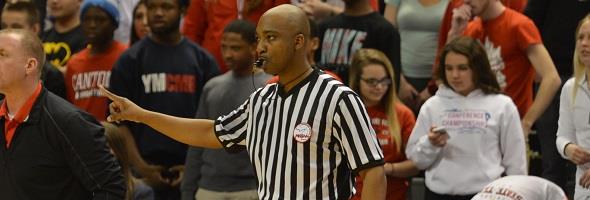
This week, MHSAA assistant director Mark Uyl explains why officials are not the correct target for criticism when a basketball game gets chippy or sloppy.
Be The Referee is a series of short messages designed to help educate people on the rules of different sports, to help them better understand the art of officiating, and to recruit officials.
Below is this week's segment – Under the Bus - Listen
It seems whenever a high school game breaks down in a negative way, the coaches, players, fans, and school administrators quickly blame the officials. It’s easy to take out aggression on these nameless, faceless, almost inanimate objects.
But sloppy or chippy play is on the coaches to control – not the officials – as they simply call what happens. Fans up in the stands then quickly follow the lead of their coach berating the officials, thinking they are so well versed in the art of officiating – but often don’t have the guts to put on the stripes themselves. Officials aren’t perfect, but often they have to clean up messes created by others during the game – the people who should really be thrown under the bus.
Past editions
March 9: Hockey Hits - Listen
March 2: Deciding the Game - Listen
Feb. 23: Pitch Counts - Listen
Feb. 16: Recruiting Officials - Listen
Feb. 9: Ejections - Listen
Feb. 2: Wrestling & Technology - Listen
Jan. 26: Post Play - Listen
Jan. 19: Ice Hockey Overtime - Listen
Jan. 12: Free Throw Change - Listen
Jan. 5: Ratings - Listen
Dec. 22: Video Review - Part 2 - Listen
Dec. 15: Video Review - Part 1 - Listen
Dec. 8: Registration - Part 2 - Listen
Dec. 1: Registration - Part 1 - Listen
Nov. 24: You Make the Call - Sleeper Play - Listen
Nov. 17: Automatic 1st Downs - Listen
Nov. 10: Uncatchable Pass - Listen
Nov. 3: The Goal Line - Listen
Oct. 27: Help Us Retain Officials - Listen
Oct. 20: Point After Touchdown - Listen
Oct. 13: Untimed Down - Listen
Oct. 6: Soccer Penalty Kick Change - Listen
Sept. 29: Preparation for Officials - Listen
Sept 22: You Make the Call: Returning Kickoffs - Listen
Sept. 15: Concussions - Listen
Sept 8: Equipment Covering the Knees - Listen
Sept. 1: Play Clock Experiment - Listen
Aug. 25: Clipping in the Free Blocking Zone - Listen