


See the Whole Play
August 19, 2014
Here are a few more pearls of wisdom from the nation’s leading gathering of sports officials, these from Barry Mano, NASO president:
- “Incorrect no-calls are easier to explain than incorrect calls.”
- “Officials are to enforce, not appease.”
- “In spite of their criticisms, there is no sensible parent who would want their child to participate without officials.”
Be the Referee: Deciding the Game
March 26, 2015
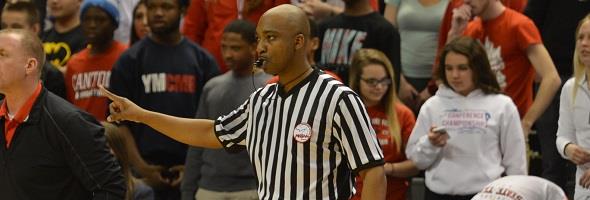
This week, MHSAA assistant director Mark Uyl explains how an official's approach DOES NOT change during the final seconds of a game.
Be The Referee is a series of short messages designed to help educate people on the rules of different sports, to help them better understand the art of officiating, and to recruit officials.
Below is this week's segment - Deciding the Game - Listen
Every American sports fan knows when the calendar turns to March, it’s time to start thinking about basketball tournament games.
With all of the pundits out there talking about the matchups and who may advance on the brackets, the comment gets made every single year that we simply hope the players decide the outcome of every game, and not a referee’s call.
The fact of the matter is that in the last 10 seconds of a tied game, when a player drives down the lane and gets hit and get knocked to the floor, an official has to make that foul call because the players did decide the outcome of that game.
For the officials to simply swallow their whistles and let one team break the rules for a clear advantage is not letting those players decide the outcome.
Past editions
March 16 - Block/Charge Call - Listen
March 9 - Dive on the Floor - Listen
March 2 - Primary Areas - Listen
Feb. 23 - Too Much TV - Listen
Feb. 16 - Video Clip Library - Listen
Feb. 9 - Cheer Safety - Listen
Feb. 2 - Basketball PA Announcers - Listen
Jan. 26 - Wrestling Health Concerns - Listen
Jan. 19 - Basketball Physical Contact - Listen
Jan. 12 - Video Review Part 2 - Listen
Dec. 29 - Video Review Part 1 - Listen
Dec. 17 - Registration Part 2 - Listen
Dec. 10 - Registration Part 1 - Listen
Dec. 3 - Legacy Program - Listen
Nov. 26 - Sideline Management - Listen
Nov. 19 - 7-Person Mechanics - Listen
Nov. 12 - Blocking Below the Waist - Listen
Nov. 5 - Tournament Selection - Listen
Oct. 29 - Uncatchable Pass - Listen
Oct. 22 - Preparation for Officials - Listen
Oct. 15 - Automatic First Downs - Listen
Oct. 8 - Officials & Injuries - Listen
Oct. 1 - Overtime - Listen
Sept. 25 - Field Goals - Listen
Sept. 18 - Tackle Box - Listen
Sept. 11 - Pass Interference - Listen
Aug. 25 - Targeting - Listen