

Casting Lines for Future Tournaments
August 12, 2016
By Jack Roberts
MHSAA Executive Director
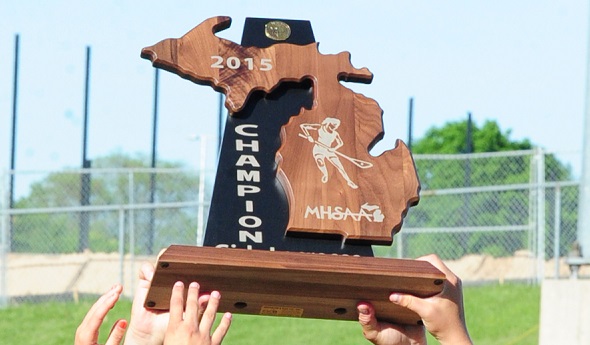
The MHSAA is best known to the public for the tournaments it conducts to conclude the fall, winter and spring seasons each school year.
These tournaments, the first and largest program of the MHSAA, have survived the Vietnam War, the Korean conflict and two World Wars. They have survived the technology bubble, the housing collapse, the energy crisis and the Great Depression.
MHSAA tournaments existed at the dawn of aviation and at the time of our nation’s lunar landing. Popes, presidents and governors have changed and changed again and again, and MHSAA tournaments roll on year after year.
But the sense of tradition and permanence and inevitability of MHSAA tournaments doesn’t dissuade us from asking questions about our tournaments, even some of the most basic questions. Here are two.
Question #1
I have long been and will always be an advocate for a Ryder Cup format for the MHSAA Golf Finals, and a team tennis approach to the MHSAA Tennis Finals; but 90 years of tradition is hard to overcome. Might this be a more exciting format? Could it be co-ed? Could it reverse the decline in boys tennis participation, and increase girls golf participation? Wouldn’t it be fun to try?
Periodically, the International Olympic Committee requires each of the designated Olympic sports to defend its status, to state its case why the sport should remain a part of the Olympic program. Then, after a series or votes that retain one sport at a time, the IOC drops the sport that makes the weakest case. It does so to make room for one of the previously unlisted sports that makes the best case for inclusion.
This would appear to keep the existing Olympic sports on their toes, and to keep the Olympic movement fresh and reflective of modern trends in sports.
While I would not enjoy the controversy, I can see the potential for some positive results if the MHSAA were to invoke the same policy for determining the 14 tournaments it will provide for girls and the 14 for boys.
This might cause us to consider more deeply what a high school sport should look like, or at least what an MHSAA tournament sport should stand for.
On the one hand, we might be inclined to drop tournaments for those sports that involve mostly non-faculty coaches and non-school venues, or require cooperative programs to generate enough participants to support a team, or resort almost entirely to non-school funding, or cater to individuals more than teams.
Or perhaps this process would cause policymakers to forget traditional thinking and ask: “In this day and age, should we shake off traditional notions of sport and consider more where modern kids are coming from?” That might mean fewer team sports and more individual sports, more “extreme” sports like snowboarding and skateboarding, and more lifetime sports, meaning not just golf and tennis and running sports, but also fishing and even shooting sports.
Currently, MHSAA policy states that the MHSAA will consider sponsorship of a tournament series for any sport which 64 member schools conduct on an interscholastic basis as a result of action by the governing boards of those schools.
Should the only question be how many schools sponsor a sport, or must an activity also have certain qualities and/or avoid certain “defects?” What should an MHSAA tournament sport look like and stand for?
Question #2
Bristling from criticism that his association is a money-grabbing exploiter of children, my counterpart in another state said, “If we were running our programs just to make money, we would do very many things very differently.” I knew exactly what he meant.
Because we care about the health and welfare of students, because we mean what we say that the athletic program needs to maximize the ways it enhances the school experience while minimizing academic conflicts, and because we try to model our claim that no sport is a minor sport when it comes to its potential to teach young people life lessons, we operate our programs in ways that make promoters, marketers and business entrepreneurs laugh, cry or cringe.
If money were the only object, we would seed and select sites to assure the teams that attracted the most spectators had the best chance to advance in our tournaments, regardless of the travel for any team or its fan base. If money were the only object, we would never schedule two tournaments to overlap and compete for public attention, much less tolerate three or four overlapping events. If money were the only object, we would allow signage like NASCAR events and promotions like minor league baseball games.
Those approaches to event sponsorship may not be all wrong; they’re just not all right for us. And we will live with the consequences of our belief system.
During a typical school year, more than 20 percent of the MHSAA’s 2,097 District, Regional and Final tournaments lose money. Not a single site in golf, skiing or tennis makes a single penny. In no sport did every District, Regional and Final site have revenue in excess of direct expenses.
In fact, in only three sports – boys and girls basketball and football – is revenue so much greater than direct expenses overall that it helps to pay for all the other tournaments in which the MHSAA invests.
That’s right: invests. When we present our budget to our board, we talk about the MHSAA’s investment in providing tournament opportunities in all those sports and all those places that cannot sustain the cost of those events on their own. How much is this investment worth to students, schools and society?
These two are core questions that require our focus far in advance of talk about scheduling, site selection, seeding and the myriad matters that too often hijack our time and attention.
St. Mary's Standouts, More Michigan Stars Taking Major Steps in Pro Baseball Climb
By
Steve Vedder
Special for MHSAA.com
July 16, 2026
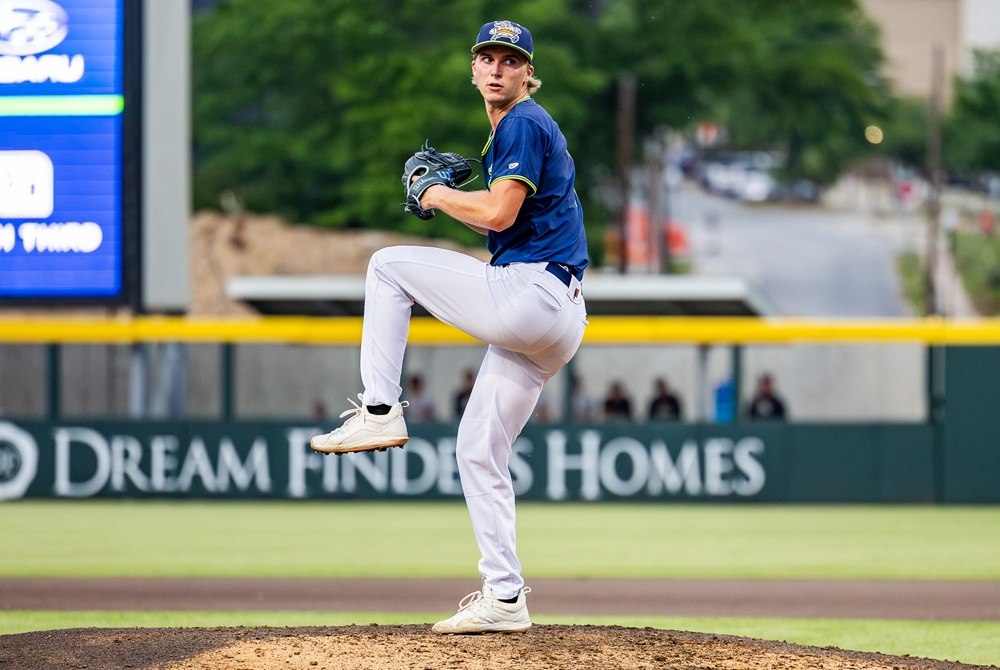
It took former Orchard Lake St. Mary's star Brock Porter three years to reach five professional baseball victories on the mound.
It's taken only four months for Porter to win five more.
Porter is one of four Eaglets from the 2019-22 MHSAA Finals champion clubs now navigating their way through professional baseball. The 2022 Mr. Baseball Award winner, now a 23-year-old right-handed pitcher, went a combined 30-0 with an ERA under a run per game for those three championship teams (with 2020 was canceled due to COVID-19) before being tabbed by the Texas Rangers in the fourth round of the 2022 MLB draft.
Injuries slowed his first three minor league seasons, and Porter didn't win any games over his first two in the Rangers chain. But a healthy Porter has taken significant steps forward this season with the High-A Hub City Spartanburgers (S.C.) with a 5-2 record, 3.56 ERA and 52 strikeouts over 43 innings and 13 games. Porter was actually 0-9 over his first two minor league seasons before going 5-1 a year ago with Hickory of the Class A Carolina League.
He said he doesn't feel rushed in moving up the Rangers minor league ladder.
"I still have time," he said. "The big goal for me is I want to move up throughout the chain. Things are going very well, I'm excited for the season. Health-wise, I feel very good. I still want to grow into the dominant pitcher I was in high school."
Porter's role within the organization has changed. While he started 28 games over first two seasons, Porter has transitioned to the bullpen, where he's pitched in a combined 54 games during last two summers.
His former Eaglets teammates also are winding their ways through the minors.
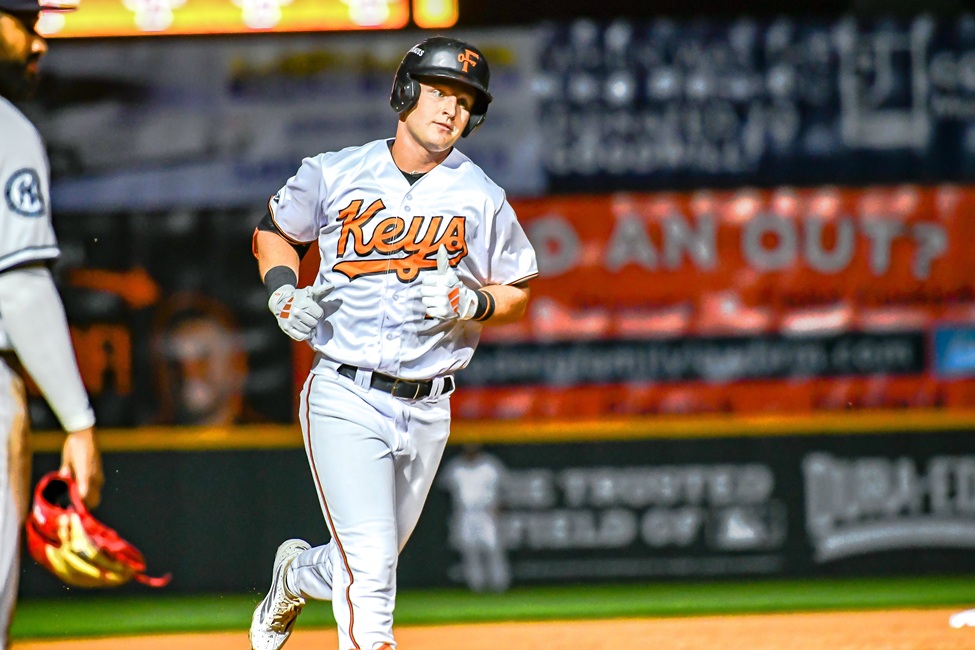 Among them, Ike Irish was one of two former Michigan high school baseball stars who played in Sunday's prestigious MLB Futures Games as part of the all-star festivities in Philadelphia. Irish, a first-round pick a year ago, has emerged as Baltimore's No. 2 prospect as ranked by MLB.com. He went 0-for-1 with a walk after starting the game as his team’s designated hitter. The other past Michigan prep star playing Sunday was Okemos’ Caleb Bonemer, a top prospect in the Chicago White Sox chain. He went 0-for-2 as the starting third baseman for the American League.
Irish, an outfielder who also can catch, has dominated High-A Frederick (Md.) with 12 homers, 15 doubles, 47 RBIs and 18 stolen bases while batting .264. Irish hit .230 in 20 games with Low-A Delarva (Md.) in 2025 after batting .350 with 39 homers over three years at Auburn University, where he was named an All-American as a junior.
Irish, who batted .427 and .450 with a combined 19 homers and 95 RBIs during his two seasons at St. Mary's, said his professional goals don't include obsessing over posting numbers.
"No, I just want to go out there and play," he said. "I don't care about numbers or hitting X number of homers. I would rather just go out and play."
In addition to Porter and Irish, former St. Mary's star Nolan Schubart has heated up at high-Class A Lake County (Ohio) of the Midwest League. A Cleveland Guardians prospect, Schubart was named last Monday as the league's Player of the Week after hitting three homers with 12 RBIs and 20 total bases. The former third-round draft pick is now batting .248 with 67 RBIs in 69 games with a 37-game on-base streak.
The fourth former St. Mary's player in the minors is infielder Alex Mooney, the 2021 Mr. Baseball Award winner. Mooney is batting .203 with 36 RBIs and 18 stolen bases in 22 attempts with Double-A Akron (Ohio). Mooney was taken by the Guardians in the seventh round of the 2023 draft out of Duke. He started his professional career as a shortstop, but has branched out to playing 27 games at second base and 17 at third this season.
Mooney said playing at the Double-A level has been an adjustment.
"It's a tough place," he said. "I'm not really a huge stats person; I just take it day-by-day. When you're playing 140 games a year in the minors you just try to get better every day. That's the mindset. You just try to get better and win the battle in the war."
A fifth member of the 2021-22 Orchard Lake St. Mary's teams will have a shot at professional baseball. Former Eaglets pitcher Nolan Higgins was taken by the Toronto Blue Jays in the fifth round of Sunday's MLB draft.
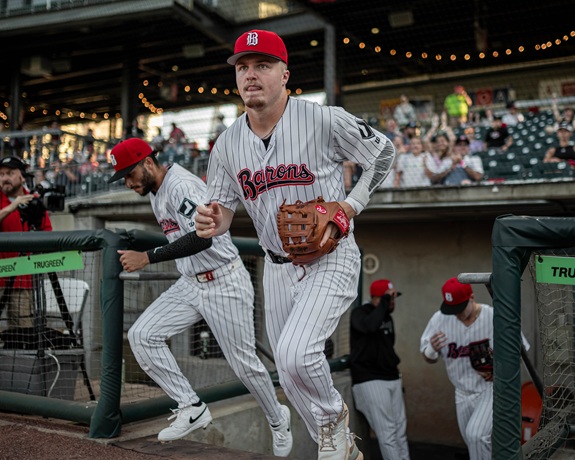 Meanwhile, Okemos’ Bonemer has been in the national spotlight twice over the first four months of this minor league season. A member of the coaches association all-state Dream Team as a high school senior in 2024, he gained a painful national notice May 5. The New York Yankees' all-star pitcher Gerrit Cole, while rehabilitating from an injury with Hudson Valley (N.Y.), surrendered a homer and single during Bonemer’s first two at bats, then drilled the Chicago White Sox prospect with a 97-mph fastball to the shoulder. The move incensed White Sox fans, who believed Cole was trying to send Bonemer a message after banging out the two hits.
Bonemer not only survived, but has thrived. He hit .238 with High-Class A Winston-Salem (N.C.) to start this season, but slammed 18 homers and 15 doubles along while totaling 43 RBIs and 10 stolen bases. That earned him a promotion to Double-A Birmingham (Ala.) where he's off to fast start with a .279 average, three homers and 11 RBIs over his first 17 games.
Four other former Michigan prep stars have had active professional seasons. Outfielder Dante Nori, who helped Northville to the 2024 MHSAA Division 1 championship, has built on his rapid start this spring when he batted .400 for Italy in March's World Baseball Classic. A member of the all-state Dream Team as a senior at Northville, Nori is batting .245 at Double-A Reading (Pa.) in the pitching-heavy Eastern League. Nori has 12 stolen bases and 11 doubles.
Former Saginaw Swan Valley infielder Mitch Jebb has played in 20 games at Double-A Altoona (Pa.) and Triple-A Indianapolis in the Pittsburgh Pirates’ system, batting .273 with eight RBIs. A 2018 all-stater at Swan Valley, this is Jebb's fourth season in the minors after batting .327 in 147 career games at Michigan State.
Howell native and the state's 2017 Mr. Baseball, Sam Weatherly, is playing his fifth year of professional baseball. Weatherly is 1-3 in 23 games at Double-A Hartford (Conn.) of the Eastern League, a Colorado Rockies affiliate. He's struck out 34 batters in 28 innings.
Jeff Criswell from Portage Central is still recovering from Tommy John surgery a year ago. A member of the 2019 NCAA runner-up Michigan club, Criswell was called up to the Rockies for two games during the second week of June. He's divided time between three levels this season, with a 2-1 record and 6.86 ERA over 19 games and 29 strikeouts in 21 innings. In 2025, he pitched in 13 games for the Rockies with a 2.75 ERA before the surgery.
PHOTOS (Top) Orchard Lake St. Mary’s grad Brock Porter delivers a pitch for the Hub City Spartanburgers this season. (Middle) Ike Irish runs the bases for the Frederick Keys. (Below) Caleb Bonemer takes the field for the Birmingham Barons. (Porter photo by Becca Torncello/Hub City Spartanburgers. Irish photo by Robert Kimble. Bonemer photo courtesy of the Birmingham Barons.)