

Casting Lines for Future Tournaments
August 12, 2016
By Jack Roberts
MHSAA Executive Director
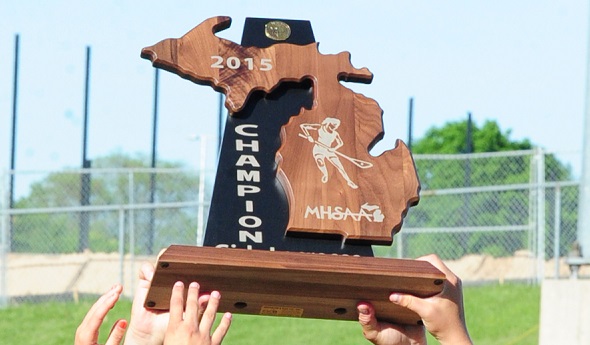
The MHSAA is best known to the public for the tournaments it conducts to conclude the fall, winter and spring seasons each school year.
These tournaments, the first and largest program of the MHSAA, have survived the Vietnam War, the Korean conflict and two World Wars. They have survived the technology bubble, the housing collapse, the energy crisis and the Great Depression.
MHSAA tournaments existed at the dawn of aviation and at the time of our nation’s lunar landing. Popes, presidents and governors have changed and changed again and again, and MHSAA tournaments roll on year after year.
But the sense of tradition and permanence and inevitability of MHSAA tournaments doesn’t dissuade us from asking questions about our tournaments, even some of the most basic questions. Here are two.
Question #1
I have long been and will always be an advocate for a Ryder Cup format for the MHSAA Golf Finals, and a team tennis approach to the MHSAA Tennis Finals; but 90 years of tradition is hard to overcome. Might this be a more exciting format? Could it be co-ed? Could it reverse the decline in boys tennis participation, and increase girls golf participation? Wouldn’t it be fun to try?
Periodically, the International Olympic Committee requires each of the designated Olympic sports to defend its status, to state its case why the sport should remain a part of the Olympic program. Then, after a series or votes that retain one sport at a time, the IOC drops the sport that makes the weakest case. It does so to make room for one of the previously unlisted sports that makes the best case for inclusion.
This would appear to keep the existing Olympic sports on their toes, and to keep the Olympic movement fresh and reflective of modern trends in sports.
While I would not enjoy the controversy, I can see the potential for some positive results if the MHSAA were to invoke the same policy for determining the 14 tournaments it will provide for girls and the 14 for boys.
This might cause us to consider more deeply what a high school sport should look like, or at least what an MHSAA tournament sport should stand for.
On the one hand, we might be inclined to drop tournaments for those sports that involve mostly non-faculty coaches and non-school venues, or require cooperative programs to generate enough participants to support a team, or resort almost entirely to non-school funding, or cater to individuals more than teams.
Or perhaps this process would cause policymakers to forget traditional thinking and ask: “In this day and age, should we shake off traditional notions of sport and consider more where modern kids are coming from?” That might mean fewer team sports and more individual sports, more “extreme” sports like snowboarding and skateboarding, and more lifetime sports, meaning not just golf and tennis and running sports, but also fishing and even shooting sports.
Currently, MHSAA policy states that the MHSAA will consider sponsorship of a tournament series for any sport which 64 member schools conduct on an interscholastic basis as a result of action by the governing boards of those schools.
Should the only question be how many schools sponsor a sport, or must an activity also have certain qualities and/or avoid certain “defects?” What should an MHSAA tournament sport look like and stand for?
Question #2
Bristling from criticism that his association is a money-grabbing exploiter of children, my counterpart in another state said, “If we were running our programs just to make money, we would do very many things very differently.” I knew exactly what he meant.
Because we care about the health and welfare of students, because we mean what we say that the athletic program needs to maximize the ways it enhances the school experience while minimizing academic conflicts, and because we try to model our claim that no sport is a minor sport when it comes to its potential to teach young people life lessons, we operate our programs in ways that make promoters, marketers and business entrepreneurs laugh, cry or cringe.
If money were the only object, we would seed and select sites to assure the teams that attracted the most spectators had the best chance to advance in our tournaments, regardless of the travel for any team or its fan base. If money were the only object, we would never schedule two tournaments to overlap and compete for public attention, much less tolerate three or four overlapping events. If money were the only object, we would allow signage like NASCAR events and promotions like minor league baseball games.
Those approaches to event sponsorship may not be all wrong; they’re just not all right for us. And we will live with the consequences of our belief system.
During a typical school year, more than 20 percent of the MHSAA’s 2,097 District, Regional and Final tournaments lose money. Not a single site in golf, skiing or tennis makes a single penny. In no sport did every District, Regional and Final site have revenue in excess of direct expenses.
In fact, in only three sports – boys and girls basketball and football – is revenue so much greater than direct expenses overall that it helps to pay for all the other tournaments in which the MHSAA invests.
That’s right: invests. When we present our budget to our board, we talk about the MHSAA’s investment in providing tournament opportunities in all those sports and all those places that cannot sustain the cost of those events on their own. How much is this investment worth to students, schools and society?
These two are core questions that require our focus far in advance of talk about scheduling, site selection, seeding and the myriad matters that too often hijack our time and attention.
Jones' Motto Inspires 'Get To' Foundation's Work to Provide Opportunities
By
Tom Kendra
Special for MHSAA.com
October 4, 2023
Ben Jones always had the same, simple message, even if it was 100 degrees and sunny or 35 degrees and raining sideways, and whether he was playing for a powerhouse like Muskegon Catholic Central or coaching a program trying to establish itself at Bloomfield Hills Cranbrook Kingswood.
 “We get to play football today,” Jones would say, as many of those around him were complaining and grumbling.
It was never “have to” for Jones, but always “get to.”
Jones, who was about to start his second year as head coach at Cranbrook, had his life tragically cut short by a drunk driver who crashed into his vehicle as he was traveling home from work in Detroit on Aug. 19, 2020. He was just 30 years old.
While Jones is gone, leaving a hole as large and painful as the 6-foot-2, 260-pound frame he carried as a tight end in his senior year at Hillsdale College, that “Get To” mentality is alive and well, and thriving and growing – thanks in large part to the efforts of his football teammates from Muskegon Catholic and later at Hillsdale.
The Get To Foundation, a 501(c)3 non-profit organization, was formed in Jones’ honor and has grown exponentially in less than three years, providing grants to sports organizations and scholarships to student-athletes.
“There is a core group of about 10 of them that have worked on (the foundation), and it’s been amazing,” said Theresa Jones, Ben’s mother, who with her husband Bruce has worked with the foundation. “It started small, and then it caught fire.”
The president of the foundation is Tim Hornak, Jones’ best friend and teammate in the trenches at both Muskegon Catholic and Hillsdale. Hornak returned to deliver a pre-game speech before the Crusaders’ home game on Sept. 15 against Kalamazoo United, where he talked about the man who is the inspiration behind the rapidly-growing Get To movement.
“You don’t have to, you get to – that simple difference can change your lives,” said Hornak, who teamed with Jones when both were seniors to help the Crusaders to a 14-0 record and the Division 8 championship in 2008. “You get to play football tonight and continue the tradition that started here in the 1950s.
“You get a chance to line up and play a great game with your best friends.”
Inspired by Hornak’s words and Jones’ legacy, the Crusaders downed Kalamazoo United 27-7 that night, the team’s second-straight win after an 0-2 start, which put them back in the Division 8 playoff picture.
 A tailgate party was held before the game as a fundraiser for the Get To Foundation, and it happened to coincide with the 15th anniversary of the Crusaders’ 2008 championship team – arguably one of the best teams in the school’s storied history. MCC has won 12 state championships, trailing only Farmington Hills Harrison in state playoff history.
The phrase “get to,” according to Hornak, goes back to the whiteboard in the MCC locker room his sophomore year and perfectly captures Jones’ approach to life and to football, whether his team was unbeaten like at MCC or struggling like the Chargers did just after he and Hornak graduated.
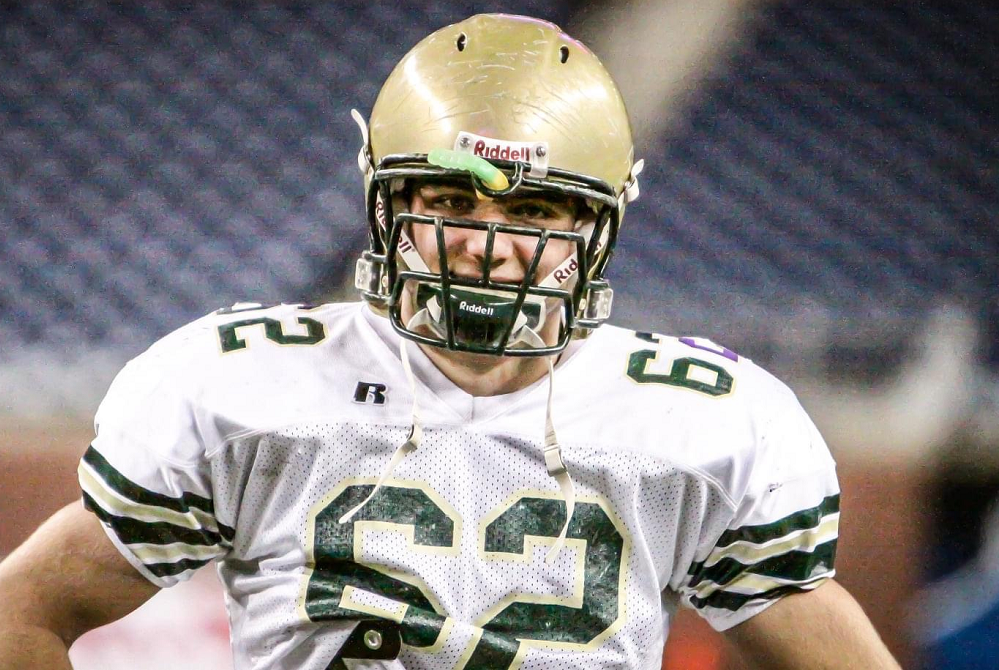
Jones, who wore No. 62 at MCC, was a two-way starting lineman who also played on the Crusaders’ 2006 championship team as a sophomore. His best friends on the team were the Hornak twins, Tim and Jon, whose father Mike was an assistant coach.
After his funeral service on Aug. 24, 2020, Jones’ hearse made a stop at MCC’s Kehren Stadium on the way to the cemetery, taking a lap on the track around Mike Holmes Field.
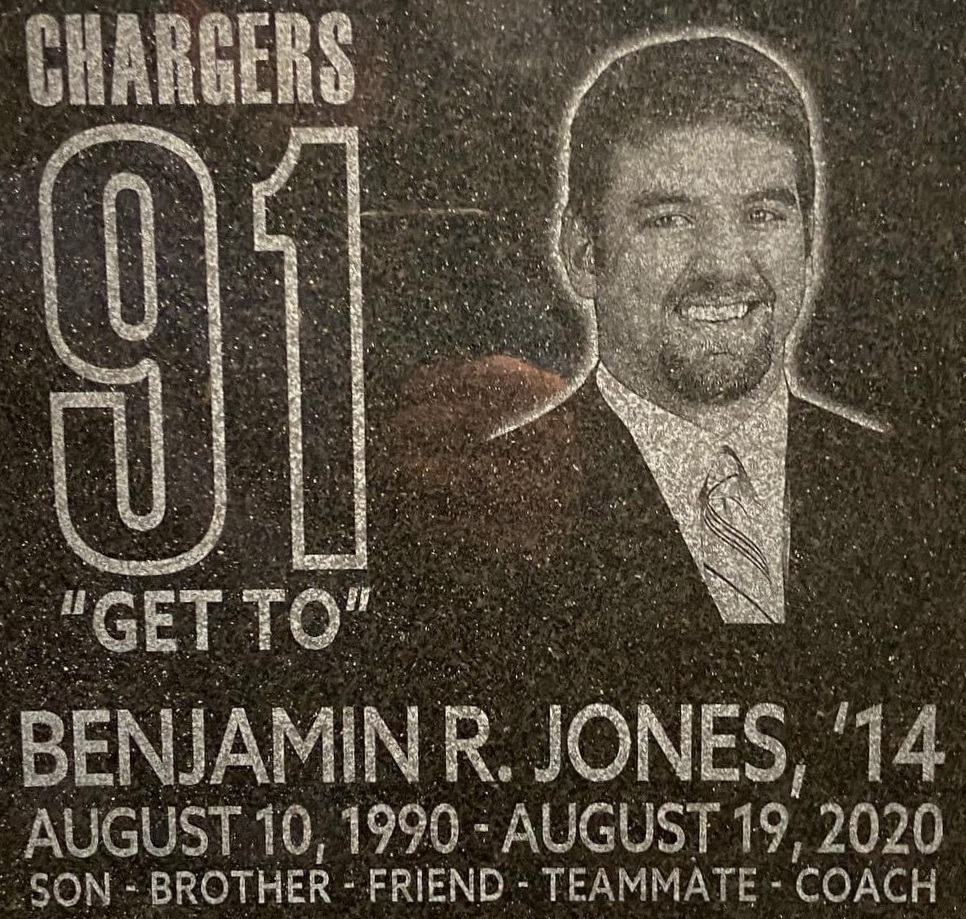
He went on to play on three teams which won or shared Great Lakes Interscholastic Athletic Conference titles at Hillsdale, where he wore No. 91 and played tight end and H-back.
“He had an inner self-confidence that you could tell right away when talking to him,” said Hillsdale coach Keith Otterbein. “He was very positive. He encouraged his teammates.”
Jones graduated from Hillsdale in 2013 with a degree in financial management and a minor in mathematics, moved to Royal Oak and took a job as a portfolio manager and financial planner at Schwartz & Co. Investment Advisors.
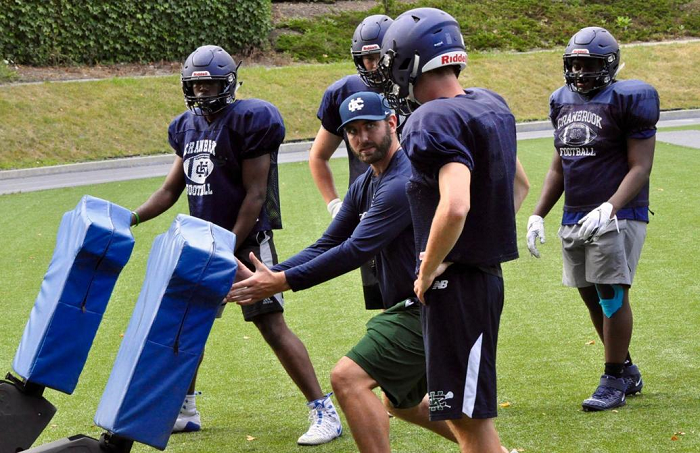
In his free time, he worked as an assistant varsity football coach at Cranbrook from 2015 to 2018, before being elevated to head coach in 2019 at the age of 28.
One of his first actions as head coach was getting Cranbrook football T-shirts printed with the message “Get To” on the back. Jones guided the Cranes to a 6-4 record and a Division 4 playoff berth in what would prove to be his only season as head coach.
 He died nine days before Cranbrook’s scheduled season opener in 2020, which ended up being delayed six weeks due to the COVID-19 pandemic.
In the immediate aftermath of Jones’ shocking death, the Hornak brothers and other former teammates vowed to do something to honor Ben and to help out his family. Out of that mission, the Get To Foundation was born.
Get To has awarded scholarships for the past three years. In 2023 alone, the foundation awarded $16,000 in scholarships to 22 student-athletes from around the state.
In addition, Get To has awarded $55,000 in grants to 17 organizations – including $3,000 to the Eaton Rapids High School football program for new shoulder pads and helmets and $2,500 to the Detroit Tigers Foundation’s Gloves for Kids program.
The next event on the foundation’s busy calendar is a speech by best-selling motivational author Jon Gordon at Lawrence Tech University on Oct. 17.
The foundation’s board has trademarked the phrase “Get To” and hopes to continue to grow the organization’s size and scope – in a way mirroring how big and impactful Ben’s life could have been if it wasn’t cut short.
For more information or to make a donation, go to the organization’s website at www.gettofoundation.org.
The relentless efforts of Ben’s ex-teammates to keep his memory alive means the world to his parents, as well as his two younger siblings – Alissa, a standout swimmer at Hillsdale who is now the school’s assistant women’s swimming coach; and Nate, who also played football for the Chargers and is now a foreign currency trader for Barclay’s, based in New York City.
Theresa Jones said coming together with all of Ben’s closest friends for Get To Foundation events has been a continuous blessing for the family.
“Every time we have an event for the foundation, it’s all of Ben’s friends and family members dressed up and having a good time,” his mother said. “It always feels like Ben’s wedding reception that he never got to have.”
 Tom Kendra worked 23 years at The Muskegon Chronicle, including five as assistant sports editor and the final six as sports editor through 2011. E-mail him at [email protected] with story ideas for Muskegon, Oceana, Mason, Lake, Oceola, Mecosta and Newaygo counties.
PHOTOS (Top) Ben Jones is shown before the 2008 Division 8 championship game at Ford Field during his senior year at Muskegon Catholic Central. The Crusaders defeated Crystal Falls Forest Park, 40-0. (Middle) Jones works with his linemen during his first year as head coach at Bloomfield Hills Cranbrook Kingswood in 2019. (Below) A plaque honoring Jones has been placed in the tunnel leading from the home locker room to the football field at Hillsdale College. (Top photo by Tim Reilly. Additional photos courtesy of the Get To Foundation.)