

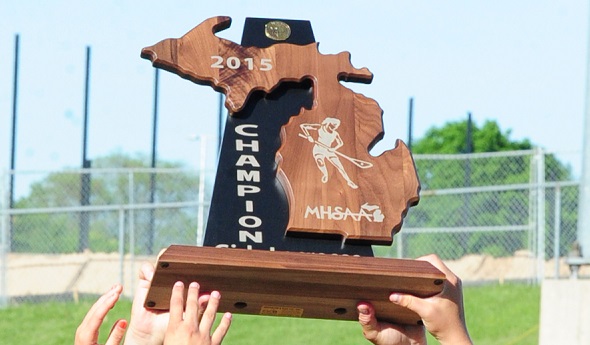
Casting Lines for Future Tournaments
August 12, 2016
By Jack Roberts
MHSAA Executive Director
The MHSAA is best known to the public for the tournaments it conducts to conclude the fall, winter and spring seasons each school year.
These tournaments, the first and largest program of the MHSAA, have survived the Vietnam War, the Korean conflict and two World Wars. They have survived the technology bubble, the housing collapse, the energy crisis and the Great Depression.
MHSAA tournaments existed at the dawn of aviation and at the time of our nation’s lunar landing. Popes, presidents and governors have changed and changed again and again, and MHSAA tournaments roll on year after year.
But the sense of tradition and permanence and inevitability of MHSAA tournaments doesn’t dissuade us from asking questions about our tournaments, even some of the most basic questions. Here are two.
Question #1
I have long been and will always be an advocate for a Ryder Cup format for the MHSAA Golf Finals, and a team tennis approach to the MHSAA Tennis Finals; but 90 years of tradition is hard to overcome. Might this be a more exciting format? Could it be co-ed? Could it reverse the decline in boys tennis participation, and increase girls golf participation? Wouldn’t it be fun to try?
Periodically, the International Olympic Committee requires each of the designated Olympic sports to defend its status, to state its case why the sport should remain a part of the Olympic program. Then, after a series or votes that retain one sport at a time, the IOC drops the sport that makes the weakest case. It does so to make room for one of the previously unlisted sports that makes the best case for inclusion.
This would appear to keep the existing Olympic sports on their toes, and to keep the Olympic movement fresh and reflective of modern trends in sports.
While I would not enjoy the controversy, I can see the potential for some positive results if the MHSAA were to invoke the same policy for determining the 14 tournaments it will provide for girls and the 14 for boys.
This might cause us to consider more deeply what a high school sport should look like, or at least what an MHSAA tournament sport should stand for.
On the one hand, we might be inclined to drop tournaments for those sports that involve mostly non-faculty coaches and non-school venues, or require cooperative programs to generate enough participants to support a team, or resort almost entirely to non-school funding, or cater to individuals more than teams.
Or perhaps this process would cause policymakers to forget traditional thinking and ask: “In this day and age, should we shake off traditional notions of sport and consider more where modern kids are coming from?” That might mean fewer team sports and more individual sports, more “extreme” sports like snowboarding and skateboarding, and more lifetime sports, meaning not just golf and tennis and running sports, but also fishing and even shooting sports.
Currently, MHSAA policy states that the MHSAA will consider sponsorship of a tournament series for any sport which 64 member schools conduct on an interscholastic basis as a result of action by the governing boards of those schools.
Should the only question be how many schools sponsor a sport, or must an activity also have certain qualities and/or avoid certain “defects?” What should an MHSAA tournament sport look like and stand for?
Question #2
Bristling from criticism that his association is a money-grabbing exploiter of children, my counterpart in another state said, “If we were running our programs just to make money, we would do very many things very differently.” I knew exactly what he meant.
Because we care about the health and welfare of students, because we mean what we say that the athletic program needs to maximize the ways it enhances the school experience while minimizing academic conflicts, and because we try to model our claim that no sport is a minor sport when it comes to its potential to teach young people life lessons, we operate our programs in ways that make promoters, marketers and business entrepreneurs laugh, cry or cringe.
If money were the only object, we would seed and select sites to assure the teams that attracted the most spectators had the best chance to advance in our tournaments, regardless of the travel for any team or its fan base. If money were the only object, we would never schedule two tournaments to overlap and compete for public attention, much less tolerate three or four overlapping events. If money were the only object, we would allow signage like NASCAR events and promotions like minor league baseball games.
Those approaches to event sponsorship may not be all wrong; they’re just not all right for us. And we will live with the consequences of our belief system.
During a typical school year, more than 20 percent of the MHSAA’s 2,097 District, Regional and Final tournaments lose money. Not a single site in golf, skiing or tennis makes a single penny. In no sport did every District, Regional and Final site have revenue in excess of direct expenses.
In fact, in only three sports – boys and girls basketball and football – is revenue so much greater than direct expenses overall that it helps to pay for all the other tournaments in which the MHSAA invests.
That’s right: invests. When we present our budget to our board, we talk about the MHSAA’s investment in providing tournament opportunities in all those sports and all those places that cannot sustain the cost of those events on their own. How much is this investment worth to students, schools and society?
These two are core questions that require our focus far in advance of talk about scheduling, site selection, seeding and the myriad matters that too often hijack our time and attention.
Frankfort Hoops Staff Bolstered by Past Stars Giving Back in Banktson, Kreski
By
Tom Spencer
Special for MHSAA.com
July 18, 2023
Veteran Frankfort girls basketball coach Tim Reznich will have a couple of true superstars on his bench this winter.
 They don’t have MHSAA eligibility remaining, but they should really help the Panthers. They’ve used up their college eligibility as well.
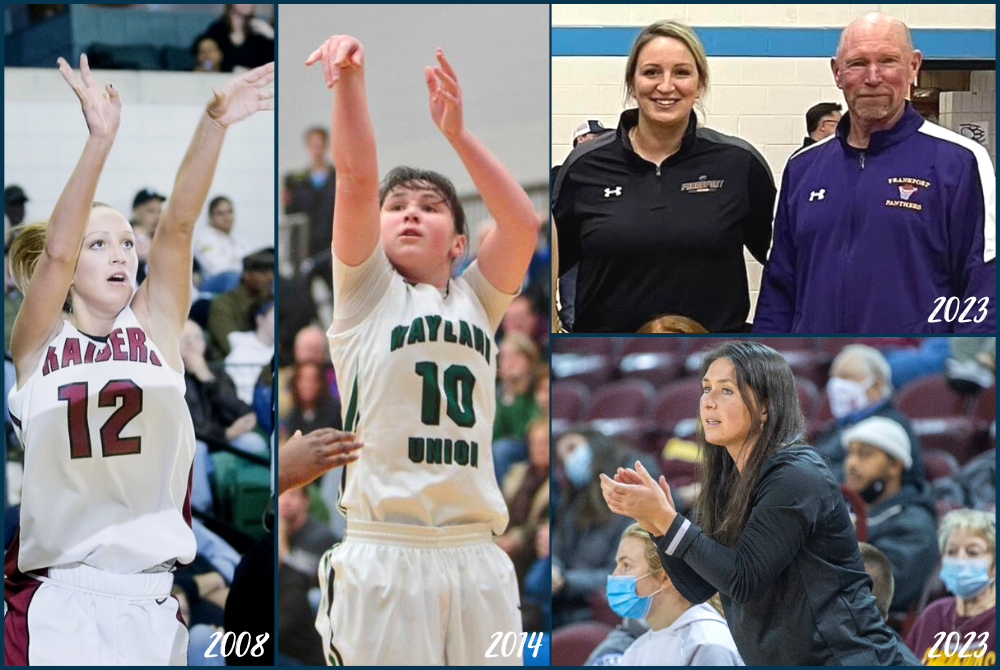
They are Lindsey (Pettit) Banktson, a 2008 graduate of Portland High School and all-state forward, and Presley (Hudson) Kreski, a 2014 product of Wayland High School and all-state guard. And, they are now serving as assistant coaches for Frankfort.
Banktson has been on Reznich’s bench 10 years, and Kreski is headed for her first at Frankfort. Kreski has been on women’s basketball coaching staffs at Western Michigan University and Central Michigan University since her playing days.
“I have always felt very fortunate in my situation at Frankfort,” Reznich said. “I have felt like we have always been able to provide our players with the resources and opportunities to excel at basketball, if that is what they wanted to do.
“When Lindsey came those resources increased, and now adding Presley to the mix just brings everything over the top,” he continued. “Our players are already starting to realize it.”
Kreski, who will be teaching health and physical education at Frankfort, and Banktson, now a physician assistant with Crystal Lake Clinic, are excited to work together and with Reznich this winter as he begins his 22nd season at the helm of the Panthers.
“I’ve loved coaching with Rez the past 10 seasons and am just as excited for season number 11,” said Banktson, who went on to play basketball and softball at Ferris State University. “Every year, the night before our first day of practice, is always like Christmas Eve for me.
“I can’t sleep and I can’t wait for my alarm to go off to head to the gym to start our 2-a-days,” she continued. “I am so grateful to coach with Rez and learn from him.”
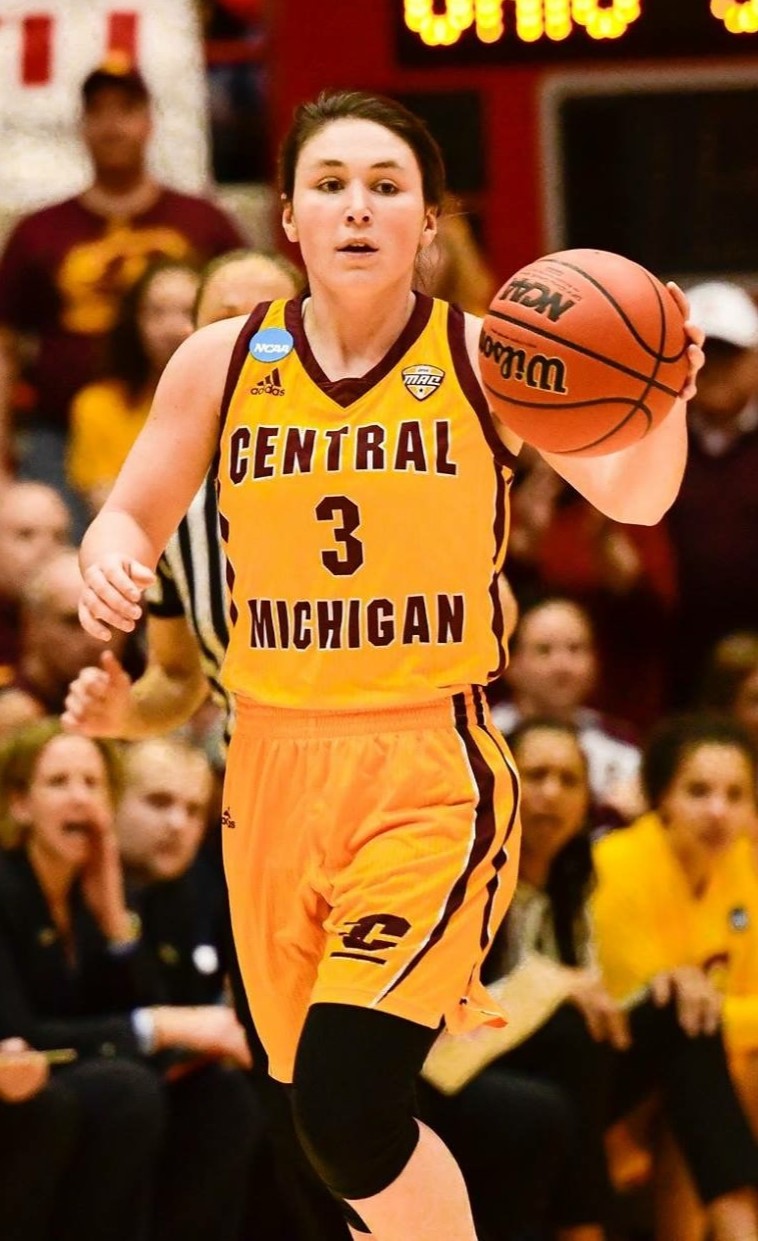
Kreske too is eager to work with Rez after getting involved with the Panthers in summer ball.
After Wayland, Kreski went on to an illustrious playing career Central Michigan where she won the NCAA 3-point contest in 2019. She also played with the Seattle Storm of the WNBA before playing professionally overseas in Poland.
“I am really excited to be at Frankfort and helping the team out,” Kreski said. “The girls work really hard and want to get better.
“Tim is a great coach, and I am looking forward to working with him and sharing my knowledge of the game as well as learning from him.”
Frankfort is coming off a District championship in 2022 and a District title loss to eventual Division 4 champion Glen Lake in 2023.
Reznich says the Panthers have already noted keys to success just by being around Kreski and Banktson. Reznich, who guided Frankfort to back-to-back Class D championships in 2005 and 2006, admits he may have softened up a bit on his players over the years. Conditioning will be a top priority this year.
“They (Kreski and Banktson) have the first-hand experience of the benefits of pushing yourself hard and not cutting corners,” Reznich said. “Our players will be in the best shape of their lives when those two are finished with them.”
And Banktson is happy to pass on her high school experience to the Panthers. She graduated in 2008 as the Lansing State Journal’s “Female Prep Athlete of the Year” after shining in three sports and leading Portland to the season’s final weekend in two.
“As a player, high school athletics taught me a lot about hard work and dedication,” she said. “High school sports taught me that you have to put in the extra work if you want to be great.
“You have to be in the gym getting extra shots outside of practice, you have to be at the field getting extra reps on the weekends,” she continued. “If you work hard and give everything you’ve got to develop your game, you will be successful.”
Kreski recalls fondly her high school days working hard and having fun with her friends and teammates, along with making deep runs in the tournament.
“High school sports is the truest form of competition,” Kreski said. “It starts with a community who supports everyone from a young age and involves all the friends and family you grew up with.
“High school sports help guide young people into leaders, teaching them how to work hard and be disciplined.”
Kreski led CMU to Sweet 16 her junior year. She is the all-time leading scorer at CMU (2,309) and career assist leader (643). Central won the Mid-American Conference three times during her days with the Chippewas. She married Gage Kreski after that chapter of her career was done.
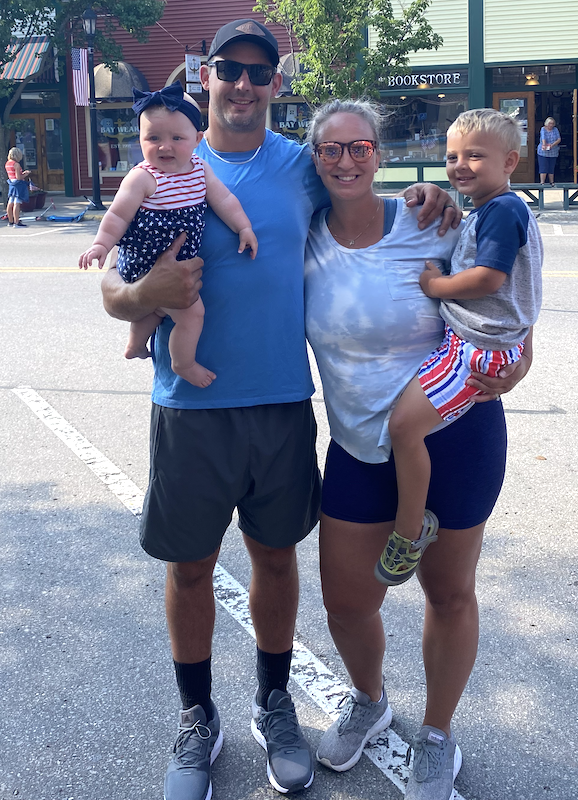
Banktson met her husband Max Banktson at Ferris State, where he played football. They moved to Frankfort, where Max was born and raised. They have a 3-year-old son named Briggs and a 6-month old daughter named Landyn.
Both Reznich and Banktson express respect and appreciation for their coaching together. They’ve been on the same page with game plans and scouting reports, and they expect it will continued with Kreski aboard.
“Rez and I really work well together,” Banktson said. “He has always respected me as a player and coach and has given me so much autonomy with our teams.
“He is always open to my input when it comes to running certain drills in practice, putting in new offenses, or adding defensive schemes,” she continued. “He trusts me to handle our subbing during games.”
Reznich agrees.
“I have always appreciated Lindsey’s perspective on what the girls are doing on the court,” he said. “It is going to be a lot of fun and exciting to add Presley’s ideas.
“We have always treated the regular season as practice for the tournament, making adjustments and tweaking things,” he continued. “I can’t wait to see the end product this year.”
 Banktson was a three-sport, four-year varsity player at Portland earning a combined 12 varsity letters in basketball, softball and volleyball. She helped the Raiders win league, District and Regional titles. Her teams reached MHSAA Semifinals for softball twice and basketball once.
It doesn’t take much to get her back in game mode.
“I can still remember the feeling of adrenaline getting ready in the locker room with my teammates, running out to our warm up music, and battling on the court each game,” she said. “I am thankful for my teammates who, when on the court, were so unselfish. We just wanted to win.”
She hopes to continue to instill greatness in the Panthers.
“I always tell the girls, ‘We were tough’ — not just physically but mentally,” she said. “We had a type of swagger – we played like we knew the bullseyes were on our back, and every game we had to fight to stay at the top.
“We took pride in wearing that Portland Raider jersey,” she continued. “I just want to instill that same mental toughness and swagger into my girls here at Frankfort.”
Having a pair of women who played now coaching and serving as mentors is beneficial on a personal level as well.
“I feel like I can relate to players on a personal level,” Banktson said. “I always try to be a good role model for them and someone they can come to with anything.
“I’m their biggest cheerleader but also not afraid to hold them accountable and help steer them down the right paths of life.”
And Banktson has learned how she might have coached herself.
“I would push myself to continue to work on my right hand, because everyone in the gym knows I’m a lefty,” she said with a smile.
2023 Made In Michigan
July 12: Championship Memories, High School Tennis' Impact Stick with Hackett Pair - Read
July 6: Brother Rice Finals Hero Aiming to Ace Family Life, Financial World - Read
July 5: Lapeer West 4-Time Finals Winner Set to Build Champions at Oklahoma - Read
PHOTOS (Top) Lindsey Banktson plays at Portland in 2008 and stands for a celebratory photo with Frankfort’s District champion last season. Presley Kreski plays for Wayland in 2014 and more recently served on Central Michigan's coaching staff. (Middle) Kreski directs the offense during her time at CMU. (Below) The Banktson family: From left, Landyn, Max, Lindsey and Briggs. (Photos of Banktson courtesy of Lindsey Banktson. CMU photo courtesy of CMU sports information. Wayland photo courtesy of Joel Bissell, MLive.com)