


Classes Still Create Hoosier Hysteria
July 27, 2017
By Rob Kaminski
MHSAA benchmarks editor
This is the fourth part in a series on MHSAA tournament classification, past and present, that will be published over the next two weeks. This series originally ran in this spring's edition of MHSAA benchmarks.
Twenty years ago, Bloomington North High School won the Indiana High School Athletic Association boys basketball championship, defeating Delta 75-54 at the RCA Dome in Indianapolis.
The date, March 22, 1997, is at the same time revered and disdained by traditionalists in the state who saw it as the last schoolboy championship game the state would ever host.
That’s how devout the game of basketball, particularly interscholastic basketball, had become in the Hoosier state during the 87 years a state champion – one state champion, to be precise – was crowned.
Following that 1997 season, the IHSAA moved to a four-class system for its roundball tournaments, like so many of its state association counterparts had done years earlier.
It would be shocking to find more than a small percentage of current high school basketball players around the country unfamiliar with the iconic movie Hoosiers, even though the film is now more than 30 years old.
And, the storyline for that blockbuster unfolded more than 30 years prior to its release, when small-town, undermanned Milan High School defeated Muncie Central High School 32-30 in the 1954 IHSAA title game.
Perhaps it’s because of the David vs Goliath notion, or the fame of the movie that replaced Milan with the fictional Hickory and real-life star Bobby Plump with Hollywood hero Jimmy Chitwood, or the simple fact that Indiana had something other states didn’t.
Whatever the reason, plenty of opposition remains to this day to basketball classification in the state.
The fact is, the small rural schools were regularly being beaten handily by the much larger suburban and city schools as the tournament progressed each season.
Small schools also were closing at a rapid rate following the state’s School Reorganization Act in 1959, as students converged on larger, centralized county schools. From 1960 to 2000, the number of schools entering the tournament dropped from 694 to 381, and in 1997 a total of 382 schools and 4,584 athletes began competition at the Sectional level (the first level of the IHSAA Basketball Tournament).
It was at the entry level of the tournament where school administrators felt the pain of the new class system, but not necessarily for the same nostalgic reasons as the fans who either attended or boycotted the tournament.
At the Sectional round of the tournament, the IHSAA was culling just 2 percent of the revenue, with the participating schools splitting the balance. So, when Sectional attendance dropped by 14 percent in that first year of class basketball, many schools realized a financial loss. It was money they had grown to count on in prior years to help fund various aspects of the department.
Schools cumulatively received more than $900,000 from Sectional competition in 1998, but that total was down from more than $1 million in the last year of the single-class tournament.
Yet, the current format provides a great deal more opportunity and realistic chances at championship runs for schools of all enrollments.
To date, 60 additional teams have championship or runner-up trophies on display in school trophy cases around Indiana.
That was the mission in front of then-IHSAA commissioner Bob Gardner (now National Federation executive director) once the board made its decision: to give thousands more student-athletes the opportunity for once-in-a-lifetime experiences.
As any statistician knows, figures can be manipulated to tell any side of a story. Declining attendance in year one of class basketball is such a number.
The truth is tournament attendance had been on a steady downward spiral since its peak of just over 1.5 million in 1962. By the last single-class event in 1997, the total attendance was half that.
The challenge then and today, as it is for all state associations, is to find that delicate balance for those holding onto tradition, those holding onto trophies, and the number of trophies to hand out.
Editor’s Note: Stories from the Fort Wayne Journal Gazette in 1998 and from a 2007 issue of Indianapolis Monthly provided facts in this article.
Choose the Right Sports Medicine Expert
By
Christina Chapski, Ed.D., AT, ATC
Henry Ford Health
November 15, 2022
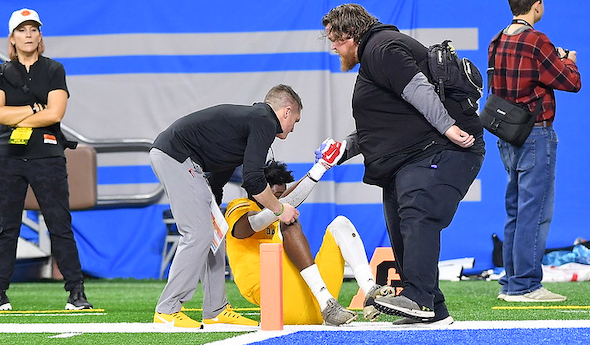
If you're an athlete, chances are you'll require specialized care from a health professional during your career.
 Confused about the differences between athletic trainers, sports medicine physicians and exercise physiologists, among other experts? You're not alone!
Each of these professionals has different levels of training, expertise and certifications, but the care they provide often overlaps. That's one reason why they often work together.
Sports Professionals Defined
Caring for athletes isn't always clear-cut. In fact, most athletes require a full team of professionals working in concert to stay at the top of their game. Yet confusion remains about which professionals you need to see for training, injury prevention, and recovery and treatment after an injury.
Each type of professional has its own set of experience, training and certifications. Here’s how they measure up:
· Sports medicine doctor: Sports medicine physicians are typically trained in orthopedic surgery, primary care or emergency medicine. These professionals have medical degrees as well as specialized training in sports medicine, including the prevention and treatment of injury. In addition to caring for conditions ranging from concussion to head colds, sports medicine physicians also focus on helping people return to sports safely and effectively after illness or injury.
· Athletic trainer: Athletic trainers take care of athletes from prevention through rehabilitation. In collaboration with a physician, these professionals offer insights that help minimize risk and prevent injuries. They evaluate athletes and provide immediate care and treatment, sometimes even on the sidelines. They also provide rehabilitation and reconditioning after an injury or illness.
· Exercise physiologist: Exercise physiologists study the effect of exercise on the muscular, cardiovascular, and sympathetic and parasympathetic nervous systems. They examine functional capacity and strength due to endurance training or strength training. These professionals may also test athletes for VO2max (your oxygen volume while training) and body composition (the ratio of fatty mass to lean mass).
· Physical medicine and rehab physician: These professionals treat a variety of medical conditions that affect the brain, spinal cord, nerves, bones, joints, ligaments, muscles and tendons. They take the whole body into account to pinpoint problems and enhance performance without surgery.
· Physical therapist: Physical therapists diagnose and treat individuals of all ages with conditions that limit their ability to move and perform daily activities.
Other Specialized Professionals Who Care for Athletes
In addition to the health care professionals described above, athletes may meet with a host of experts, including:
· Nurses and medical assistants
· Occupational therapists
· Cardiologists
· Neurologists
· Behavioral health specialists
· Dietitians
· Complementary medical practitioners, such as acupuncturists and chiropractors
None of these individuals are "fitness professionals," a term nearly anyone can use to describe a range of professional activities. Rather, these sports medicine experts are part of a comprehensive team that includes at least one physician. They are each licensed by the state to provide specialized care to athletes.
Personal trainers, on the other hand, focus on helping people find their way around the gym, hold them accountable to achieve their goals and help new exercisers and seasoned fitness enthusiasts stick to a workout regimen.
If you're an athlete, you need a team of health professionals who can provide comprehensive care to reach your highest potential.
Christina Chapski, Ed.D., AT, ATC, is the Director of Athletic Training & Community Outreach with Henry Ford Sports Medicine.
Want to learn more? Henry Ford Health System sports medicine experts are treating the whole athlete, in a whole new way. From nutrition to neurology, and from injury prevention to treatment of sports-related conditions, they can give your athlete a unique game plan.
Visit henryford.com/sports or call (313) 972-4216 for an appointment within 24 business hours.