


Classes Still Create Hoosier Hysteria
July 27, 2017
By Rob Kaminski
MHSAA benchmarks editor
This is the fourth part in a series on MHSAA tournament classification, past and present, that will be published over the next two weeks. This series originally ran in this spring's edition of MHSAA benchmarks.
Twenty years ago, Bloomington North High School won the Indiana High School Athletic Association boys basketball championship, defeating Delta 75-54 at the RCA Dome in Indianapolis.
The date, March 22, 1997, is at the same time revered and disdained by traditionalists in the state who saw it as the last schoolboy championship game the state would ever host.
That’s how devout the game of basketball, particularly interscholastic basketball, had become in the Hoosier state during the 87 years a state champion – one state champion, to be precise – was crowned.
Following that 1997 season, the IHSAA moved to a four-class system for its roundball tournaments, like so many of its state association counterparts had done years earlier.
It would be shocking to find more than a small percentage of current high school basketball players around the country unfamiliar with the iconic movie Hoosiers, even though the film is now more than 30 years old.
And, the storyline for that blockbuster unfolded more than 30 years prior to its release, when small-town, undermanned Milan High School defeated Muncie Central High School 32-30 in the 1954 IHSAA title game.
Perhaps it’s because of the David vs Goliath notion, or the fame of the movie that replaced Milan with the fictional Hickory and real-life star Bobby Plump with Hollywood hero Jimmy Chitwood, or the simple fact that Indiana had something other states didn’t.
Whatever the reason, plenty of opposition remains to this day to basketball classification in the state.
The fact is, the small rural schools were regularly being beaten handily by the much larger suburban and city schools as the tournament progressed each season.
Small schools also were closing at a rapid rate following the state’s School Reorganization Act in 1959, as students converged on larger, centralized county schools. From 1960 to 2000, the number of schools entering the tournament dropped from 694 to 381, and in 1997 a total of 382 schools and 4,584 athletes began competition at the Sectional level (the first level of the IHSAA Basketball Tournament).
It was at the entry level of the tournament where school administrators felt the pain of the new class system, but not necessarily for the same nostalgic reasons as the fans who either attended or boycotted the tournament.
At the Sectional round of the tournament, the IHSAA was culling just 2 percent of the revenue, with the participating schools splitting the balance. So, when Sectional attendance dropped by 14 percent in that first year of class basketball, many schools realized a financial loss. It was money they had grown to count on in prior years to help fund various aspects of the department.
Schools cumulatively received more than $900,000 from Sectional competition in 1998, but that total was down from more than $1 million in the last year of the single-class tournament.
Yet, the current format provides a great deal more opportunity and realistic chances at championship runs for schools of all enrollments.
To date, 60 additional teams have championship or runner-up trophies on display in school trophy cases around Indiana.
That was the mission in front of then-IHSAA commissioner Bob Gardner (now National Federation executive director) once the board made its decision: to give thousands more student-athletes the opportunity for once-in-a-lifetime experiences.
As any statistician knows, figures can be manipulated to tell any side of a story. Declining attendance in year one of class basketball is such a number.
The truth is tournament attendance had been on a steady downward spiral since its peak of just over 1.5 million in 1962. By the last single-class event in 1997, the total attendance was half that.
The challenge then and today, as it is for all state associations, is to find that delicate balance for those holding onto tradition, those holding onto trophies, and the number of trophies to hand out.
Editor’s Note: Stories from the Fort Wayne Journal Gazette in 1998 and from a 2007 issue of Indianapolis Monthly provided facts in this article.
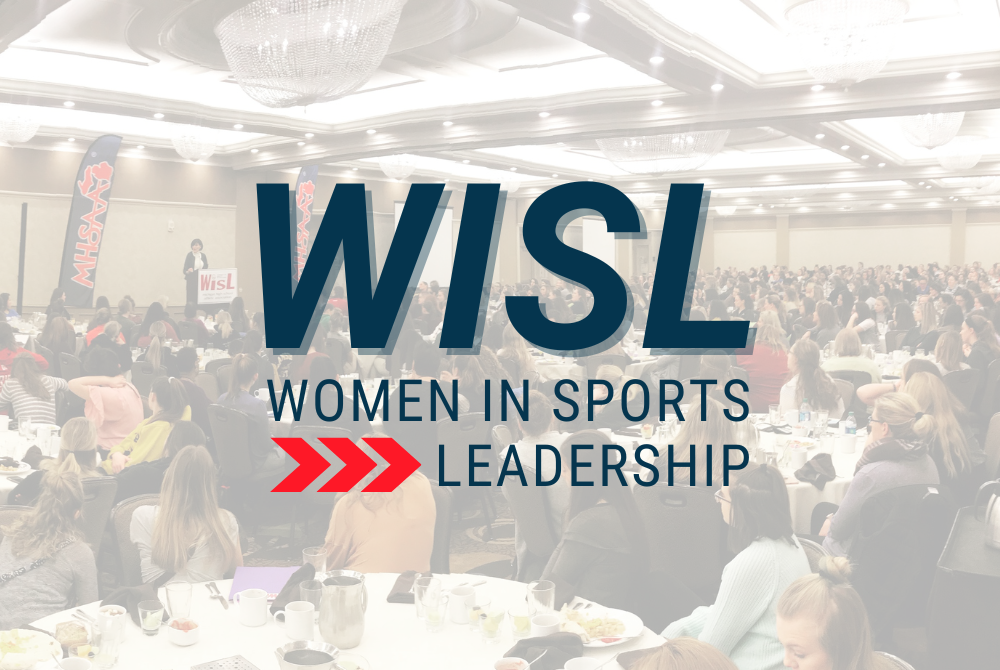
MHSAA Women In Sports Leadership Conference to Celebrate Multiple Milestones
By
Geoff Kimmerly
MHSAA.com senior editor
September 14, 2022
A pair of milestones will be celebrated by the Michigan High School Athletic Association during this year’s Women In Sports Leadership Conference, to be presented Sunday, Oct. 9, and Monday, Oct. 10 at Crowne Plaza Lansing West for 600 participants, most of them high school female student-athletes from across the state.
A theme of “Power of the Past – Force of the Future” will recall opportunities created during the 50 years since the enactment of Title IX in 1972. This also will be the 25th WISL Conference, which remains the first, largest and longest-running program of its type in the country.
This year’s edition again will feature three keynote speakers and a variety of workshops. The opening address will be delivered by Ashley Baker, who serves as the chief diversity, equity and inclusion (DEI) officer at Michigan State University. Baker, originally from Pontiac, earned bachelor and master’s degrees from Bowling Green State University and a doctorate in sport management and policy from the University of Georgia. She came to MSU in December 2020 from Xavier University (Louisiana) where she most recently had served as assistant vice president for student affairs and chief inclusion officer/deputy Title IX coordinator.
First-year Spartans softball coach Sharonda McDonald-Kelley will speak during the Oct. 9 evening general session. She coached Campbell University (N.C.) to back-to-back NCAA Tournament appearances and was a four-time all-Big 12 selection as a player at Texas A&M, appearing in the College World Series before playing professionally for seven years. McDonald-Kelley was named Big South Conference Coach of the Year in 2021, and previously also coached professionally and as associate head coach at Texas Tech University after serving as an assistant for multiple prestigious college programs.
University of Michigan women’s basketball coach Kim Barnes-Arico will speak during the morning session Oct. 10. She led the Wolverines last season to their first NCAA Tournament Elite Eight and is nearing 500 career victories, having won a U-M program-record 218 during her 10 seasons. She’s a two-time Big Ten Conference Coach of Year and was a semifinalist this past season for the Werner Ladder Naismith Coach of the Year honor. Michigan is her fifth college coaching stop; she came to Ann Arbor after 10 seasons at St. John’s. She played basketball one season at Stony Brook University (N.Y.) and then her final three including two as captain at Montclair State University (N.J.).
Workshops offered during the WISL Conference include topics on coaching, teaching and learning leadership; sports nutrition and performance, and injury prevention; and empowerment and goal-setting. Presenters are accomplished in their fields and represent a wide range of backgrounds in sport.
A complete itinerary is available on the MHSAA Website.
The Oct. 9 evening general session also will include recognition for the 2022 Women In Sports Leadership Award winner – recently-retired Livonia Stevenson athletic director Lori Hyman. A basketball standout at MSU during the second half of the 1970s, Hyman went on to coach college basketball for 17 years and then serve as a highly-regarded athletic director for 27 years including the last 22 at her alma mater Stevenson.
Follow the #WISL hashtag on Twitter and Instagram to learn more about the conference’s activities.