


The Best Coach Ever
February 5, 2013
In the fall of 2004, another of the inductees with my father to the first-ever Hall of Fame Class of Stevens Point (WI) Area Senior High School was Rick Reichardt, arguably the best male athlete the community ever produced. Rick played four sports in high school, both football and baseball at the University of Wisconsin in Madison, and on two Major League Baseball teams.
In his own acceptance speech that evening in 2004, Rick said that my dad was the best coach he ever had. Well, Dad was merely Rick’s Little League baseball coach.
That’s remarkable in and of itself. What’s more remarkable is that Dad never played organized baseball. He never developed the skills of the game. Yet Rick said Dad was his best coach ever.
Eventually, I’ve figured out Dad’s “secret of success.” Dad didn’t coach a sport. He coached people.
Our just-published winter issue of benchmarks is devoted to coaches like this and to the coaching profession. Read it here.
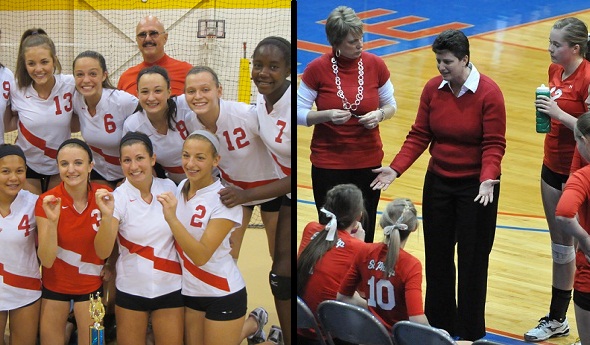
Volleyball Mentors Achieve Milestones
September 26, 2012
Over the last three weeks, two of Michigan's most successful volleyball coaches ever moved further up the all-time list with milestone victories.
On Sept. 8, Clinton Township Chippewa Valley coach Bill Rice became the fifth volleyball coach in MHSAA history to win 1,000 matches when his team defeated Lutheran Westland at the University of Michigan-Dearborn Invitational. And Battle Creek St. Philip's Vicki Groat became the 12th coach to win 800 matches, earning her monumental win against Jackson Christian on Thursday.
Groat has coached the Tigers since 1998, when she took over for her mother Sheila Guerra. At St. Philip's current pace -- it is again considered the favorite to win the MHSAA Class D championship this fall and has claimed six straight -- she could match her mom's 862 career wins during the 2012 season. St. Philip is 35-1-1 this season.
Rice began at Chippewa Valley in 1980 and has led his team to four league and 11 Class A District championships, plus back-to-back 50-plus win seasons from 2002-04. His team is 10-13-2 this fall.