

Lessons Passed Down the Coaching Tree
By
Geoff Kimmerly
MHSAA.com senior editor
July 18, 2013
Lessons, like legends, are meant to be passed from generation to generation.
And just as parents hand them down to their children who then do the same, coaches teach athletes the best of what they learned as athletes themselves. Some of those athletes then become coaches as well, and in turn, educate a next group of teenagers growing up in part through their participation in sports.
As we begin to turn our eyes toward another school year beginning next month, here are a few favorite lessons taught by four recent participants of the MHSAA’s Coaches Advancement Program – with back stories on how they learned those lessons themselves and explanations of why passing them on continues to be important.
We are family
Steve Brooks
Ypsilanti boys basketball
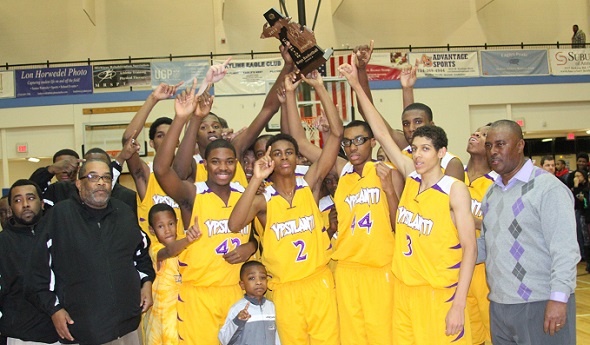
Bio: Brooks led the Ypsilanti High School program the last 10 seasons, guiding the Phoenix last winter to its first Regional championship since 1981. He has been selected as the first boys basketball coach for the newly-formed Ypsilanti Community Schools, a merger of the former Ypsilanti and Willow Run districts. Previously, he coached three seasons at Inkster and also led that program to the Quarterfinals.
Lesson learned: Brooks was in fourth grade when he and a friend happened to ride their bike past Flint Northern’s football practice field during one of coach Fred Crawford’s training sessions. The noise and excitement and especially the defensive coaches yelling first caught the kids’ attention; Brooks and his friend ended up watching through the fence until Crawford approached and asked if they’d like a closer look. “He said, ‘Hey, you’re going to be a Viking one day, aren’t ya?’ It was so simple. But it made an impression on me as a young man, the pride and tradition of going there,” Brooks said.
Brooks’ family later moved to a neighborhood in Flint Northwestern’s district. But when the school boundary was redrawn before his junior year – and he had his choice of staying or attending Northern – Brooks remembered saying he would be a Viking one day and made the switch. Building togetherness remains a major focus of Brooks’ Ypsilanti program today, 49 years after Crawford first invited him into Northern’s football family.
Lesson taught: “At any time, our players can come in and talk about personal things and feel like they can let stuff out and it won’t go further than the people it’s entrusted to,” Brooks said. Making a connection to players begins early through his middle school coaches and remains key to building that familial trust.
It’s a philosophy that goes to Brooks’ core. “When you’re starting to coach nephews and younger brothers of players you’ve had, it’s that same type of feeling and promoting of family,” Brooks said.
Do the right thing
Heather Prentice
Portage Northern competitive cheer
Bio: Prentice has coached Portage Northern the last eight seasons and guided the 2007 and 2008 teams to the MHSAA Finals. Total, she’s coached cheer since 1986, including previous tenures at Climax-Scotts and Laingsburg.
Lesson learned: Prentice learned more from what she felt her high school experience lacked. She loved cheering – but decided as a coach to take an active role in the lives of her athletes. “I’ve matured the older I’ve gotten, and I think what’s become more important the older I’ve gotten is putting more of the focus on what I want my kids to leave with,” Prentice said.
“I’m not a parent, and I’m a person in their lives for a very short time,” she added. “But it’s a very significant period in life, and I try to carry myself as I would want them to remember me.”
Lesson taught: To that end, Prentice focuses on mixing plenty of fun with the hard work and lessons she teaches. Integrity ranks high on that list.
She’ll point out during workouts that if an athlete does 23 jumping jacks instead of 25, only that girl will know. But cutting corners, if it continues, tends to catch up with a person.
The payoff is finding out those lessons have paid off.
“The great thing about coaching for so long is you get letters or emails back from kids; ‘I thought of you today when I was disciplining my 3-year-old child,’ things like that. Or, ‘I went in for a job interview and they asked for one of my qualities. And I said I have integrity. I do have integrity, and you taught me that.’ Those are the cool moments,” Prentice said. “They really did hear me; they did hear what I am saying.
Accept responsibility
Duane Enderle
Birch Run girls and boys soccer
Bio: Enderle has coached Birch Run’s girls program since its start, and this spring led the Panthers girls to the District Final for the second time during the program’s six-season history. He also coached the boys for four seasons before taking the last two off, but will return to their sideline this fall.
Lesson learned: Enderle was a sophomore starter on his South Hagerstown, Md., team during one of the first seasons under eventual longtime coach Mike Tesla. At one point that season, Enderle didn’t make a Saturday practice – and during the next Monday’s game never left the bench.
“I learned at an early age it doesn’t matter how good you are. There’s always a consequence,” Enderle said.
Lesson taught: He’s noticed the last few seasons, both on the high school and club soccer fields, a growing number of players unable to control their emotions. “They get yellow cards and come out of a game for 10 minutes, and if it’s one of the good players it ends up hurting the team,” Enderle said.
He said this year’s Birch Run team saw a different side of him as he pushed accountability a little bit harder. It’s a lesson that doesn’t lose significance, even as athletes change over the years and push boundaries in different ways.
“That’s the biggest thing I try to pass on to them, their own self-responsibility and accounting for all of their actions,” Enderle said. “Everything they do always has consequences.”
One for all
Kim Crum
Mattawan girls lacrosse
Bio: Crum is a 2002 Mattawan graduate and played three seasons for the highly-successful softball program led by coach Alicia Smith. Crum just finished her third season coaching the school’s girls lacrosse team after previously coaching the Kalamazoo United team for three seasons.
Lesson learned: Being part of a team is a full commitment to those teammates, something Crum works to instill in her players each spring. She learned that in part as an athlete under Smith – who last season led Mattawan to its second MHSAA championship in three seasons. “With a group of teenage girls, a group of any teenagers for that matter, they form cliques and opinions of people before they get (on a team),” Crum said. “When we were on that team, there were people that didn’t agree, didn’t get along. But when we set foot in practice, for a game, we were part of a team and it didn’t matter what happened outside of there during the day. I try to tell the kids that now.”
Lesson taught: Instead of finishing practices with “1-2-3-Wildcats,” the team’s mascot, Mattawan closes with “1-2-3-Family!” Crum’s emphasis on “team commitment” also has grown through working with her assistant Matt Stephens, the school’s football coach during the fall.
Playing a high school sport often means seeing those coaches and teammates as much or more than family during that three or fourth-month span. Some of Crum’s lacrosse players have played together in the past or together on other sports teams. But she and Stephens are quick to remind them that each team, each season, is a new group with new dynamics to learn.
“Every time we do something, we look at it as how it affects the group,” Crum said. “We have to figure out how each other work. ... Be patient. By the end, we’ll figure things out.”
PHOTO: Ypsilanti boys basketball coach Steve Brooks (far right) celebrates with his team this March after leading the Phoenix to its first Regional title since 1981. (Photo courtesy of Randy Castro, Ann Arbor Journal.)

Shores Star Walker Continues Drive for Hoops Greatness as College Coach
By
Scott DeCamp
Special for MHSAA.com
August 8, 2024
NORTON SHORES — Dribbling, passing, and shooting are prerequisites for basketball players, and Muskegon Mona Shores alumna Jordan Walker did them quite well.
 But for Walker, determination has been perhaps her most important trait.
It helped her win the Michigan Miss Basketball Award during her senior season in 2017 after suffering an ACL injury prior to her junior year with the Sailors. It’s also allowed her to continue an ascent in the basketball world.
Time-management habits and prioritization have been instilled in all three of Jarvis and Danielle Walker’s three children.
“There’s a special drive with these (Walker) kids,” said Brad Kurth, who was Jasmyn and Jordan Walker’s basketball coach at Mona Shores.
Jordan Walker earned two master’s degrees over six years of college while juggling the demands of being a Division I basketball player at Western Michigan University and University of Tennessee. The 25-year-old’s playing days appear to be finished, but she’s still pursuing her basketball dreams as an assistant coach at the D-I level.
Walker spent the 2023-24 season as a first-year assistant at Mercer University. This March, Mercer head coach Susie Gardner announced her resignation, meaning Walker had to seek opportunities elsewhere.
In typical Walker fashion, she landed on her feet, and it didn’t take long. In May, she was hired as an assistant coach at Jacksonville University. Her responsibilities include player development with point guards, academics, community service, and housing.
“(The Mercer position) kind of fit exactly where I was at perfectly,” Walker said during a break while on the road recruiting for Jacksonville recently. “I was really thankful for that opportunity and thankful for my circle and my village thinking of me at that time and putting my name out there because it honestly was the perfect situation for me.
“At the Final Four, you meet people and you meet a lot of coaches and you network, you build relationships. There was one coach I saw on the road a ton throughout the year and I saw at the Final Four and he knew the situation. At that point, (Jacksonville) didn’t have any openings, and later on it opened up and they gave me a call. At that point, it was getting to the interview and what the position holds and what it would look like. Again, it was another situation that was perfect for where I was at in life and what I wanted to do and the path that I’m on, so it was another no-brainer for me to head to Jacksonville.”
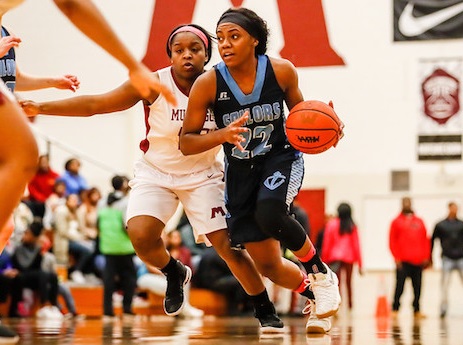
At Mona Shores, the 5-foot-7 guard broke the school’s all-time scoring record — one that stood 22 years — with 1,365 points. During her Miss Basketball season, Walker averaged 22.1 points, 8.5 rebounds, and 5.5 assists per game.
At the collegiate level, Walker amassed more than 1,300 points, 700 rebounds, and 400 assists. In two seasons with WMU (she lost one season with another ACL injury), she started 54 of 64 games and averaged 11.8 points, 4.9 rebounds, 2.2 assists, and 1.8 steals. As a graduate transfer at Tennessee, she started 77 of 96 games and averaged 6.3 points, 4.1 rebounds, 3.0 assists, and 1.1 steals while helping the Lady Vols reach the NCAA Tournament three times.
 According to Walker, the foundation for her success began in the home and in the Mona Shores school community.
“Honestly, my memories with Mona Shores I truly cherish because it’s such a special time, a special place. Playing high school ball, I tell people AAU and high school ball is some of the most fun times that you’ll have playing. Obviously, I enjoyed my college time as well — I did six years,” she quipped. “But I definitely enjoyed my time at Mona Shores. Just the people that were there because it was a truly special place.
“Again, I talk about the village a lot because it does take that and (the) Mona Shores community, they really just poured into me and supported (me) and that’s something that I was always grateful for. Especially my head coach there, Brad Kurth. He did an amazing job with us and preparing us, not only for the games in high school but for the next level as well as far as player development and scouts and going over stuff like that so when I got to college, it wasn’t my first time seeing a scout, it wasn’t my first time doing a film study. Those things I always take with me.”
Of course, with the Walker family, it’s always been books before basketball.
While at Mona Shores, Jordan Walker served on the MHSAA’s Student Advisory Council and earned one of the prestigious MHSAA/Farm Bureau Insurance Scholar-Athlete Awards as a senior; only 32 honorees are selected annually. Walker earned her bachelor’s degree in political science and minor in communications from WMU in 2020, taking only three years. At Tennessee, she completed her first master’s degree in 2022 in business administration (MBA) with a concentration in entrepreneurship and innovation; she finished her second master’s degree in 2023 in the Agricultural Leadership, Education and Communications (ALEC) Department with a concentration on name, image, and likeness (NIL) and women’s leadership.
When Walker suffered the ACL injury at WMU, which sidelined her for a year, it allowed her to get ahead in the classroom. She had 19- and 20-credit semesters that year. In her third and final year at WMU, she was taking 21 credits in a semester.
“Academics in our house was nothing to play around with,” Walker said. “If you didn’t have your academics right — in the summer, if you didn’t finish your workbooks, if you didn’t read your books, you were not playing basketball. Academics were a big thing, and I thank my parents for that because they instilled that at a young age.
“It came down to time management, which kind of goes back to what I was saying about the foundation of your high school and what you do in high school and the habits that you form because that’s ultimately going to carry you throughout college. Of course, you can tweak it and gain new things, but I think Mona Shores did a great job of setting me up academically so that when I got to college, some of the courses that I took, I was able to comprehend at that level and take multiple classes and high-credit semesters and be able to graduate early, which led to me being able to get my (two) master’s (degrees).”
All three of the Walker siblings continue to achieve at a high level on and off the court.
Jasmyn Walker, the eldest of the siblings, was a first-team all-stater at Mona Shores and a Division I basketball player at Valparaiso and Western Michigan. She is in her first season as an assistant coach at George Washington University after previous stops at Purdue-Fort Wayne, Butler, Ferris State and Davenport.
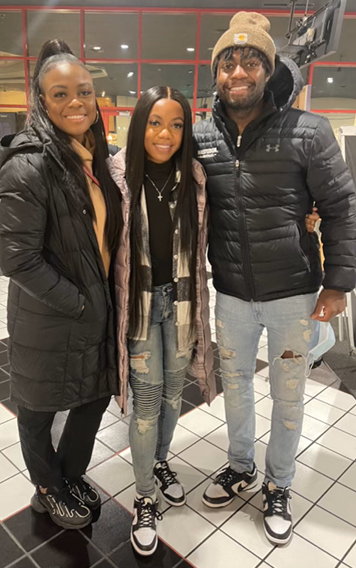 Jarvis Walker II, the youngest of the siblings, was a first-team all-stater at Muskegon High School and is a graduate student playing basketball for Indiana University-Indianapolis after starting his collegiate career at Purdue-Fort Wayne.
The Walker siblings are each other’s biggest fans.
“I’m immensely proud of them,” Jasmyn Walker said. “Jordy and Jay have gone above and beyond to reach their goals. I’ve seen the work they’ve put in, the time invested, and sometimes the lows that come with chasing dreams. They’ve pushed themselves at every turn.”
Jarvis Walker II said that sister Jordan is somebody who will “figure it out no matter the circumstances.”
He believes that each stop along her journey has afforded her great experience and deeper knowledge that will benefit her not only in basketball but in life.
“Grind, grind, grind — she is one of the hardest-working people I know,” he said about his sister. “It has motivated me to be better in every aspect of life from school to basketball and day-to-day interactions and how I go about certain things.”
In many respects, Kurth feels like a proud papa to the Walkers as he’s coached Jasmyn and Jordan and has spent countless hours around the family.
“All three of the kids — I mean, Jarvis, Jordan, and Jasmyn — I could never be prouder of a group of kids,” Kurth said. “You talk about the full package: Basketball is one part, but every single one of them shows academic excellence, every single one of them shows extreme character. Those are things that are timeless. Basketball is a young person’s sport. Coaching you can do a long time, but your playing days are limited. I think I’ve seen a lot of kids sacrifice everything, including their character, including their academics, to do basketball and they shouldn’t. Character should be at the top. These three kids, it’s just matchless.”
Included in Jordan Walker’s long resume is her active participation in leadership programs such as “So You Want To Be a Coach” and “Above the Rim Summit.”
Walker aspires to be a collegiate head coach. She’s doing all she can to keep climbing that ladder.
With her second master’s degree specializing in NIL and that being such a large part of college athletics now, she appears to have a leg up on her competition.
“NIL can look like a bunch of different things, and I think that when choosing a school and what that looks like, make sure that outside of NIL it meets all of your expectations,” Walker said. “Money and brand deals and all of that may look enticing, but still don’t fall on your standards of what your program you want to have has.
“It’s the academics, and if they have your major, and it’s the culture and it’s your relationships with your coaches and your teammates. Make those be your tops and NIL be a plus. I think that that’s the biggest thing.”
2024 Made In Michigan
August 6: MCC's Glover Fills Key Role as Athletic Trainer for Super Bowl Champions - Read
August 1: Lessons from Multi-Sport Experience Guide Person in Leading New Team - Read
July 30: After Successful 'Sequel,' Suttons Bay's Hursey Embarking on Next Chapter - Read
July 24: East Kentwood Run Part of Memorable Start on Knuble's Way to NHL, Olympics - Read
July 22: Monroe High Memories Remain Rich for Michigan's 1987 Mr. Baseball - Read
July 17: Record-Setting Viney Gained Lifelong Confidence at Marine City - Read
July 11: High School 'Hoop Squad' Close to Heart as Hughes Continues Coaching Climb - Read
July 10: Nightingale Embarking on 1st Season as College Football Head Coach - Read
June 28: E-TC's Witt Bulldozing Path from Small Town to Football's Biggest Stage - Read
PHOTOS (Top) At left, Jordan Walker stands with her class on the Breslin Center floor during the 2017 MHSAA/Farm Bureau Scholar-Athlete Awards ceremony, and at right in 2023 after receiving her second master's degree from University of Tennessee. (Middle) Walker makes her move toward the basket during a game her senior season at Muskegon Mona Shores. (Below) Jordan Walker, middle, takes a photo with sister Jasmyn and brother Jarvis. (Graduation and family photos courtesy of the Walker family; Mona Shores basketball photo by Tim Reilly.)