


Teaching ABC's of Pressure Situations
October 30, 2013
 By Eric Martin
MSU Institute for the Study of Youth Sports
Coaches have seen the signs: Athletes having too much or not enough energy prior to a game, quickening breathing, sweating more than usual, being unable to focus on important details, and having their minds wander from the present to “what if” scenarios and past mistakes.
Athletes deal with pressure in many ways. Although some handle it well, many do not have the tools to perform to their full abilities in these situations. Most athletes place a high importance on succeeding in sport, and when athletes reach regional, district, or state championships, the pressure they feel may become overwhelming.
How athletes handle this increased pressure can often mean the difference between winning and losing. Therefore, helping athletes deal with it is something coaches should consider prior to athletes encountering these high-stakes situations.
Unfortunately, there is no magic elixir for helping your athletes work under pressure. But if these ABC’s of pressure situations are followed, your athletes will be much better equipped to cope, and the chances of their performance levels dropping significantly will be reduced.
1. Act the Part
How you as coaches act influences your athletes. For better or worse, athletes notice your emotions in response to these situations and take cues from how you handle pressure.
You are a demand on your players’ attention – you can add or reduce your players’ perceived stress by how you act. Understanding the demand you place on players requires self-awareness. How do you respond when a key call goes against you? Do you have nervous habits that athletes may notice? What messages are you providing to your athletes – both verbally and non-verbally? Athletes pick up on these non-verbal cues, so you must be aware of how you respond to these situations.
It is important to remember emotions are not always negative – rather acting differently than normal can be a signal to your athletes that you are stressed. Strive to be consistent in your actions – whether you are coaching during a preseason match or championship contest. These situations are stressful for you too, but you need to be the constant your athletes look to for stability.
2. Breathing – Remember to do it
It seems like a simple thing, but when athletes’ emotions are running high, they forget how to breathe – or, at least, forget how to breathe properly. Worse, they often think they are breathing normally but don’t notice breaths are becoming shorter and shallower. Teaching athletes to breathe properly when not in pressure situations will help them have the tools to rely on when they encounter more intense scenarios.
For proper breathing, athletes need to do so from the belly and not the chest. The pace of this breathing should be 6-2-7; that is, have athletes take a deep breath from the abdomen for six seconds, hold for two seconds, and then finally slowly exhale completely for seven seconds. This breathing strategy is ideal for pregame situations to quiet nerves and help athletes get ready to play, but a condensed version (3-2-3) can also be used for quick breaks in the action like a timeout or court change.
3. Control the controllables
During times of high pressure, athletes sometimes feel they do not have control over their own performances. It is important to help athletes focus on things they can control and not worry about those that cannot be changed or are outside their influence.
Instead of athletes dwelling on aspects that are out of their control like unusual game times for championship finals or a referee’s bad call, help them focus on completing their warm-up preparations and how they can respond to poor calls. Helping focus athletes’ attention on things they can control will help them better handle pressure situations and leave them feeling less helpless
Athletes’ emotions are typically out of their control, but how they view them and respond to these emotions are under their control. Author and preacher Charles R. Swindoll said, “Life is 10 percent what happens to you and 90 percent how you react to it!” Be sure your athletes know how to respond when difficult situations arise.
Conclusion: Fearlessness is an assembly
Not all athletes react to pressure situations in the same manner, but all athletes can benefit from these simple suggestions. Remember to ACT THE PART of how you want your athletes to act, teach your athletes proper BREATHING techniques, and help athletes focus on CONTROLLING THE CONTROLLABLES.
Good preparation is the key to performance. Increase self-monitoring and give athletes the tools to succeed in pressure situations; they, in turn, can be in a better position to succeed. However, like any skills, they must be practiced accordingly, and one session will not solve all issues. Devote the time to train athletes in these skills, and when the need arises they will have them ready to use.
Good luck this season!
Martin is a third-year doctoral student in the Institute for the Study of Youth Sports at Michigan State University. His research interests include athlete motivation and development of passion in youth, sport specialization, and coaches’ perspectives on working with the millennial athlete. He has led many sessions of the MHSAA Captains Leadership Clinic and consulted with junior high, high school, and collegiate athletes. If you have questions or comments, contact him at [email protected].
Nurturing Our Lower Level Programs
May 15, 2014
By John E. “Jack” Roberts
MHSAA Executive Director
When I’ve been faced with the most difficult choices as to different courses of action for the MHSAA, I’ve tried to face up to this reframing of the issue: “If we were creating the MHSAA for the first time today, would we do this, or would we do that?”
For example, would we or would we not limit coaches’ contact with athletes out of season? Would we have a 90-day period of ineligibility for transfer students or would it be 180 days?
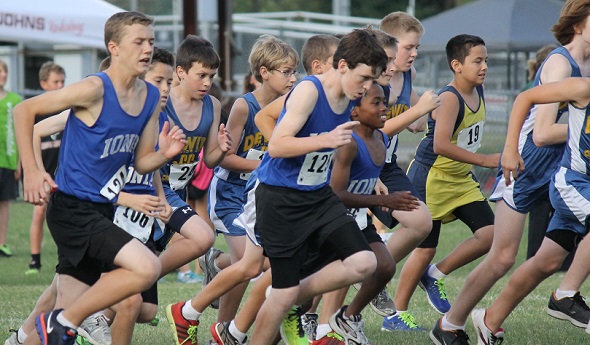
There are other examples of such “either, or” questions I could provide, but none is as difficult or defining as this: Should school sports under the MHSAA’s auspices provide more opportunities for 7th- and 8th-graders and new opportunities for even younger students?
I won’t be coy about what I think our answer should be. I haven’t always felt this way, and I recognize it is a different opinion than some who are quoted in this publication; but today it’s my belief that if we were creating the MHSAA for the first time in 2014, the MHSAA would allow more contests and longer contests for 7th- and 8th-graders, and the MHSAA would have competition policies and programs for younger middle schoolers too.
I believe this is what parents want for their children and what students want for themselves; and I believe, within reason, that the better we serve these students in their junior high/middle school years, the stronger high school sports will be and the better these programs will support the educational missions of schools.
I believe we must begin to serve middle school students more comprehensively, and that our doing so today is the best hope we have for retaining comprehensive programs for high school students tomorrow. Not only does the lower profile and pressure of lower level programs nurture the highest ideals of educational athletics, they provide our highest hope for preserving those ideals at the high school level.
The Lasting Impact of First Impressions
The over-arching question before us is how to maintain policies that encourage multiple sport experiences for students at the junior high/middle school level while at the same time adjusting those policies in terms of grade level served and the numbers and lengths of contests allowed in order to be more attractive to junior high/middle school parents and to school districts which desire additional competition opportunities in the school setting for students prior to high school.
There is a good healthy discussion in our midst about the scope of junior high/middle school athletics – how much should occur and how young it should commence; and the result of these discussions may have long-lasting effect on students, schools and the MHSAA.
Here are two central issues:
1. Contest Limits
Many people over many years have contributed to developing the current season limitations for the number of contests permitted by MHSAA member junior high/middle schools. These good people have believed in a philosophy of sports at this level that encourages students to try multiple sports.
“Kids haven’t fully matured yet,” they say. “Kids haven’t been exposed to some sports yet. They don’t know what they might like or be good at. So let’s have policies and programs that encourage new opportunities and experiences at this level.”
The season limits that have been put in place allow some junior high/middle schools, or their entire leagues, to fit four distinct seasons in a nine-month school year, consistent with this over-arching philosophy to encourage these students to try new things and learn.
There is another educationally grounded and equally astute group of administrators and coaches who are concerned that the current limits are too severe in comparison to non-school youth sports programs. For example, community/club basketball or soccer programs may schedule 15 or 18 or more games per season versus the MHSAA limit of 12 at the junior high/middle school level.
These folks think these restrictive limitations create a disincentive for kids to play school sports, and that many of those who have no place in junior high/middle school sports have no interest later in high school sports.
2. 6th-Graders
Historically, the popular opinion among educators has held that 7th and 8th grade is early enough for schools to provide competitive athletics, early enough to put youth into the competitive sports arena, and early enough to pit one school against another in sports.
Today, however, many educators and parents point out that such protective philosophies and policies were adopted about the same time “play days” were considered to be the maximum exertion females should experience in school sports. Some administrators and coaches argue that both our severe limits on contest limits at the junior high/middle school level, and our refusal to serve 6th-graders, are as out of date and inappropriate as play days for females.
Today, in nearly four of five school districts with MHSAA member schools, 6th-graders go to school in the same building with 7th- and 8th-graders. But MHSAA rules don’t allow 6th-graders to participate with and against 7th- and 8th-graders. In fact, the MHSAA Constitution doesn’t even acknowledge that 6th-graders exist.
Today, in many places, 6th-graders have aged-out of non-school, community sports, but they are not permitted to play on MHSAA junior high/middle school teams.
Last school year, 50 different school districts requested this rule be waived for them, and the MHSAA Executive Committee approved 46 of 50 waivers, allowing 6th-graders to compete on 7th- and 8th-grade teams. During 2011-12, 37 of 40 requests for waiver were approved, in all cases for small junior high/middle schools. Many of these schools want, and some of them desperately need, these 6th-graders to fill out junior high/middle school teams.
Young people are starting sports much younger today than 100 years ago when the MHSAA was created. Younger than even 50 years ago when the MHSAA was incorporated. If the MHSAA were created today to serve any students before 9th grade, I’m certain it would not leave out 6th-graders who are walking the same halls with 7th- and 8th-graders, and who have been playing competitive sports almost since the first day they started walking at all.
Eyes on the future
The most important thing we can do to enhance high school sports is to grow junior high/middle school sports programs. The earlier we disconnect young people from non-school sports and engage them in school-sponsored sports, the better our chances are of keeping high school athletic programs healthy, and the better our prospects are of keeping both participation rates and conduct standards high.
School sports are in competition for hearts and minds of young people. Our competition includes movies, jobs, cars, video games, boyfriends and girlfriends and club sports ... especially club sports. School sports needs to market itself better, and part of better is to be available earlier – much sooner in the lives of youth. More contests at the junior high/middle school level and more opportunities for 6th-graders should be parts of our marketing strategies on behalf of educational athletics generally.
For at least 50 years there have been predictions by people outside of our member schools that the system of school-sponsored sports that is almost unique to the United States would someday give way to the system of most countries where youth sports is provided by non-school community groups and private athletic clubs. Some people challenge school-sponsored sports on a program basis – for example, that competitive athletics creates a distraction to the core educational mission of schools. Others may challenge school-sponsored sports on a financial basis – that interscholastic athletics compete for the limited resources communities have to support their schools.
Today there also exists among our member schools a small percentage of administrators who have come to their leadership roles without involvement in school sports and who either desire and believe that interscholastic sports will be moved from schools to communities or who do not want but predict that such will occur as resources for schools continue to shrink.
I believe this is more likely to happen, or to happen sooner, if we do not change our approach to junior high/middle school sports. If we continue to restrict 7th- and 8th-graders to so few contests of such limited length compared to what those students have in non-school sports, and if we continue to offer nothing for younger students, we essentially and effectively force these students to non-school sports.
It is an often cited statistic that between 80 and 90 percent of all young people who ever begin playing competitive athletics stop playing before they reach the age of 13, meaning the vast majority of young people never, ever are involved in school programs. Thus, it is no mystery why people question the future of school sports. We’re doing nothing to make programs available to them. They have no experience in them.
Our restrictive and possibly outdated policies and procedures regarding contest limits and lengths and the age at which we begin to serve junior high/middle school students may assure that the dire predictions about school sports’ future will be accurate. We are doing too little, too late. It is marketing at its worst.
In my mind there is little doubt that we are doing too little too late with junior high/middle school students. Now the challenge before us is to think beyond “we can’t afford it” and make some necessary changes, while still avoiding a system that allows or even encourages schools doing too much too soon.