


Working Through Transfer Trends
December 2, 2015
By Jack Roberts
MHSAA Executive Director
One of the responsibilities that schools have asked organizations like the MHSAA to execute is the management of transfer student eligibility. Historically, many associations have linked eligibility to residence ... thus, for some the regulation has been called the “Residency Rule” or “Transfer/Residency Rule,” not merely the “Transfer Rule.”
Over the years, as society became more mobile and families less stable, these rules became more and more complicated; and now, for most state high school associations, this is the regulation that consumes the most (or second) most pages of their handbooks. Over the years, this has also been the regulation most frequently challenged in court.
Over the years, some states have relaxed their transfer rule and others have refined their transfer rule. In either case, the transfer rule remains an imperfect rule, an imperfect net. Sometimes this net snags students who should not be made ineligible, and for those situations all associations have arranged some kind of waiver or appeal process.
And sometimes, and much less easily solved, the net fails to catch the situations it really should ... the transfers that are not hardship related or the result of some very compelling educational need, but those that are obviously for athletic reasons. It is those that we have been most focused on in Michigan.
Our first effort to get at the most problematic transfers was the adoption for the 1997-98 school year of what we called the “Athletic-MOTIVATED Transfer Rule” ... Regulation I, Section 9(E). Examples of an athletic-motivated transfer are included in the rule. The rule only applies to transfer students who do NOT meet any of the stated exceptions for immediate eligibility and are ineligible for one semester under our basic transfer rule. They become ineligible for 180 scheduled school days if there is a finding that the transfer was more for athletics than any other compelling reason.
This effort has not been successful enough because it requires a school that loses a student to another school to promptly allege to the MHSAA office, with supporting documentation, that the transfer was more for athletic reasons than any other compelling reason. The receiving school then must respond to those allegations. Then the executive director makes the decision. The unfortunate result of applying this rule is that it usually causes hard feelings between the schools, and hard feelings toward the executive director by the school decided against. In 17 years, schools have invoked this rule only 45 times.
Our more recent effort to address the most egregious athletic transfers resulted from requests from the coaches associations for wrestling and basketball, which were watching too many students change schools for athletic reasons, usually related to an out-of-season coaching relationship. The new rule – the “Athletic-RELATED Transfer Rule” – is Regulation I, Section 9(F). The difference between Section 9(E) and the newer Section 9(F) is that in 9(F) one school does not have to make and document allegations before staff can act. If MHSAA staff discover or are informed of any of the circumstances listed in 9(F), we can act. Again, the rule only applies to those transfer students whose circumstances do NOT meet one of the automatic exceptions. It applies only to students who are ineligible for a semester under the basic transfer rule. If there is a finding that one of the athletic related “links” exists (usually an out-of-season coaching relationship), then this transfer student who would be ineligible for one semester is made ineligible for 180 scheduled school days.
So far, it appears that 9(F) may be a better deterrent than 9(E). It has been referenced when students are rumored to be transferring, and it has stopped many of those transfers before they occur. We expect 9(F) to be an even better deterrent in 2015-16 because the rule has been broadened to apply to administrators and parents (not just coaches) and to address directing and coordinating athletic activities (not just coaching).
We have said that if this latest effort does not succeed in slowing athletic transfers, then the next step is 180 days of ineligibility – at least in any sport the student played in high school previously – for all transfer students who do not qualify for an exception that permits immediate play. I fear that would catch far too many students who should not be withheld so long from competition and could lead to a period like the early 1980s when the MHSAA, at the request of the state principals association, adopted the core of the transfer rule we have today and which resulted in a period of busiest litigation for the MHSAA when, at one time, the association had more than a dozen cases in court simultaneously on transfer matters. We’ve got to make the current rules work – with tweaks, perhaps; but not with radical revision.
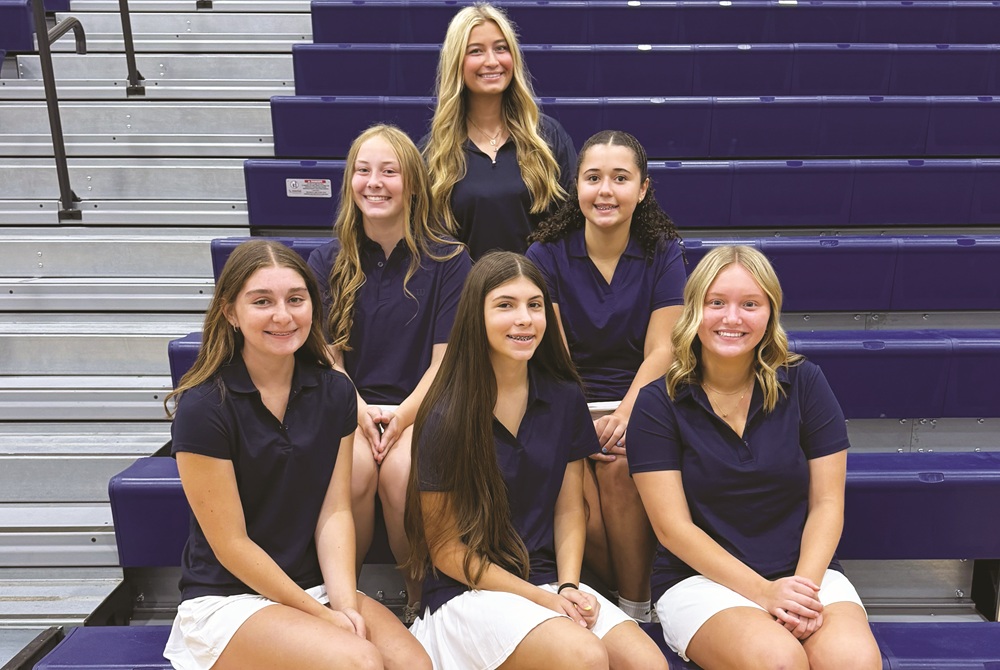
Recent Whiteford Grad Ovall Leading Bobcats' Inaugural Girls Golf Team
By
Doug Donnelly
Special for MHSAA.com
September 2, 2026
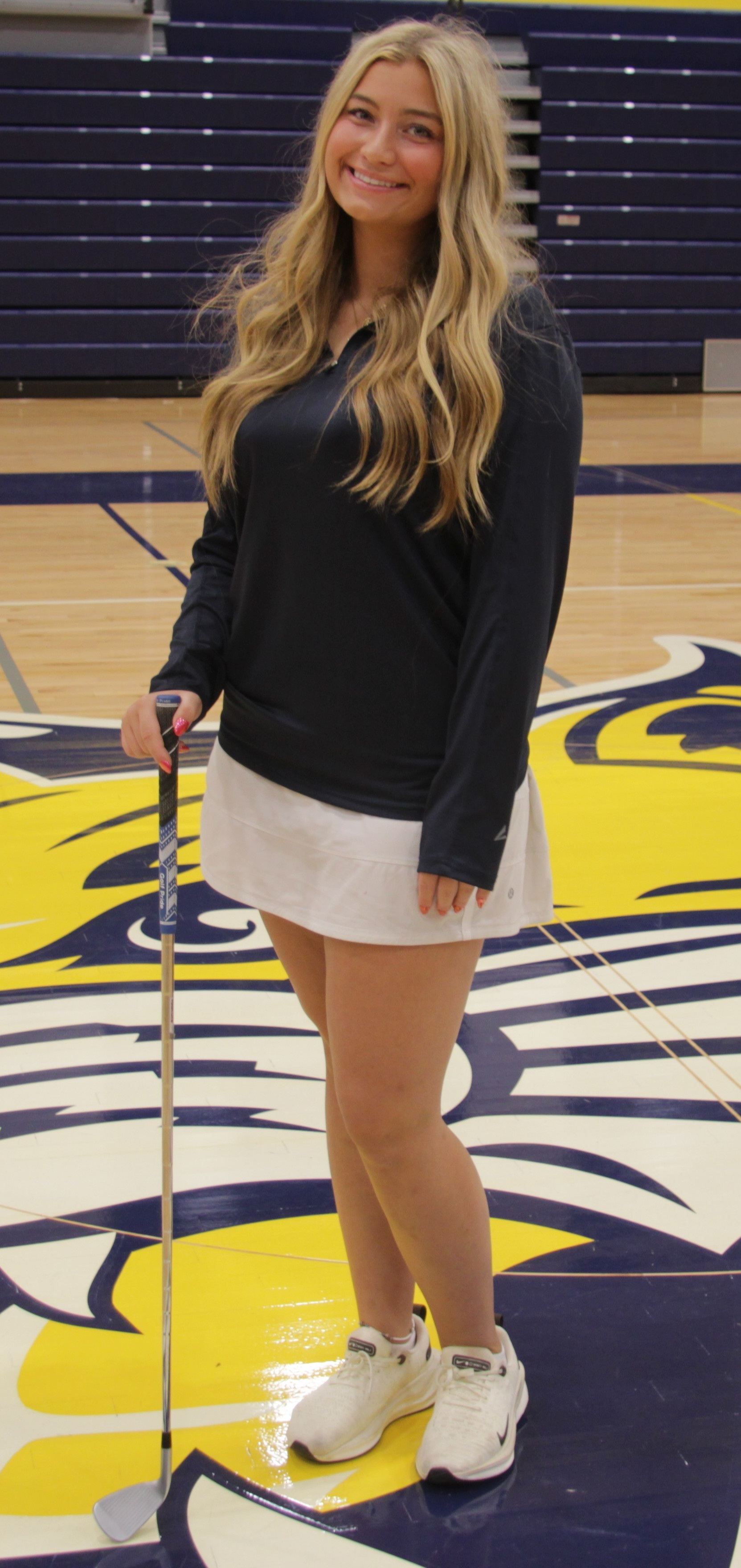
Addison Ovall might be the youngest varsity head coach in the state of Michigan this fall.
 Ovall, who graduated in June from Ottawa Lake Whiteford, had barely taken off her cap and gown when she found herself as the new head coach of the Bobcats girls golf team. She’s also a pioneer of sorts – she helped lead the crusade for Whiteford to field a team in that sport for the first time.
The five girls on the squad tee it up for the first time Tuesday.
“I always wanted to start a girls golf team while I was a student here, but there didn’t seem much interest in it,” Ovall said. “Once I graduated, I shared my story about having played on the boys team and I think that garnered some interest. It’s something I’ve always wanted.”
Ovall was going to golf in college, but a traffic crash during which she suffered a broken wrist put those plans on the backburner. For now, her work on the course is dedicated to helping five novice golfers learn the game.
“That just led me here to coach,” she said.
Ovall learned the game when she was a kid from her father.
“Ever since I was little, I had a club in my hand,” she said. “It seems like I’ve been playing forever.”
She started high school in Toledo and played on a girls golf team as a freshman at St. Ursula Academy, a private school in northwest Ohio. She moved to Whiteford as a junior and was set to be a one-person golf team in the fall of 2025 with her mom as the head coach. That’s when she was injured in the crash and couldn’t continue the season.
Whiteford athletic director Miranda Green went through the MHSAA to get clearance for Ovall to join the boys team in the spring.
“She had played in one competition in girls golf, then got hurt,” Green said. “I had to write a letter to the MHSAA, and she was approved to play on the boys team, but she had to sit one match. She was excited to still be able to play.”
Ovall said it was a difficult transition.
 “It was terrifying, to be honest,” she said. “I had to hit from the men's tees, had to learn everything, but I think it made me a better golfer and a better person overall. I met new people, which was cool. I had college opportunities, which was awesome.”
Her season was hampered by the wrist injury, but she didn’t let it stop her. It did get in the way of playing at the college level, however.
“It was sort of difficult, but I was better off for it,” she said.
While still in high school she started lobbying other girls in school to sign up for golf.
“Toward the end of the year we had girls start showing interest in it,” she said. “That was really cool. When the school asked me to come back to coach, I was pretty nervous. I didn’t think anyone was going to come to tryouts.”
She ended up having five girls join the squad, which gives them enough to compete in dual matches and tournaments.
“It’s just been fun to get to know the girls,” she said. “We are a very young team. We are just starting out so we are trying to see what our strengths and weaknesses are.”
While the first match isn’t until next week, they have been playing daily at Whiteford Valley Golf Club, the same home course the Whiteford boys team plays on. Ovall said they typically spend an hour on the driving range, then chipping and putting for the last 45 minutes of practice. One day a week, the girls play nine holes.
“It is good to see how the game is coming together and to see what we need to improve on,” she said.
Because there are so few members on the team, Ovall can spend about 15 minutes with each golfer daily.
“After we play a round, the next day I will focus on what their biggest weaknesses were on the course,” she said.
Ovall said teaching the game is a rewarding experience.
“We have one girl who is an experienced golfer, but everyone else is really brand new to the game,” she said. “We want them to go out and have fun. We’re all able to hit the ball, which is good. Right now, we just keep going over everything getting ready for that first tournament and going over all of the rules. We’ve had a month to prepare.”
Charlie Weiser is one of the freshmen on the team. She said she decided to go out for golf because her whole family golfs. The team is getting to know the rules and having fun together, she said. In practice, she likes to focus on driving and putting, but is getting pretty good with her 8-iron.
“I just started at the beginning of summer, but it’s been going pretty good,” she said. “There have been good days and bad days.”
Green said she didn’t have any apprehension about turning the new program over to Ovall.
“Honestly, it was a no-brainer,” she said. “She is the perfect person to do it. I’m excited for her. Hopefully she can keep the program growing.”
 Doug Donnelly has served as a news and sports reporter at the Adrian Daily Telegram and the Monroe News for 30 years, including 10 years as city editor in Monroe. He's written a book on high school basketball in Monroe County and compiles record books for various schools in southeast Michigan. He is now publisher and editor of The Blissfield Advance, a weekly newspaper. E-mail him at [email protected] with story ideas for Jackson, Washtenaw, Hillsdale, Lenawee and Monroe counties.
PHOTOS (Top) This fall’s Whiteford girls golf team is the school’s first. Top row: Coach Addison Ovall. Middle row: Grace Grosteffon and Avee Ingram. Bottom row: Addy Emch, Charlie Weiser and Brenna Allen. (Below) Ovall. (Photos by Doug Donnelly.)