


Class D Schools Set Multi-Sport Participation Record, Overall Rate Remains Steady
By
Geoff Kimmerly
MHSAA.com senior editor
September 22, 2026
The MHSAA's eighth Multi-Sport Participation Survey, conducted last spring for the 2025-26 school year, showed just more than 45 percent of athletes at member high schools participated in more than one sport – for the most part consistent with past findings although the state’s smallest schools posted a record high rate of athletes playing more than one sport.
The annual Multi-Sport Participation Survey was inspired by the MHSAA’s Task Force on Multi-Sport Participation, which was appointed in 2016 to study early and intense sport specialization – a serious issue related to health and safety at all levels of youth sports – and to promote multi-sport participation as a way to help stave off overuse injuries and burnout among athletes that have been tied to chronic injuries and health-related problems later in life.
The 2025-26 Multi-Sport Participation Survey received responses from 73.8 percent of member high schools and showed 45.3 percent of athletes at those MHSAA member high schools participating in two or more sports, an almost identical percentage as in 2024-25. For 2025-26, 47.5 percent of male athletes and 42.6 percent of female athletes played multiple sports, again percentages nearly identical to the previous school year. The percentage of multi-sport athletes remains inversely proportional to schools’ enrollments, as Class D schools – the state's smallest – again enjoyed the highest percentage of multi-sport athletes at 64.2 percent, followed by Class C schools (59.5), Class B (49.0) and Class A (38.4).
Results for Class A, B and C schools have remained consistent over the lifetime of the multi-sport participation survey, showing small increases over the years but not overwhelming changes. However, Class D multi-sport participation reached a high in 2025-26, with that 64.2 percent of athletes participating in at least two sports an increase of 6.1 percent since 2017-18. During that time, Class A multi-sport participation is up 3.0 percent, Class B is up 2.3 and Class C is up 4.3.
Battle Creek Harper Creek and Grand Rapids Northview have appeared among the top 10 percent of their respective Classes (A/B/C/D) for multi-sport participation seven of the eight years the survey has been conducted. Three more schools have appeared among the top 10 percent of their respective Classes six of the eight years – Decatur, Detroit Cody and Warren Michigan Collegiate – while East Grand Rapids, Lake Leelanau St. Mary, Manton and Parma Western have appeared among the top 10 percent of their Classes five times apiece.
In Class A, Harper Creek (73.2 percent) posted the highest percentage of multi-sport athletes for 2025-26, followed by Saginaw United (72.7), Harper Woods (72.1) and Macomb L’Anse Creuse North (65.9) also reporting at least 65 percent of athletes playing multiple sports.
Detroit Denby led Class B schools at 83.6 percent of athletes playing more than one sport, followed by Warren Michigan Collegiate (83.3), Ecorse (78.1), Detroit Osborn (75.6), Dearborn Heights Robichaud (76.2) and Flint Hamady (76.1) all topping 75 percent. In Class C, Detroit Community reported all 72 of its athletes played multiple sports during the 2025-26 school year, followed by Galesburg-Augusta (82.7 percent), Kingston (82.1), Niles Brandywine (80.7) and Martin (80.4) reaching 80 percent.
Watersmeet also reported all 27 of its athletes were multi-sport participants, followed in Class D by Lake Leelanau St. Mary (95.5 percent), Carney-Nadeau (94.8), Onekama (92.5) and Atlanta (90.9) reaching 90 percent.
The full summary report on the Multi-Sport Participation Survey is available on the “Multi-Sports Benefits” page.
The Dangers of Returning to a Sport Too Soon After an Injury
September 12, 2023
 When you've been hit with an injury, it's natural to want to get back to your regular activities as soon as possible. In fact, it's not uncommon for athletes to sidestep doctors' orders and return to the field or the court before an injury has healed.
"It doesn’t matter how much you train, or how much you prepare, injuries are going to happen, especially if you're an athlete," says Jamie Schwab, an athletic trainer at Henry Ford Health System. "But the real trouble arises when athletes try to play through their pain without allowing sufficient time for recovery."
Risks Of Returning Too Soon After Injury
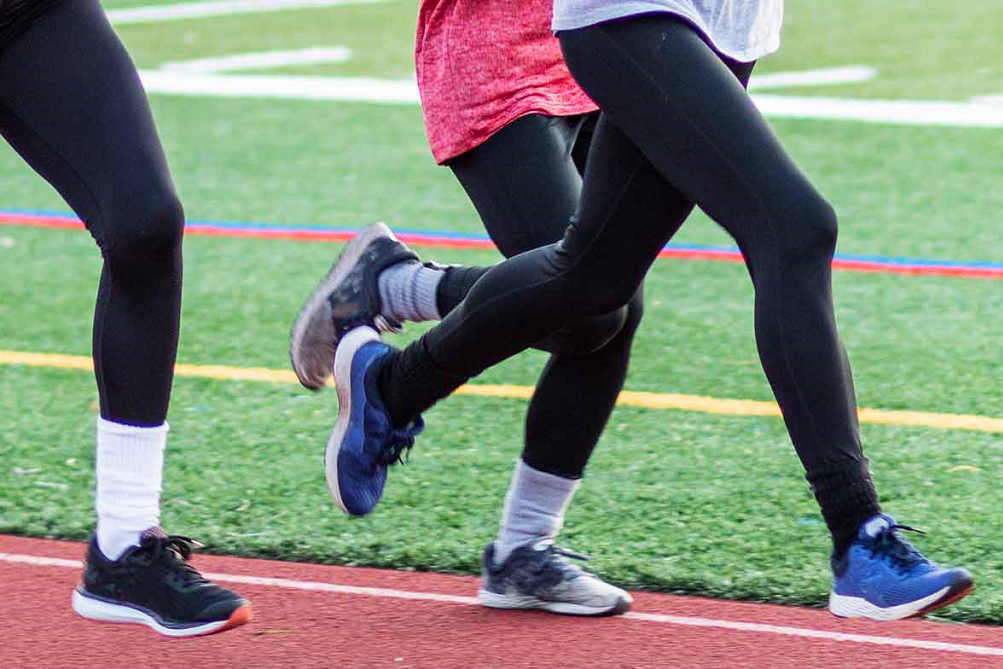
If you sprain your ankle during a cross country run, it can be tempting to finish the race. Unfortunately, hiding your pain and powering through the activity can actually make matters worse.
"If you continue to work out after suffering from an injury, you run the risk of furthering that injury," Schwab says. So what began as a minor ankle sprain can evolve into a major sprain that sidelines you for weeks.
Returning to play after surgery demands extra precautions. "Athletes are a lot more susceptible to re-injury after returning from surgery, especially if they don't complete the entire 9-month or year-long rehabilitation protocol," Schwab says. In some cases, you can exacerbate an injury to such a degree that you'll never be able to participate in the same capacity.
A Safe Return To Play
The road back to play after an injury is a long and winding one. Before you can even consider returning to exercise, you need to reduce swelling, get pain under control and get your range of motion back to almost normal.
"The recovery process takes time," Schwab says. "But if you stick with it, and you take it seriously, it's going to be a whole lot easier for you to return to the playing field in a timely manner."
Once you get pain and swelling under control, you can focus on agility and weight exercises that will help you regain strength and slowly return to baseline. The key tenets for a safer return to play:
► Be honest about your abilities: "So many athletes are afraid to tell the truth," Schwab says. "But if you're hurting and you're not competing at your full potential, you're letting your team down and yourself down, too." Even worse, you could increase your risk of further injury.
► Focus on building strength: Strength training is critical. It can help you become faster, stronger and more agile on the field. It can also help you recover more quickly after an injury.
► Listen to your body: If something doesn't feel right, pay attention to it. Talk to your athletic trainer or a physical therapist to get to the bottom of what's bugging you and put a plan in place to address it.
Boosting Performance Over The Long Haul
Unfortunately, not every coach and athletic trainer stresses the importance of a maintenance program. In fact, focused training and maintenance exercises are key to preventing injuries in the first place.
"The rehabilitation exercises you begin doing on day one after injury need to be maintained at least three to four times each week, indefinitely," Schwab says. "If you follow that regimen, all of your muscular nagging strains will no longer be a problem because your body is constantly adapting to the stresses. It's conditioned, it's strong, it can withstand the constant changes in direction."
Most importantly, don't be afraid to try complementary strategies. Practice using a foam roller, try cupping to release tension in the muscles and enhance blood flow and consider getting a monthly massage.
Jamie Schwab, AT, ATC, SCAT, CSCS, is an athletic trainer with Henry Ford Sports Medicine and works with student athletes at Edsel Ford High School. She is a National Strength and Conditioning Association-certified strength and conditioning specialist.
To find a sports medicine doctor or athletic trainer at Henry Ford, visit henryford.com/sports.