

Coaches Guide to Nutrition: Refuel for the Finish
November 17, 2026
As athletes head into competition, refueling becomes an important part of staying ready for what comes next.
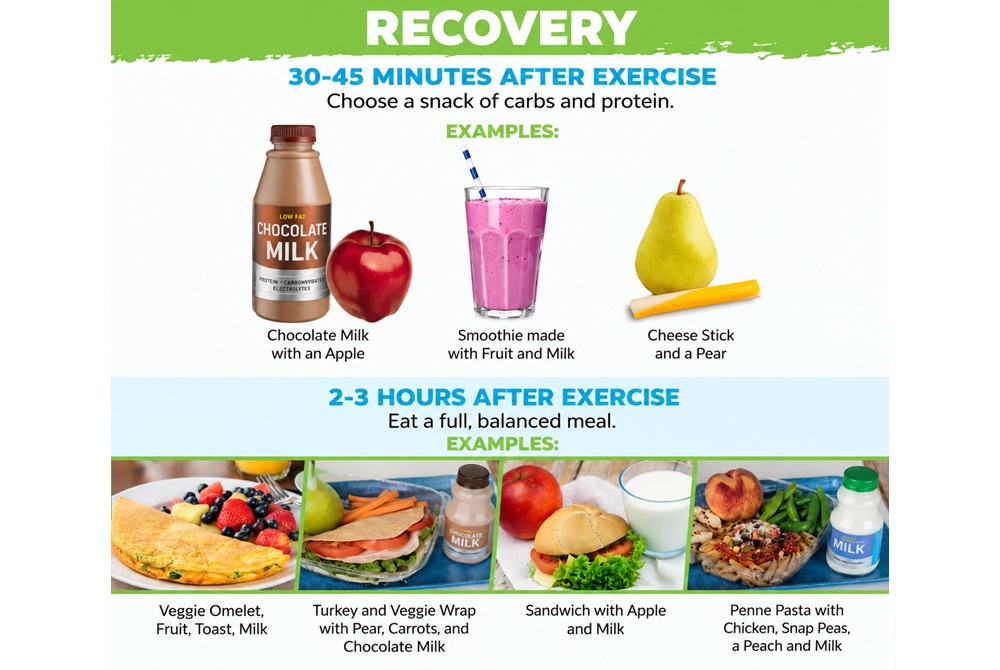
 After exercising, the body needs the right nutrition to refuel energy stores and support muscle recovery.
Carbohydrates help replenish energy, while protein helps repair and rebuild muscles, making both an important part of post-exercise refueling.
The first 30–45 minutes after exercise is an important opportunity to begin refueling.
Chocolate milk is one convenient option because it provides carbohydrates, protein, fluids, and electrolytes to help athletes refuel, rebuild, and rehydrate.
Athletes should continue to refuel with a balanced meal within 2-3 hours to continue supporting recovery.
Whether it’s after practice, a semifinal, or the championship game, proper refueling can help athletes prepare to give their best effort the next time they compete.
Information above is excerpted from UDIM’s A Coach’s Guide to Nutrition.

MHSAA Provides Heat Management Reminders in Advance of 2022 Fall Practices
By
Geoff Kimmerly
MHSAA.com senior editor
August 3, 2022
With communities across Michigan preparing for forecasts this week including temperatures in the 80s and in some places low 90s, this is an opportune time for the Michigan High School Athletic Association to provide its annual reminders on training in hot weather as fall sports teams are set to begin practices next week and competition later this month.
Each year, the MHSAA provides information to its member schools to help them prepare for hot weather practice and game conditions during the late summer and early fall. Practices for all Fall 2022 sports – cross country, football, Lower Peninsula girls golf, boys soccer, Lower Peninsula girls swimming & diving, Lower Peninsula boys and Upper Peninsula girls tennis, and volleyball – may begin Monday, Aug. 8.
The “Health & Safety” page of the MHSAA Website has links to several information sources, including the MHSAA preseason publication Heat Ways, which is available for download and includes valuable information on heat management in addition to requirements and resources regarding head injuries and sudden cardiac arrest.
The first days of formal practices in hot weather should be more for heat acclimatization than the conditioning of athletes, and practices in such conditions need planning to become longer and more strenuous over a gradual progression of time. Schools also must consider moving practices to different locations or different times of day, or change practice plans to include different activities depending on the conditions. Furthermore, football practice rules allow for only helmets to be worn during the first two days, only shoulder pads to be added on the third and fourth days, and full pads to not be worn until the fifth day of team practice.
The MHSAA advises student-athletes to make sure to hydrate all day long – beginning before practice, continuing during and also after practice is done. Water and properly-formulated sports drinks are the best choices for hydration.
A number of member schools follow the MHSAA’s Model Policy for Managing Heat & Humidity, which while not mandated for member schools was adopted as a rule for MHSAA postseason competition in 2013. The plan directs schools to begin monitoring the heat index at the activity site once the air temperature reaches 80 degrees, and provides recommendations when the heat index reaches certain points, including ceasing activities when it rises above 104 degrees. (When the temperature is below 80 degrees, there is no combination of heat and humidity that will result in a need to curtail activity.) The model heat & humidity policy is outlined in a number of places on the MHSAA Website, including as part of Heat Ways.