

Awards Honor Those Lending a Hand
April 12, 2017
By Geoff Kimmerly
Second Half editor
Sports often make up a significant, although singular part of the lives of Michigan’s high school student-athletes and coaches.
 Many also find ways to have significant impacts on the lives of others – and we’d like to tell the rest of our state how they’re making a difference.
The Michigan High School Athletic Association, together with Lake Trust Credit Union, will award this spring the inaugural Community Service Awards to recognize individuals and teams that have worked to benefit their communities.
Each winner will receive a $1,000 award to be applied toward an individual college scholarship, credited to a team’s account with its athletic department or even gifted to the group helped by our honoree.
Please help us get the word out. Encourage a student, coach or administrator to tell us about a completed or ongoing community service project. Any student, team or coach currently participating in interscholastic athletics at an MHSAA member high school can apply. Applications should be e-mailed both to the school’s athletic director and MHSAA’s Kurt Tiesman at [email protected].
The deadline for applications is May 1, and multiple winners will be selected and notified by May 12. Click for more information.
We hear and read about these contributions and successes throughout the school year. Thank you in advance for your help in allowing us to honor some of this great work in the community by those who also shine on the field.
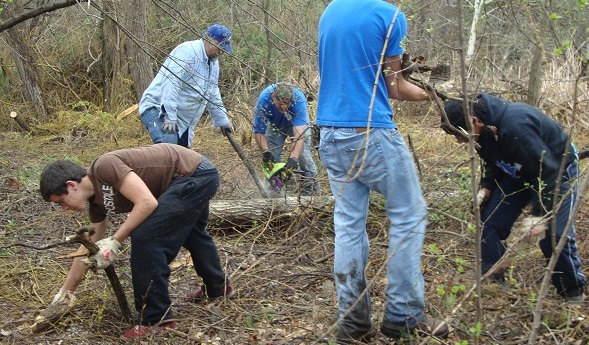
PHOTO: Members of the Adrian boys track & field team help clean up after a tornado in Dexter in 2012.

MHSAA Update Meeting Series Returns for 49th Year
By
Geoff Kimmerly
MHSAA.com senior editor
September 1, 2026
The Michigan High School Athletic Association will conduct its 49th annual Update Meeting series during September and October, and this year’s schedule will again offer in-service programming for athletic directors at six of the seven locations.
The Update series is annually attended by more than 800 school administrators. During the meetings, information about current MHSAA activities is disseminated, issues affecting interscholastic athletics are discussed and attendees are surveyed on various topics.
Six luncheon meetings are scheduled in the Lower Peninsula, and a morning meeting is scheduled for Marquette in the Upper Peninsula. MHSAA Executive Director Mark Uyl will address high school superintendents, principals, athletic directors and school board members on a variety of topics at these meetings. Update Meetings also provide school administrators an opportunity to ask questions and discuss any recent changes in the Association's rules and regulations.
This also will be the 24th year of Athletic Director In-Service programs conducted during morning-long sessions prior to most of the Update Meetings. These workshops are designed to help prepare those administrators for the rigors of their jobs, and with the Update Meetings offer those in attendance an opportunity to meet with administrators from neighboring school districts with whom they normally are not able to have day-to-day contact.
The meeting in Bath on Sept. 23 also will serve as the Annual Business Meeting for the MHSAA. The registration form for Athletic Director In-Service and Update Meetings is available on the Administrators page.
Here is a schedule of the 2026 Update Meetings:
• Sept. 8 – Radisson Plaza Hotel & Suites, Kalamazoo (Noon – Preceded by AD In-Service at 8:30 a.m.)
• Sept. 14 – Ukrainian Cultural Center, Warren (Noon – Preceded by AD In-Service at 8:30 a.m.)
• Sept. 21 – Prince Conference Center, Grand Rapids (Noon – Preceded by AD In-Service at 8:30 a.m.)
• Sept. 23 – Eagle Eye Banquet Center, Bath (Noon – Preceded by AD In-Service at 8:30 a.m.)
• Sept. 28 – Otsego Club & Resort, Gaylord (Noon – Preceded by AD In-Service at 8:30 a.m.)
• Sept. 30 – Zehnder's Restaurant, Frankenmuth (Noon – Preceded by AD In-Service at 8:30 a.m.)
• Oct. 16 – Northern Michigan University Superior Dome, Marquette (10 a.m.)
The MHSAA is a private, not-for-profit corporation of voluntary membership by more than 1,500 public and private senior high schools and junior high/middle schools which exists to develop common rules for athletic eligibility and competition. No government funds or tax dollars support the MHSAA, which was the first such association nationally to not accept membership dues or tournament entry fees from schools. Member schools which enforce these rules are permitted to participate in MHSAA tournaments, which attract more than 1.4 million spectators each year.