


Chrisinske, Inglis Receive Bush Awards
June 5, 2013
Two athletic administrators respected as mentors and role models in their respective regions and throughout the state – Dave Chrisinske of Middleville Thornapple Kellogg and Cody Inglis of Traverse City Central – have been named the recipients of the Michigan High School Athletic Association's Allen W. Bush Award for 2013.
Al Bush served as executive director of the MHSAA for 10 years. The award honors individuals for past and continuing service to prep athletics as a coach, administrator, official, trainer, doctor or member of the media. The award was developed to bring recognition to men and women who are giving and serving without a lot of attention. This is the 22nd year of the award, with the selections being made by the MHSAA's Representative Council.
Chrisinske has served as an athletic director the last 21 years and for 36 years total in public and community education. He came to Thornapple Kellogg in fall 2011 after 32 years with Allendale Public Schools, where he taught and coached before serving 19 years as athletic director and also as assistant principal and community education director. He has coached football, basketball, baseball and volleyball at school or youth levels, and also is a registered MHSAA volleyball official.
The 1972 graduate of Stockbridge High School also worked for Coopersville Community Education for two years after graduating with his bachelor’s degree in group social studies from Grand Valley State University in 1977. He earned a master’s in educational leadership from Grand Valley State in 1992 and became a Certified Athletic Administrator in 1997.
Chrisinske continues to lend his time and expertise to a number of committees and community efforts; he has served as a region representative for the Michigan Interscholastic Athletic Administrators Association for a decade, on various MHSAA committees including the baseball and wrestling sport committees and the scholarship classification committee, and on three successful school bond committees that led to new buildings and outdoor athletic facilities at Allendale. He also was a district representative for the Michigan High School Baseball Coaches Association for 10 years and has served on recreation committees for both Allendale and Thornapple Townships.
Chrisinske was recognized as the MIAAA Region IV Athletic Director of the year in 2004, and as Athletic Director of the Year by the West Michigan Officials Association in 2006 and West Michigan Umpires Association in 2011.
“Dave Chrisinske has become a go-to person in his league and community, always willing to share his knowledge and enthusiasm for high school athletics and serving student athletes,” said John E. “Jack” Roberts, executive director of the MHSAA. “His dedication shines through as well in his efforts with the MIAAA and as a frequent host of MHSAA tournaments. We are pleased to honor Dave Chrisinske with the Bush Award.”
Inglis also has served as an athletic director at two high schools, dating back to 1997. He spent 11 years at Suttons Bay, first as a teacher and also as assistant principal and middle school principal. He has spent the last five years as athletic director and assistant principal at Traverse City Central High School. Inglis is a 1989 graduate of Portage Northern High School and earned his bachelor’s degree from Hope College and master’s from Ohio University.
He coached boys and girls cross country and track and field at Suttons Bay from 1995-2008, leading his teams to numerous conference championships and the girls cross country team to a runner-up finish at the 2002 Lower Peninsula Division 4 Final. He was named Cross Country Coach of the Year after that season by the Michigan Interscholastic Track Coaches Association, and the MITCA Track Coach of the Year the following spring. He also served as an assistant coach for eight seasons for the Traverse City St. Francis-led cooperative hockey program.
Inglis has been a member of the MIAAA since 1997, became a Certified Athletic Administrator in 1999, and has served as an MIAAA region representative since 2001. He too is a regular host of MHSAA tournaments in a number of sports and has served as a member of the track and field, hockey, skiing and cross country sport committees and the site and officials selection committees. He was named MIAAA Region 2 Athletic Director of the Year in 2003. Inglis was league treasurer and secretary for the Northwest Conference from 1997-2008 and has served as Big North Conference secretary since 2009.
He’s also active in a number of community programs, including Boy Scouts, Big Brothers Big Sisters, Special Olympics, the Suttons Bay Township Recreation Committee, the Suttons Bay Art Festival and with his church.
“Cody Inglis is named time and again by his fellow athletic administrators as someone of integrity and character,” Roberts said. “He’s passed on these and various lessons to his coaches and athletes, but also as a regular speaker at the MIAAA’s annual conference. His impact continues to affect those he works with regularly in the Traverse City area, but also others across our state. He is a deserving recipient of the Bush Award.”
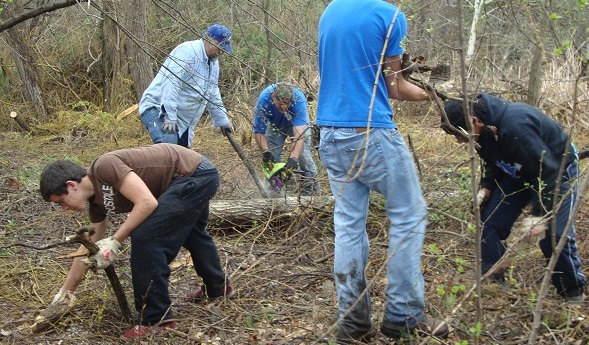
Awards Honor Those Lending a Hand
April 12, 2017
By Geoff Kimmerly
Second Half editor
Sports often make up a significant, although singular part of the lives of Michigan’s high school student-athletes and coaches.
 Many also find ways to have significant impacts on the lives of others – and we’d like to tell the rest of our state how they’re making a difference.
The Michigan High School Athletic Association, together with Lake Trust Credit Union, will award this spring the inaugural Community Service Awards to recognize individuals and teams that have worked to benefit their communities.
Each winner will receive a $1,000 award to be applied toward an individual college scholarship, credited to a team’s account with its athletic department or even gifted to the group helped by our honoree.
Please help us get the word out. Encourage a student, coach or administrator to tell us about a completed or ongoing community service project. Any student, team or coach currently participating in interscholastic athletics at an MHSAA member high school can apply. Applications should be e-mailed both to the school’s athletic director and MHSAA’s Kurt Tiesman at [email protected].
The deadline for applications is May 1, and multiple winners will be selected and notified by May 12. Click for more information.
We hear and read about these contributions and successes throughout the school year. Thank you in advance for your help in allowing us to honor some of this great work in the community by those who also shine on the field.
PHOTO: Members of the Adrian boys track & field team help clean up after a tornado in Dexter in 2012.