

From the Director: Back to School
August 7, 2020
By Mark Uyl
MHSAA Executive Director
Since March 12, our world has been anything but normal. These times have tested most everything in life, and as summer turns toward fall, we find ourselves still with far more questions than answers. It has been said that an abnormal reaction to an abnormal situation is normal behavior.
Let me start with these abnormal times. I’ve had many conversations with administrators over the past month about the start of school and school sports. The one constant theme is these are anything but normal times. Many of these conversations have moved to the issue of schools starting the academic year virtually while considering whether or not to offer school sports opportunities this fall. Let me share the things that have been part of almost all conversations on this topic.
The loudest message I hear is kids are going to be playing sports this fall someplace. Period. If we believe that kids are going to take the fall off if school sports aren’t offered, we haven’t been paying much attention since May. Since that time, athletic activity has taken place in the club, travel, AAU and non-school space nearly every day. From first-hand experience, many of these events have implemented ZERO of the safety standards and protocols that businesses and schools have adopted for their plans of return. The non-school world generally has plowed ahead this summer with few-to-no rules, regulations, enforcement, oversight and accountability to anyone. If kids are going to be playing sports, our member schools are telling us that activity needs to be in the safest environment possible – which is with professional educators and trained coaches in our school sports world.
Schools are quick to point out that kids have been conditioning and training with school coaches in school-sponsored workouts most of the summer. We believe that the absence of virus outbreaks among our 749 high schools’ summer activities, involving thousands of kids, has been because schools have been following the return-to-activity plans. Districts have told us they can continue doing what they’ve been doing safely since June by following all COVID guidance and regulations we have put in place with government’s leadership and partnership.
Schools starting the year virtually are telling us they will use the lessons learned from the start of sports for when students return to campus later in the fall. School administrators have shared this view privately as this has become a highly-charged topic among various groups within our school communities. Sports allow schools to bring students back to campus in small, consistent and defined groups with the same adults working with those students each day. In school sports, there is little mixing of students from one sport with those students in another – making it much easier to monitor, track and trace kids when needed than if all students were in the buildings, hallways and classrooms all day. We hear from administrators that valuable lessons can be learned with athletics in August and September for a successful school start-up with students back on campus in October.
All of us share the fundamental belief that we must protect the health and safety of individuals first. This doesn’t include only COVID prevention measures, but also the mental health of teenage students and adults as well. In districts that are starting the school year online, they see athletics being the one shred of normalcy students, and staff members who choose to coach, will have during the fall. It’s a chance to safely interact with peers and get needed physical activity that hasn’t been happening for some kids since March. Health and safety has to include all facets of the individual, and more research is being shared each day about how mental health is becoming a critical issue. For many at-risk kids, sports is the one motivating factor to keep them in school and progressing toward graduation. Given the challenges of all online education for these at-risk kids, sports and the daily routine they bring perhaps would be more important for this group of students than ever before.
With no school sports, the affluent communities and families can navigate online learning during the day and then afford the non-school athletic opportunities that kids and families in less-affluent areas simply cannot. In many communities, school sports can provide opportunities and open doors that would not appear if kids become priced-out from participating and competing.
The past five months have been the most abnormal in a century. School sports being the one pathway back to school for students in our state – the one norm for this fall – run by professional educators who put kids first, would be an incredible boost to the physical and mental health of all of us. We believe that school sports can be done safely and smartly, and the MHSAA has developed plans that do just that. While the optics of sports taking place while waiting for in-person education is not what any of us prefer, we believe we must react to these abnormal times by thinking differently and looking at these unique times through a unique lens.
Trying to find one normal for our kids in these abnormal school days might just be the best thing we can do.

Rep Council Wrap-up: Fall 2012
December 7, 2012
A change in format for the Boys Basketball Finals highlighted actions taken by the Representative Council of the Michigan High School Athletic Association during its annual Fall Meeting, Nov. 30 in East Lansing.
Mirroring closely the format of the MHSAA Girls Basketball Finals, the Boys Finals will move this season from three to two sessions. The first session will tip off with the Class D Final at 10 a.m., followed by the Class A championship game. The second session will begin tentatively at 4:30 p.m. with the Class C Final and conclude with the Class B title game.
Previously, the Class A and B Finals were separate sessions, with the Class A Final tipping at 4 p.m. and Class B at 8 p.m. The change will make for a shorter day for spectators wishing to attend all four games, and also allow them to do so by purchasing tickets for two sessions instead of three.
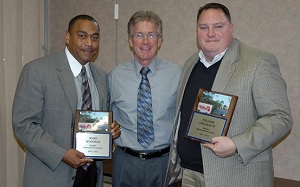 The Fall Meeting also saw the addition of two members to the 19-person council. Reese Public Schools athletic director Dave Derocher began a two-year term after being elected earlier this fall to represent Class C and D schools in the northern Lower Peninsula. Orlando Medina, who serves as athletic coordinator for Harrison Township L’Anse Creuse Public Schools, was appointed for a two-year term. He also previously served as athletic director at Detroit Cesar Chavez Academy. They fill positions formerly held by Beal City superintendent William Chilman IV and Romulus High School athletic director Mark Woodson, whose terms ended.
Also, Carmen Kennedy, principal at St. Clair Shores South Lake High School, was reappointed for a second two-year term. The Representative Council is the legislative body of the MHSAA. All but five members are elected by member schools. Four members are appointed by the Council to facilitate representation of females and minorities, and the 19th position is occupied by the Superintendent of Public Instruction or designee.
The most prominent points discussed at the Fall Meeting were risk minimization for athletes and possible strategies for making school sports safer. Among topics discussed were raising expectations for coaches’ participation in online safety courses and schools’ management of heat illness; the possible restructuring of practice policies in regards to hot weather; and game rules revisions to enhance safety especially in football, soccer and ice hockey.
The Council reviewed its previous actions on those topics, including discussions in December 2011 that led to the inclusion of health and safety content in online rules meetings. Council members considered a model policy for managing heat and humidity, and also a number of ideas collected during Fall Update meetings with administrators throughout the state.
No action was requested on those items at the Fall Meeting. Complete and vetted proposals are likely to be considered when the Council next meets in March and then May.
PHOTO: Outgoing Representative Council members Mark Woodson of Romulus (left) and William Chilman IV (right) are presented plaques for their service by MHSAA Executive Director Jack Roberts (middle) during the Fall Meeting.