


MHSAA Announces 2015-16 Concussion Data
September 12, 2016
By Geoff Kimmerly
Second Half editor
The Michigan High School Athletic Association has completed an unprecedented yearlong collection of head injury reports from its member schools, mandated in 2015-16 for the first time as part of an effort to identify and reduce the incidence of those types of injuries in educational athletics.
The MHSAA requested that member schools report, by sport, possible concussions by their student-athletes during both practice and competition. Reporting for the 2016-17 school year is underway, and schools again are required to designate if potential concussions occurred during competition or practice and at which level – varsity, junior varsity or freshman.
The full report of all head injuries experienced during 2015-16 by student-athletes at MHSAA member high schools – including percentages by sport (per 1,000 participants), gender and team level, as well as data tracking when athletes returned to play – is available on the Health & Safety page of the MHSAA Website.
The MHSAA received data from more than 99 percent of its member high schools after the end of the fall, winter and spring seasons, and continued to track each injury report through its conclusion this summer. Member junior high and middle schools also were allowed, although not mandated, to report their potential head injuries; those findings are not part of the published report.
It is the hope that universities, health care systems and the National Federation of State High School Associations will take part in analyzing the data. The MHSAA will work, in particular, with Michigan State University’s Institute for the Study of Youth Sports to explore these findings and their relation to possible changes and additions in coaches education.
“We know that school sports are safer than they’ve ever been, thanks to advances in equipment, increased and more complete coaches education and rules designed to bring higher levels of safety to both practices and competition,” said John E. “Jack” Roberts, executive director of the MHSAA. “However, this unprecedented effort will allow us for the first time to set a baseline by which we can determine year-to-year progress as we work to reduce the incidence of head injuries in school sports, while providing questions we will seek to answer with assistance from our research partners.”
Student-athletes at MHSAA member high schools encountered during 2015-16 a total of 4,452 head injuries – or 5.9 per member school. Total participation in MHSAA sports for 2015-16 was 284,227 – with students counted once for each sport he or she played – and only 1.6 percent of participants experienced a head injury. Boys experienced 3,003 – or 67 percent – of those injuries, although boys participation in sports, especially contact sports, also was higher than girls.
More than half of head injuries – 54 percent – were experienced by varsity athletes. A total of 2,973 – or 67 percent – came in competition as opposed to practice. More than half took place during either the middle of practice or middle of competition as opposed to the start or end, and nearly 56 percent of injuries were a result of person-to-person contact. The largest percentage of athletes – 28 percent – returned to activity after 6 to 10 days, while 20 percent of those who suffered head injuries returned after 11-15 days of rest.
Not surprisingly, contact sports revealed the most head injuries. Ranking first was 11-player football with 49 head injuries per 1,000 participants, followed by ice hockey with 38 and 8-player football with 34. However, girls soccer was just behind with 30 injuries per 1,000 participants, and girls basketball ranked fifth with 29 injuries per 1,000.
A startling disparity in the number of reported head injuries suffered by girls and boys playing the same sports was the most significant finding revealed by the concussion reporting. Soccer, basketball and baseball/softball are played under identical or nearly identical rules, and in those sports females reported significantly more concussions than males playing the same or similar sport.
Female soccer players reported 30 concussions per 1,000 participants. Male soccer players, meanwhile, reported only 18 concussions per 1,000 participants. Female basketball players reported 29 concussions per 1,000 participants; male players reported 11. Softball players reported 11 concussions per 1,000 participants, and baseball players reported four per 1,000.
“Experts tell us that it’s not surprising that girls report more head injuries than boys. But we found it stunning how many more head injuries were reported for girls than boys,” Roberts said. “As we delve deeper into the data, we hope to identify what physiological, social and psychological factors may contribute to this disparity – and how we can better prepare school personnel and especially coaches to watch for over- or under-reporting.”
Schools report possible concussions online via the MHSAA Website. Reports are then examined by members of the MHSAA staff, who follow up with school administrators as those student-athletes continue to receive care and eventually return to play. Student privacy is protected.
The reporting of possible concussions is part of a three-pronged advance by the MHSAA in concussion care begun during the 2015-16 school year which is producing data related to the frequency and severity of head injuries. The MHSAA in fall 2015 launched the largest-ever state high school association sideline concussion testing pilot program, with 62 schools taking part by using one of two screening tests designed to detect concussions. One of the objectives of the pilot was to increase awareness of concussions and improve sideline detection, and results indicated that the average number of possible concussions reported by pilot schools exceeded the average reported by schools outside the pilot group. For the 2016-17 school year, 34 schools are taking part in one of the two pilot programs as the project was concentrated to include schools which were diverse in size and location and able to best conduct the pilots to completion. The pilots will focus on sports for which most concussions occur, according to the mandated reporting by all schools during the 2015-16 school year.
The MHSAA also is the first state association to provide all participants at every member high school and junior high/middle school with insurance intended to pay accident medical expense benefits – covering deductibles and co-pays left unpaid by other policies – resulting from head injuries sustained during school practices or competitions and at no cost to either schools or families. During 2015-16, a total of 159 claims were made – with more than half coming in football (55) or girls basketball (29).
Previously, the MHSAA also was among the first state associations to adopt a return-to-play protocol that keeps an athlete out of activity until at least the next day after a suspected concussion, and allows that athlete to return to play only after he or she has been cleared unconditionally for activity by a doctor (M.D. or D.O.), physician’s assistant or nurse practitioner.
The MHSAA is a private, not-for-profit corporation of voluntary membership by more than 1,400 public and private senior high schools and junior high/middle schools which exists to develop common rules for athletic eligibility and competition. No government funds or tax dollars support the MHSAA, which was the first such association nationally to not accept membership dues or tournament entry fees from schools. Member schools which enforce these rules are permitted to participate in MHSAA tournaments, which attract more than 1.4 million spectators each year.

MHSAA Remembers Late Director Bush
By
Geoff Kimmerly
MHSAA.com senior editor
September 11, 2013
Allen W. Bush was a military man and had a military way about him.
And those traits no doubt were invaluable as the former U.S. Marine became a respected national voice during arguably the most transformative era in high school athletics.
Bush, who served as Executive Director the Michigan High School Athletic Association from the fall of 1968 through the summer of 1978, died Monday in Traverse City. He was 90.
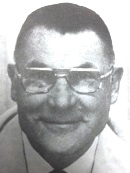 Bush oversaw some of the most significant developments in MHSAA history, chiefly the addition of girls sports – MHSAA tournaments existed for nine girls sports when he retired – plus the addition of football playoffs in 1975 and MHSAA tournaments in baseball, ice hockey and skiing.
“He led the MHSAA during simultaneously one of the most stressful and most exciting times as schools responded to federal legislation promoting opportunities for minorities and females,” current MHSAA Executive Director John E. “Jack” Roberts said. “Al Bush was among leaders who saw the opportunities instead of burdens of those laws.”
He began his tenure at the MHSAA on March 1, 1960, as Assistant State Director of Athletics to Executive Director Charles E. Forsythe. Bush’s designation changed to Associate Director in 1963, and on July 10, 1968 he was appointed to replace the retiring Forsythe as leader of the association.
An award bearing Bush’s name is bestowed by the MHSAA each spring to an administrator, coach, official, trainer, doctor, or member of the media who has at least 15 years of experience in Michigan interscholastic athletics with unusually frequent and significant contributions to the MHSAA.
Prior to joining the MHSAA, Bush taught mathematics, coached four sports and served as athletic director at different times during tenures at Battle Creek Central, Kalamazoo University, Dearborn and Bay City Handy high schools. Bush was a graduate of Kalamazoo University and later earned multiple bachelor’s degrees from Western Michigan University and a master’s in school administration from the University of Michigan. He was captain of the football team at WMU and received its Most Valuable Player and Athletic-Scholarship awards as a senior, and later was named Man of the Year in 1975 by WMU’s Alumni W Club.
Bush also studied at Princeton University and the University of Arizona and served six years of active duty with the U.S. Marine Corps during World War II and the Korean War. He was discharged with a rank of first lieutenant.
While at the MHSAA, Bush was a frequent contributor to the National Federation of State High School Associations. He served as chairperson of the committee that wrote the NFHS’s first swimming and diving rule book and also was a representative to the U.S. Olympic Committee.
A memorial service will take place at 11 a.m. Friday, Sept. 13, at Central United Methodist Church in Traverse City.
A summation written by late MHSAA historian Dick Kishpaugh during 1978 said the following of Bush's service to member schools:
"Through all of these varied and complex changes, the MHSAA has met its commitment to a high standard of excellence," Kishpaugh wrote.
"Al Bush is fallible, as we all are, but he needs to make no apologies. The accomplishments speak for themselves."