

MHSAA, NFHS Learning Center Team Up to Provide Online Student Leadership Series
By
Geoff Kimmerly
MHSAA.com senior editor
August 10, 2023
Leadership always has been one of the most valuable and applicable life skills developed by student-athletes participating in educational athletics. To assist in that development, the Michigan High School Athletic Association (MHSAA) and National Federation of State High School Associations (NFHS) have partnered to produce an online Student Leadership series designed to provide the latest research-based instruction to high schoolers throughout the United States.
The Student Leadership series is provided as part of the web-based NFHS Learning Center and includes two free courses focused on students – “Becoming a Leader” and “Leading Others” – with a third installment for coaches currently in production. All three are inspired by the latest research on how youth-aged athletes learn to lead.
This latest work builds on the MHSAA-produced “Captains Course” developed in 2015 with Michigan State University’s Institute for the Study of Youth Sports (ISYS). The “Captains Course” has been taken more than 100,000 times and is based on in-person “Captains Clinics” that MHSAA staff and ISYS conduct with thousands of students across Michigan each year.
Each student-focused segment of the new Student Leadership series takes 30-45 minutes to complete and includes frequent and quick activities designed to help students understand how they would apply leadership skills in real-life scenarios. Course instruction was created primarily in coordination with the MHSAA by a pair of nationally-recognized authorities on the subject: Jed Blanton, an assistant professor in kinesiology, recreation and sport studies at the University of Tennessee; and Scott Pierce, an associate professor in kinesiology and recreation at Illinois State University.
Both Blanton and Pierce have vast experience with youth athletics; both also formerly worked for the Institute for the Study of Youth Sports and served as graduate assistants at the MHSAA during their time at MSU, playing large roles in more than a decade of research conducted through coordination with the MHSAA’s 16-member Student Advisory Council. High school administrators, student leaders, and other researchers and mental performance consultants also contributed to the lessons taught in these courses. The NFHS produced the content, including all of the visuals and digital features, and the student-focused courses went live on the NFHS Learn website in mid-summer.
“We’ve taken a good program, and made it even better,” said MHSAA Assistant Director Andy Frushour, who coordinates the Association’s student services programs. “This is a program we do in person in Michigan, but our reach now is across the country – and these courses are free, hopefully allowing us to contribute to the development of even more student leaders.”
The “Becoming a Leader” course defines leadership styles and builds skills to help students consider themselves as leaders. “Leading Others” details how leaders put those skills into practice including during challenging situations. Blanton and Pierce worked closely with student advisory groups from various states to make the research content relatable to school sports participants. All voices heard in the courses belong to high school students – including athletes from Michigan, Illinois and Washington who provided 30 testimonials that describe leadership in action.
The “Coaches Course” will provide the same information as presented to high school students, but in a way that explains how coaches can use these tools to personalize leadership training among their athletes as they seek to recognize which types of leaders they have on a team, and which types are missing and need to be developed.
“The NFHS is grateful for the opportunity to work with the MHSAA as well as Dr. Blanton and Dr. Pierce,” said Dan Schuster, the NFHS’ director of educational services. “We believe these student leadership courses will provide valuable information across the country and will contribute to the improvement of the interscholastic experience for young people.”
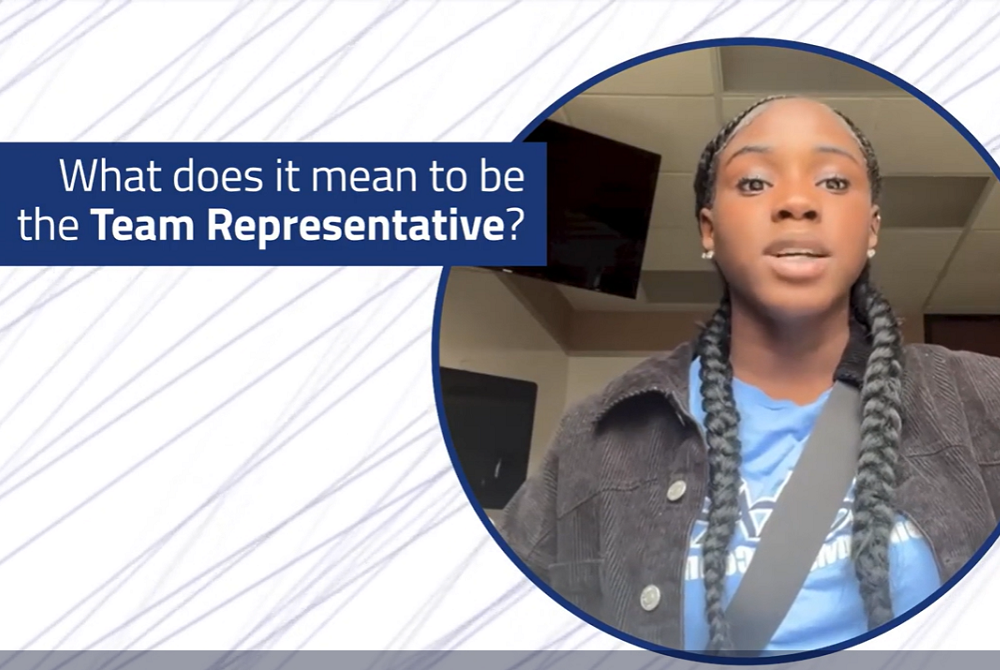
Video previews provide additional information on both Student Leadership courses.Click for direct links to “Becoming a Leader" and “Leading Others.”

Performance of the Week: Grandville's Caden Livermore
September 18, 2026

Caden Livermore ♦ Grandville
Senior ♦ Cross Country
Livermore has been one of the state’s elite cross country runners for more than a year, and he proved it once again at Saturday’s Spartan Invitational at Michigan State, winning the “Elite” race in a time of 15:19.4, 12.2 seconds ahead of a field that included several of the state’s top returning runners from a year ago.
The Grandville senior is coming off a third-place finish at last year’s Lower Peninsula Division 1 Final and at the Spartan finished just ahead of Kalamazoo Central’s Samuel Baker and Northville’s Brandon Cloud, who placed 22nd and second, respectively, at Michigan International Speedway last November. Livermore’s top time this season of 15:03.1 ranks fourth on the state’s top times list, all divisions included. He’s also coming off runner-up finishes in the 1,600 and as part of the 1,600 relay at this spring’s LPD1 Track & Field Finals, and after graduation he’ll be competing in both sports at Grand Valley State University, where he’s interested in studying kinesiology and business.
@mhsaasports 👟POW: Caden Livermore #Grandville #CrossCountry #SpartanInvite #PerformanceOfTheWeek #MHSAA ♬ original sound - MHSAA
@mhsaasports 👟POW: Caden Livermore #TikTalk #FunFacts #FYP #HighSchoolSports #MHSAA ♬ original sound - MHSAA
Follow the MHSAA on TikTok.
MHSAA.com's "Performance of the Week" features are powered by MI Student Aid, a division within the Department of Lifelong Education, Advancement, and Potential (MiLEAP). MI Student Aid encourages students to pursue postsecondary education by providing access to student financial resources and information. MI Student Aid administers the state’s 529 college savings programs (MET/MESP), as well as scholarship and grant programs that help make college Accessible, Affordable and Attainable for you. Connect with MI Student Aid at www.michigan.gov/mistudentaid and find more information on Facebook and X @mistudentaid.