


MHSAA Remembers Late Director Bush
By
Geoff Kimmerly
MHSAA.com senior editor
September 11, 2013
Allen W. Bush was a military man and had a military way about him.
And those traits no doubt were invaluable as the former U.S. Marine became a respected national voice during arguably the most transformative era in high school athletics.
Bush, who served as Executive Director the Michigan High School Athletic Association from the fall of 1968 through the summer of 1978, died Monday in Traverse City. He was 90.
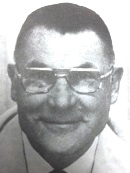 Bush oversaw some of the most significant developments in MHSAA history, chiefly the addition of girls sports – MHSAA tournaments existed for nine girls sports when he retired – plus the addition of football playoffs in 1975 and MHSAA tournaments in baseball, ice hockey and skiing.
“He led the MHSAA during simultaneously one of the most stressful and most exciting times as schools responded to federal legislation promoting opportunities for minorities and females,” current MHSAA Executive Director John E. “Jack” Roberts said. “Al Bush was among leaders who saw the opportunities instead of burdens of those laws.”
He began his tenure at the MHSAA on March 1, 1960, as Assistant State Director of Athletics to Executive Director Charles E. Forsythe. Bush’s designation changed to Associate Director in 1963, and on July 10, 1968 he was appointed to replace the retiring Forsythe as leader of the association.
An award bearing Bush’s name is bestowed by the MHSAA each spring to an administrator, coach, official, trainer, doctor, or member of the media who has at least 15 years of experience in Michigan interscholastic athletics with unusually frequent and significant contributions to the MHSAA.
Prior to joining the MHSAA, Bush taught mathematics, coached four sports and served as athletic director at different times during tenures at Battle Creek Central, Kalamazoo University, Dearborn and Bay City Handy high schools. Bush was a graduate of Kalamazoo University and later earned multiple bachelor’s degrees from Western Michigan University and a master’s in school administration from the University of Michigan. He was captain of the football team at WMU and received its Most Valuable Player and Athletic-Scholarship awards as a senior, and later was named Man of the Year in 1975 by WMU’s Alumni W Club.
Bush also studied at Princeton University and the University of Arizona and served six years of active duty with the U.S. Marine Corps during World War II and the Korean War. He was discharged with a rank of first lieutenant.
While at the MHSAA, Bush was a frequent contributor to the National Federation of State High School Associations. He served as chairperson of the committee that wrote the NFHS’s first swimming and diving rule book and also was a representative to the U.S. Olympic Committee.
A memorial service will take place at 11 a.m. Friday, Sept. 13, at Central United Methodist Church in Traverse City.
A summation written by late MHSAA historian Dick Kishpaugh during 1978 said the following of Bush's service to member schools:
"Through all of these varied and complex changes, the MHSAA has met its commitment to a high standard of excellence," Kishpaugh wrote.
"Al Bush is fallible, as we all are, but he needs to make no apologies. The accomplishments speak for themselves."

2026 MHSAA Bush Awards Honorees Exemplify Dedicated Service in Several Roles
By
Geoff Kimmerly
MHSAA.com senior editor
June 30, 2026
Athletic administrators must balance multiple roles no matter the size of their school districts or numbers of sports they direct, and St. Ignace’s Don Gustafson, Brethren’s Jason Kemler, Grand Rapids’ Jolinda Lucas and Greenville’s Brian Zdanowski have thrived while shouldering wide-ranging responsibilities to provide first-rate athletic experiences for their students.
Their dedication to school sports and those athletes – both locally and statewide – made them clearly deserving recipients of 2026 Allen W. Bush Meritorious Service Awards as selected by the Michigan High School Athletic Association’s Representative Council.
Al Bush served as executive director of the MHSAA for 10 years. The award honors individuals for past and continuing service to school athletics as a coach, administrator, official, trainer, doctor or member of the media. The award was developed to bring recognition to people who are giving and serving locally, regionally or statewide without a lot of attention. This is the 35th year of the award.
 Gustafson has taught at his alma mater St. Ignace since 1982 and continued even after retiring from administration in 2021. In addition to his classroom work, he served as assistant athletic director his first three years, then athletic director for four, as junior high principal from 1994-2005, high school principal from 2005-11 and superintendent for the next decade.
He’s also been an MHSAA-registered game official since 1978, working six Finals in football, one in basketball and numerous in cross country, in addition to several more postseason events during his time officiating seven sports. He was named to the Basketball Coaches Association of Michigan (BCAM) Hall of Honor in 2021 as an official and “Friend of Basketball.”
Gustafson served on the MHSAA Representative Council from 2015-21. The Michigan State University grad also has served on St. Ignace’s city council, taking time away only during his tenure as superintendent.
“Don Gustafson’s contributions to school sports span nearly half a century and have included everything from behind-the-scenes support to being considered one of the state’s top game officials and a valued voice on our Representative Council,” MHSAA Executive Director Mark Uyl said. “He has long been a knowledgeable and positive voice impacting not only the Upper Peninsula but our community statewide.”
 Brethren High School athletic director Jason Kemler recently completed his 20th year with the Kaleva Norman Dickson school district, where he has hosted several MHSAA Tournament events in a variety of sports including Regionals in track & field both at the high school and middle school/junior high levels. He’s also served on multiple MHSAA committees including the Junior High/Middle School Committee.
Kemler has done extensive work as well as part of the Michigan Interscholastic Athletic Administrators Association (MIAAA), serving as a regional representative, historical records chairperson and co-chair of the middle school/junior high committee, and also co-chair for the MIAAA’s 60th and 65th anniversary celebrations. He was named the MIAAA’s Region 3 Athletic Director of the Year in 2023.
Kemler is a graduate of Dansville High School and Albion College and received his teaching certificate from Michigan State University and master’s from Central Michigan University. He also serves as a captain for his local fire department.
“Jason Kemler’s stamp is all over the Brethren athletic department and community as a whole, as he’s embraced all of the roles that go with serving at a small school – teaching physical education and history and coaching as well as serving as athletic director and representing his school in significant ways among his colleagues statewide,” Uyl said. “His commitment and dedication are fine examples of what the Bush Award seeks to recognize.”
 Lucas also has made an outsized impact at the middle school level during her 14 years serving in multiple roles for Grand Rapids Public Schools, including as middle school athletic director, director of all GRPS elementary sports and as athletic director for Grand Rapids University Prep Academy, whose students compete for either Ottawa Hills or Union High School. She has served on the MHSAA Junior High/Middle School Committee, contributing to an increasing emphasis at that level, and was selected as a meet manager for inaugural MHSAA Cross Country and Track & Field Regionals for junior high/middle school athletes.
Also a teacher at University Prep and an MHSAA-registered official the last six years for track & field and cross country – and the last two for volleyball – Lucas has served as sportsmanship chair for the MIAAA and as part of the MHSAA/Farm Bureau Insurance Scholar-Athlete Award Committee, and on the board for the Michigan-based Academy of Sports Leadership. She was named the MIAAA’s Region 14 Athletic Director of the Year in 2022.
Lucas graduated from Hobart (Ind.) High School and has a bachelor’s degree in physical education and health from Indiana State University, a master’s in educational leadership from Indiana University, and earned her certified athletic administrator designation from the National Interscholastic Athletic Administrators Association (NIAAA). She is a Red Cross instructor and has served on the GRPS health and physical education leadership team. Prior to coming to Grand Rapids, Lucas served in multiple athletic administration roles in Indiana, where she also taught for 24 years and earned a 30-year coaching and multiple 20-year service awards.
“Jolinda Lucas has brought a special dedication to our junior high and middle school sports and their important roles in educational athletics,” Uyl said. “She has provided valuable input on a variety of historic decisions, including the addition of sixth graders to MHSAA competition and creation of Regional competitions in cross country and track & field. Her foresight is impacting Michigan’s school-sports athletes at the youngest levels and making a difference that will continue to benefit them as they advance to high school programs.”
 Zdanowski recently completed his 28th school year as athletic director at Greenville after previously serving as a teacher, coach and athletic director over a decade at Onaway and Midland Bullock Creek. As an athletic director, he has hosted more than 100 MHSAA Tournament events, including five 8-Player Football Finals and 13 11-Player Semifinals. He also has been an MHSAA-registered game official for 44 years, working five sports including Finals in baseball in 1995 and football in 2001.
The longtime administrator also has served on multiple MHSAA committees, including more than a decade on the MHSAA/Farm Bureau Insurance Scholar-Athlete Award Committee, and served as Ottawa-Kent Conference president for two years. He’s been a member of the MIAAA for 34 years, Michigan Association of Secondary School Principals (MASSP) for 28 years and National Association of Sports Officials (NASO) for 25. He was named the MIAAA’s Region 4 Athletic Director of the Year in 2008.
Zdanowski, a graduate of Standish-Sterling, has a bachelor’s degree in teacher education from Saginaw Valley State University and a master’s in athletic administration from Central Michigan University. He’s also completed 24 courses from the NIAAA Leadership Training Institute.
“Brian Zdanowski has created a program at Greenville that is the model of quality, and that was proven deservedly when his athletic department was named an Exemplary Athletic Program by the MIAAA in 2000, the first year of that prestigious recognition program,” Uyl said. “He has consistently shared what he’s built at home with the rest of the state for now several decades, and we continue to be thankful for Brian’s desire to serve and contribute to school sports in a variety of leadership roles.”
The MHSAA is a private, not-for-profit corporation of voluntary membership by more than 1,500 public and private senior high schools and junior high/middle schools which exists to develop common rules for athletic eligibility and competition. No government funds or tax dollars support the MHSAA, which was the first such association nationally to not accept membership dues or tournament entry fees from schools. Member schools which enforce these rules are permitted to participate in MHSAA tournaments, which attract more than 1.4 million spectators each year.