


MHSAA Remembers Late Director Bush
By
Geoff Kimmerly
MHSAA.com senior editor
September 11, 2013
Allen W. Bush was a military man and had a military way about him.
And those traits no doubt were invaluable as the former U.S. Marine became a respected national voice during arguably the most transformative era in high school athletics.
Bush, who served as Executive Director the Michigan High School Athletic Association from the fall of 1968 through the summer of 1978, died Monday in Traverse City. He was 90.
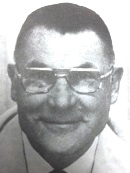 Bush oversaw some of the most significant developments in MHSAA history, chiefly the addition of girls sports – MHSAA tournaments existed for nine girls sports when he retired – plus the addition of football playoffs in 1975 and MHSAA tournaments in baseball, ice hockey and skiing.
“He led the MHSAA during simultaneously one of the most stressful and most exciting times as schools responded to federal legislation promoting opportunities for minorities and females,” current MHSAA Executive Director John E. “Jack” Roberts said. “Al Bush was among leaders who saw the opportunities instead of burdens of those laws.”
He began his tenure at the MHSAA on March 1, 1960, as Assistant State Director of Athletics to Executive Director Charles E. Forsythe. Bush’s designation changed to Associate Director in 1963, and on July 10, 1968 he was appointed to replace the retiring Forsythe as leader of the association.
An award bearing Bush’s name is bestowed by the MHSAA each spring to an administrator, coach, official, trainer, doctor, or member of the media who has at least 15 years of experience in Michigan interscholastic athletics with unusually frequent and significant contributions to the MHSAA.
Prior to joining the MHSAA, Bush taught mathematics, coached four sports and served as athletic director at different times during tenures at Battle Creek Central, Kalamazoo University, Dearborn and Bay City Handy high schools. Bush was a graduate of Kalamazoo University and later earned multiple bachelor’s degrees from Western Michigan University and a master’s in school administration from the University of Michigan. He was captain of the football team at WMU and received its Most Valuable Player and Athletic-Scholarship awards as a senior, and later was named Man of the Year in 1975 by WMU’s Alumni W Club.
Bush also studied at Princeton University and the University of Arizona and served six years of active duty with the U.S. Marine Corps during World War II and the Korean War. He was discharged with a rank of first lieutenant.
While at the MHSAA, Bush was a frequent contributor to the National Federation of State High School Associations. He served as chairperson of the committee that wrote the NFHS’s first swimming and diving rule book and also was a representative to the U.S. Olympic Committee.
A memorial service will take place at 11 a.m. Friday, Sept. 13, at Central United Methodist Church in Traverse City.
A summation written by late MHSAA historian Dick Kishpaugh during 1978 said the following of Bush's service to member schools:
"Through all of these varied and complex changes, the MHSAA has met its commitment to a high standard of excellence," Kishpaugh wrote.
"Al Bush is fallible, as we all are, but he needs to make no apologies. The accomplishments speak for themselves."

Photos: Top Shooters & Award Winners
March 26, 2019
By Geoff Kimmerly
Second Half editor
The MHSAA Girls & Boys Basketball Finals the last two weekends showed off many of the best teams and players who took the courts across Michigan this winter.
The championships also provided an opportunity to celebrate a few more accomplishments with the Basketball Coaches Association of Michigan “Top Shooters Challenge” contests and MHSAA recognition for leaders past, present and future.
Below are photos from a number of events that took place during quarter breaks and halftimes at Van Noord Arena this past weekend and the Breslin Center two weeks ago.
Top Shooters: This season’s BCAM top shooters contests again recognized the sharpest from the free-throw line and 3-point arc. This past weekend at Calvin College, Grand Rapids Forest Hills Northern’s Madi Stevenson won the 3-point contest with Pontiac Notre Dame Prep’s Sarah Stuart runner-up, while Saline’s Ella Stemmer won the free throw contest and Manton’s Abby Brown was second.
At Breslin, Mio’s Drew Hess won the 3-point challenge with Kent City’s Eli Carlson second. Zeeland East’s Clayton Dykhouse and Owosso’s Carson Bornefeld tied for the free throw championship.
(See photo above, clockwise from left: Girls free throw finalists, boys free throw finalists, girls 3-point finalists and boys 3-point finalists.)
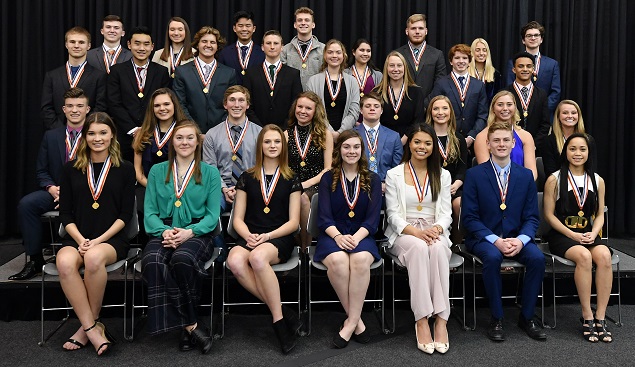
30th Scholar-Athlete Awards: Farm Bureau and the MHSAA presented 31 honorees with Scholar-Athlete Awards during Boys Finals weekend (one honoree was unable to attend). This year’s selections were honored at a banquet and then on the floor during halftime of the Division 3 Final.
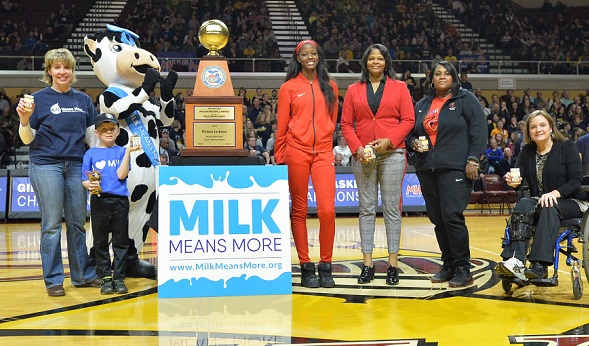

Miss Basketball & Mr. Basketball: Detroit Edison’s Rickea Jackson was recognized on-court as the Miss Basketball Award winner during Saturday’s Division 3 game before leading the Pioneers that evening to their third straight MHSAA title. Mr. Basketball Award honoree Romeo Weems accepted the trophy at Breslin as this year’s top senior on the boys side.
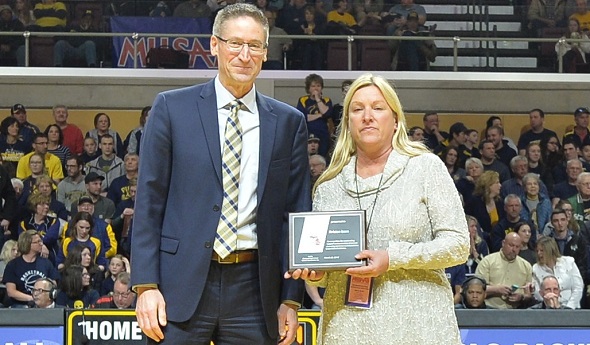
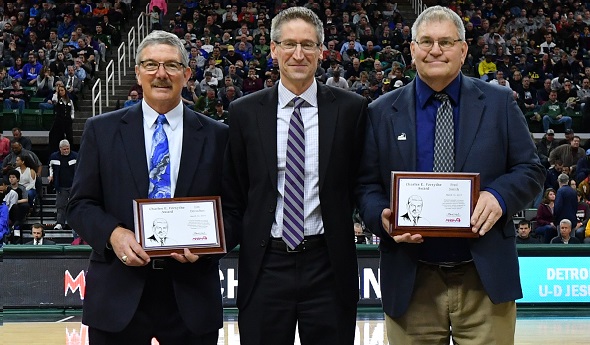
WISL & Forsythe Awards: Adrian Madison athletic director Kris Isom was honored Saturday as this year’s recipient of the MHSAA Women In Sports Leadership Award. The week prior, retired Negaunee and Brimley superintendent Jim Derocher and retired Buchanan, Benton Harbor, Comstock and St. Joseph Lake Michigan Catholic athletic director Fred Smith accepted Charles E. Forsythe Awards. All three were presented by Grand Haven Area Public Schools assistant superintendent Scott Grimes, who serves as president of the MHSAA’s Representative Council.
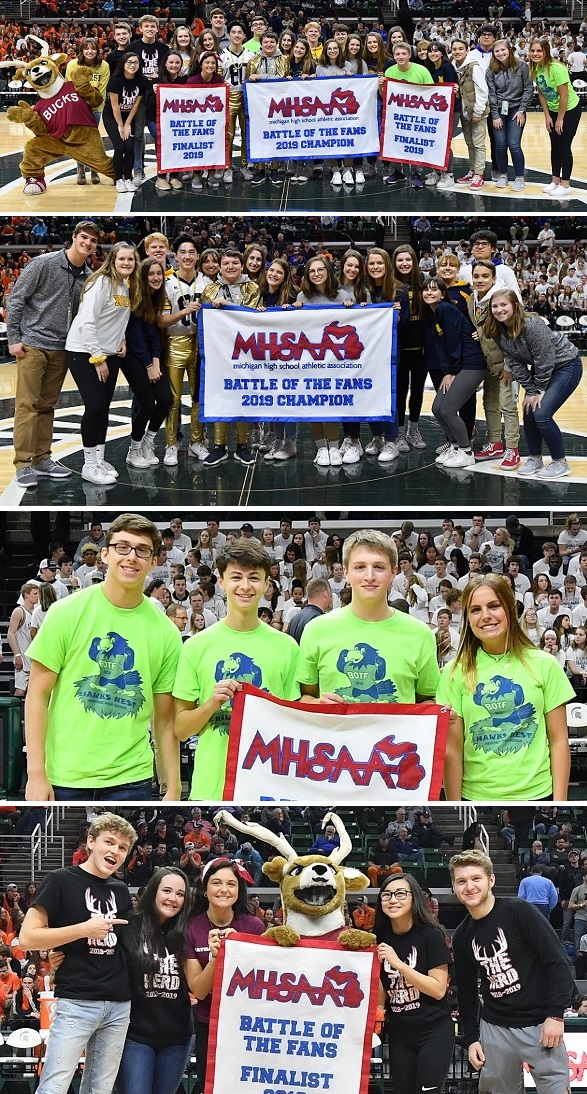
Battle of the Fans: Representatives from all three finalists from this year’s BOTF VIII – champion North Muskegon with Saginaw Heritage and Buchanan – took to the Breslin floor during the Division 2 Semifinals to receive their banners.