

NFHS's Gardner Announces Retirement
January 9, 2018
Special from NFHS
Bob Gardner, executive director of the National Federation of State High School Associations (NFHS) since May 2010, has announced his retirement, effective Aug. 1, 2018. Gardner notified the NFHS Board of Directors of his retirement plans at the NFHS Winter Meeting on Jan. 3 in Scottsdale, Arizona.
 Gardner is the fifth full-time executive director of the NFHS, following H.V. Porter (1940-58), Cliff Fagan (1958-77), Brice Durbin (1977-93) and Bob Kanaby (1993-2010).
Gardner’s eight-year run as head of the national organization for high school athletics and performing arts activities will conclude a 48-year career in secondary education, including the final 18 years on the NFHS staff in Indianapolis.
Since assuming duties as NFHS executive director in 2010, Gardner has vigorously promoted the values of high school activity programs and expanded opportunities for participation by boys and girls nationwide. During his eight years as executive director, participation in high school sports has increased by almost 400,000, including the expanded opportunity for students with disabilities in high school sports.
Gardner has led the organization’s focus on risk minimization in high school sports, with particular emphasis on concussion awareness, and has brought a heightened national presence to the work of the NFHS and its member state associations. In addition to the continual expansion of the NFHS Learning Center during his tenure, Gardner is credited with starting the NFHS Network, the first-of-its-kind digital coverage of high school sports with more than 25,000 events covered during the 2016-17 school year.
In addition, during his eight years as chief executive of the organization, operating revenue for the NFHS increased by $4 million.
Ironically, Gardner’s entire 48-year career was spent in the state of Indiana. He was a teacher and coach at three schools for eight years and also served as an athletic director for a period of time. In 1978, Gardner became principal of Milan Junior-Senior High School, followed by a stint as superintendent of the Milan Community Schools.
After serving on the Indiana High School Athletic Association (IHSAA) Board of Directors during his time at Milan, Gardner joined the IHSAA staff in 1985 as assistant commissioner. He served 10 years in that role prior to becoming commissioner in 1995.
During his five years as IHSAA commissioner, Gardner led the change in the IHSAA football playoffs to permit participation by all schools, negotiated the association’s largest corporate sponsorship agreement in history with Indiana Farm Bureau Insurance and led the transition to multiple classes in team sports.
Gardner joined the NFHS staff in 2000 as chief operating officer and served in that position for 10 years prior to becoming executive director. During this time, he chaired the NFHS Rules Review Committee and was responsible for day-to-day operations of the organization.
Gardner earned his bachelor’s degree from the University of Evansville (Indiana) and his master’s and education specialist degrees from Ball State University in Muncie, Indiana. He has served on the Board of Directors for USA Football, USA Basketball and the Indiana Sports Corporation. He is a member of the Indiana High School Wrestling Hall of Fame.
Following the March 1 application deadline, finalists for the position will be interviewed by the NFHS Board of Directors April 17-18 in Indianapolis, with the new executive director expected to begin duties Aug. 1.
Scholars & Athletes 2017: Class A
By
Geoff Kimmerly
MHSAA.com senior editor
February 20, 2017
By Geoff Kimmerly
Second Half editor
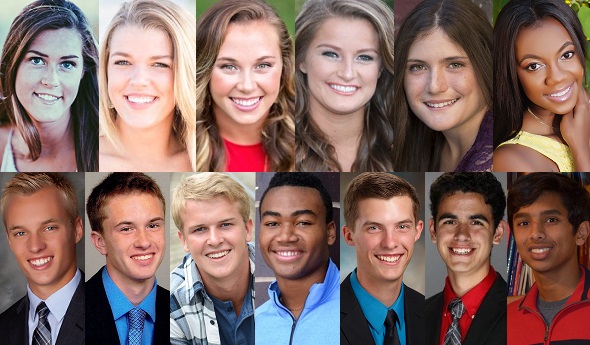
The Michigan High School Athletic Association has selected 13 student-athletes from Class A member schools to receive scholarships through the MHSAA-Farm Bureau Insurance Scholar-Athlete Award program.
 Farm Bureau Insurance, in its 28th year of sponsoring the award, will give $1,000 college scholarships to 32 individuals who represent their member schools in at least one sport in which the Association sponsors a postseason tournament. The first 30 scholarships are awarded proportionately by school classification and the number of student-athletes involved in those classes; also, there are two at-large honorees which can come from any classification.
Students applying for the Scholar-Athlete Award must be carrying at least a 3.5 (on a 4.0 scale) grade-point average and have previously won a letter in a varsity sport in which the Michigan High School Athletic Association sponsors a postseason tournament. Other requirements for the applicants were to show active participation in other school and community activities and produce an essay on the importance of sportsmanship in educational athletics.
Each of the scholarship recipients will be honored at halftime ceremonies of the Class C Boys Basketball Final game March 25 at the Breslin Student Events Center in East Lansing. Commemorative medallions will be given to the finalists in recognition of their accomplishments.
The Class A Scholar-Athlete Award honorees are: Justin Beemer, Fenton; Aidan Carichner, Saline; Lindsay Duca, East Grand Rapids; Connor K. Fischer, Grandville; Jordan George-Nwogu, Ann Arbor Pioneer; Paige Hallock, Greenville; Nathan Jones, Battle Creek Lakeview; Landon Kemp, Greenville; Connor Bryant Meehan, Saline; Varun R. Shanker, Midland Dow; Nikki Sorgi, Utica Ford; Caroline Szabo, Midland Dow; and Jordan Walker, Muskegon Mona Shores.
Overviews of the scholarship recipients of the Class A Scholar-Athlete Award follow. A quote from each recipient's essay also is included:
 Lindsay Duca
East Grand Rapids
Played four years of varsity volleyball and will play her fourth of varsity lacrosse; also played varsity basketball as a freshman. Served as lacrosse team captain as a junior and will as a senior and has been part of three straight MHSAA Division 2 championships in that sport; also played on the 2013 Class A volleyball title-winning team. Earned all-state in lacrosse. Founded school’s “Big Sister Little Sister” program and helped match up more than 160 freshmen and senior girls. Participated in key club four years volunteering more than 40 hours each year. Participated in multiple leadership and youth development initiatives over her four year and served the last two as part of the MHSAA’s Student Advisory Council. Also served three years with school’s “Healthy High” organization promoting healthy lifestyles and two as part of the Kids Food Basket Youth Advisory Board raising funds and awareness to combat childhood hunger. Will attend Pomona College in California and study political science.
Essay Quote: “Situations … where I have performed courageous acts of sportsmanship in the face of adversity, have shaped my character into a brave contender unafraid to stand up, or swallow my pride, for what is right. They have challenged me to not take the easy route out, even if that entails suppressing my instincts or sacrificing my dignity.”
 Paige Hallock
Greenville
Played three years of varsity volleyball, four of varsity basketball and will run her third of varsity track & field. Earned all-state recognition in basketball and served as captain of both that team and her volleyball team. Participating in third year of National Honor Society and received academic honors her first three years of high school with a grade-point average above 3.9. Serves as president of her school’s LINK and Helping Out New Kids clubs and as an e-board member for Students Against Destructive Decisions. Also has participated in student council and as part of her school’s Interact junior rotary club. Participating in fourth year as part of school’s Village Green Show Choir. In addition to other volunteer work, helped raise $2,000 for a school banner bringing awareness to drunk driving. Will attend Grand Valley State University and study either physical therapy or nursing.
Essay Quote: “The word sportsmanship means many different things to people, but to me it means playing the game and playing it the right away. Respecting your teammates, referees, coaches, the opposing team, spectators in the stands and the communities. It’s important to be able to show this respect and still compete at a high level of play. By showing respect, you will earn others’ respect in return.”
 Landon Kemp
Greenville
Played two years of varsity golf, four of varsity basketball and will run her fourth of varsity track & field. Set the MHSAA all-Finals record for pole vault in 2016 in winning the Lower Peninsula Division 1 title. Has placed a combined eight times at MHSAA Finals over her first three track & field seasons; also qualified for the MHSAA Finals in golf and earned all-league honors in basketball three times heading into this winter. Served as captain of both the basketball and track & field teams. Participating in fourth year of National Honor Society, currently as vice president, and also serves as an e-board member for her school’s Helping Out New Kids club. Received academic honors her first three years of high school with a grade-point average above 3.9 and was selected by her school superintendent to serve on school improvement and mission statement committees. Served four years on the Greenville Area Youth Advisory Council and is serving this year as a student representative to the Greenville Education Foundation. Will attend University of South Dakota and study sports management and media.
Essay Quote: “Sportsmanship isn’t about what you can do for yourself; it’s about what you can do for others. … Learning to go out of your way for others can be hard at first, but the more you do it, the more you will want to do it.”
 Nikki Sorgi
Utica Ford
Played four seasons of varsity basketball and will play her fourth of varsity softball. Helped basketball team to a District title as a junior and her softball team to the MHSAA Division 1 Semifinals as a freshman. Has been part of four team school records in softball and earned all-state honors, and owns two school records in basketball while earning all-county recognition. Served as captain of both teams and was named one of two state winners of the Wendy’s High School Heisman Award. Serving fourth year on student council and participating in her fourth year of both National Honor Society and National Technical Honor Society. Also has participated in DECA, including as president, and as part of her school’s Interact club. Selected every year as a mentor/recruiter to encourage middle and elementary school students to play high school sports. Organized a drive to collect donated blankets the last three years for C.S. Mott Children’s Hospital. Will attend Bowling Green State University and major in pre-medical studies.
Essay Quote: “In softball, failure is a natural part of the game. Where else do you succeed only three out of 10 times and you are considered a success? Coping with this rate of failure not only builds mental toughness, but also an understanding that failure in sports is not something to fear: it presents an opportunity to learn and to grow.”
 Caroline Szabo
Midland Dow
Played four seasons of varsity golf and will play her fourth of varsity tennis. Earned all-state honors in tennis twice and all-region and academic all-state honors in golf. Won No. 2 singles championship at 2016 Lower Peninsula Division 1 Tennis Finals and helped both teams to MHSAA Finals team titles during the calendar year 2016. Named National Merit Scholarship semifinalist and Advanced Placement (AP) Scholar with Honors. Participating in third year of National Honor Society and second as part of DECA, serving as her school club’s vice president of competition and a delegate to the International Career Development Conference; helped her DECA club to a state championship in sports & entertainment marketing and state medal award in business test. Participated in a summer chemistry research internship at Michigan State University. Served as a volunteer at Mid-Michigan Regional Medical Center and Greater Midland Tennis Center. Will attend Michigan State and study biochemistry.
Essay Quote: “ … I realized that if athletes don’t uphold the values of the game through good sportsmanship, they have not reaped the benefits from their participation in sports – benefits that can extend beyond sports and into life in general. I have now been on state championship-winning teams in two sports, but those accomplishments wouldn’t be as special to me if I hadn’t shown good sportsmanship throughout all of my athletic endeavors.”
 Jordan Walker
Muskegon Mona Shores
Played four seasons of varsity basketball, will run her fourth of varsity track & field and also played a season of varsity volleyball. Earned all-state and academic all-state recognition for basketball as both a sophomore and junior and helped her team to three straight league titles entering this winter. Named the statewide Miss Basketball Award winner as a senior. Also served as captain of the basketball team and has served the last two years as part of the MHSAA’s Student Advisory Council. Serving her fourth year on student senate, with two as vice president, and is participating in her second year of National Honor Society. Organized “Kicks for Kids” shoe drive and has served as a peer tutor and a volunteer basketball coach; also has served as part of her district’s elementary school reading program and on the hospitality committee for her church. Will attend Western Michigan University and study political science.
Essay Quote: “It took a devastating injury for me to grasp aspects of the game of basketball that may previously have been a blur or that I ignored all together. Similarly, I learned a great deal and encountered similar frustration being on the sideline during this past election – a year shy of being able to vote. Although my voice may be heard from the ‘sideline’ in both cases, nothing trumps one’s ability to have a direct influence – especially when it comes to displaying appropriate sportsmanship … in competition and beyond.”
 Justin Beemer
Fenton
Played two years of varsity soccer and participated in three seasons of varsity swimming & diving, earning all-league honors in both and advancing to the MHSAA Finals in the latter as part of the school record-setting 400-yard freestyle relay. Helped both teams to league championships, the swim team to three straight over his first three seasons, and co-captained both teams while also earning league all-academic honors in both sports. Participating in fourth year of marching band and third of National Honor Society, and helped the school’s first robotics team to a state semifinalist finish as a junior. Earned a Michigan Interscholastic Press Association writing award and serves as a band section leader. Has represented his Michigan district and a four-state region as part of the Missouri Synod’s Lutheran Youth Fellowship leadership program. Will attend University of Michigan and study biomedical engineering.
Essay Quote: “Sportsmanship lays a foundation for the fair treatment and respect of others. Much like athletics, the world is a competitive place. … My coaches often say that you play like you practice. I believe this principle applies to our lives as well; the dignity with which student athletes conduct themselves in high school is simply practice for the competition of life.”
 Aidan Carichner
Saline
Ran three seasons of varsity cross country and will run his third of varsity track & field this spring. Earned all-state in cross country in the fall after finishing 26th at the Lower Peninsula Division 1 Final, and academic all-state in that sport as a junior. Has served as captain of both teams. Served three years on student council, two as section leader in his school’s jazz band, two as a “Link Crew” leader and two as a “Ten for Men” Christian fellowship leader. Recognized as Saline’s “Youth of the Year” in 2016 and was named a National Merit Scholarship Commended Scholar. Received a superior rating for clarinet from the Michigan School Band and Orchestra Association. Initiated a drive to recycle 100 pairs of shoes for use in making tracks and other play surfaces; and for “Walk, Run & Roll” event, secured donation of shoes for athletes with special needs. Participating in second year of National Honor Society and fourth as part of University of Michigan’s MREACH academic enrichment and leadership development program. With attend University of Michigan and major in pre-medical studies or business administration.
Essay Quote: “Sportsmanship is a product of understanding, connection, competition and respect. … Without it, we remain strangers on opponent sides. With sportsmanship, we form a special bond and add to the richness of our experience.”
 Connor K. Fischer
Grandville
Played two seasons of varsity football, three of varsity ice hockey and will play his third of varsity lacrosse this spring. Helped hockey team to the MHSAA Division 1 Final in 2015 and Semifinals in 2016 and has served as team captain for all three of his sports. Earned academic all-state recognition in football in the fall. Serving second year as his class’ president and fourth on his class’ executive board. Participating in second year of National Honor Society and first on his school’s student life committee, and has logged more than 570 hours of community service in addition to providing youth leadership and service with his church. Carries a 4.06 grade-point average and earned the Advanced Placement (AP) Scholar Award. Selected to both the U.S. Military Academy Summer Leadership Experience and U.S. Naval Academy Summer Seminar in 2016. Has accepted appointment to the U.S. Military Academy at West Point and will study mechanical engineering.
Essay Quote: “One team overcome by grief, one team surrounding them with compassion. That powerful moment was perhaps the purest example of the importance of sportsmanship. What made it amazing was that it wasn’t scripted. No one told those young men what to do, or how to act. They already knew; it was already in them. It had been developed and engrained through years of competition in educational athletics.”
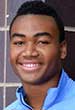 Jordan George-Nwogu
Ann Arbor Pioneer
Played three years of varsity football and will play his third of varsity baseball this spring. Earned all-league honorable mention in football his last two seasons and made the Ann Arbor News Dream Team as a junior; earned all-state baseball honors as a junior and has served as captain of that team. Participating in third year of National Honor Society and Kiwanis Club and second as part of school’s Gift Club community service organization. Played two years in school’s concert band and earned all-state as first chair tuba from the Michigan School Band and Orchestra Association. Also participated in Ann Arbor Public Schools’ Rising Scholars program for three years, as a Science Olympiad coach for elementary students and as part of his church teen ministry. Named NAACP Scholar and Alpha Kappa Alpha Young Man of Promise. Will attend University of Michigan and study engineering.
Essay Quote: “Sportsmanship is about being gracious in both victory and defeat. As an 8-year-old playing soccer, sportsmanship was easier since we got an ice cream treat after a game whether we won or lost. Dealing with losses can be a lot more difficult in high school. … Sportsmanship has taught me to treat game losses as a learning experience as there are a lot more games to be played.”
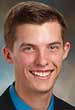 Nathan Jones
Battle Creek Lakeview
Played two seasons of varsity soccer, ran two of varsity cross country and will play his fourth of varsity baseball; also played two junior varsity seasons of basketball. Made all-state Dream Team in baseball and has helped that team to the MHSAA Semifinals once and three league titles. Earned all-conference in cross country helping that team to a league title, and also helped his soccer team to an all-city championship. Served as captain of the baseball team and squad leader in soccer. Serving fourth year as a representative in student government and also fourth as part of Fellowship of Christian Athletes and Soul Impact, for which he is a co-prayer leader. Also has participated for four years in school’s Friends Forever club, church youth group and served as editor of the school newspaper. Named state finalist for computer graphics by the Michigan Industrial and Technology Education Society. Will attend Eastern Michigan University and study computer science.
Essay Quote: “That game is what high school sports should be about: respect and true sportsmanship towards each other. … Sports are far more than just winning or losing; it’s the time you spend enjoying the sport you love, and being able to share that time with everyone around you.”
 Connor Bryant Meehan
Saline
Ran four years of varsity cross country and two of varsity track & field entering this spring. Earned all-region honors in cross country, serving as that team’s captain in the fall and a track & field captain last season. Also earned academic all-state honors in cross country. Achieved school’s highest academic honors every trimester of high school and was named a finalist three years by the Michigan Math Prize Competition; also earned an outstanding service award for FIRST Robotics Competition. Participating in fourth year of orchestra, serving as first chair for viola. Earned Eagle Scout rank as a freshman and has participated in Boy Scouts all four years of high school, also earning membership in the Order of the Arrow honor society. Has participated at least three years in Michigan Math Circle, Michigan Technological University’s Engineering Scholars and the Michigan Math & Science Scholars programs. Participating in third year with Ten for Men leadership group and serves as teen leader at his church. Will attend University of Michigan and study engineering.
Essay Quote: “Selfish ambition has no place in the heart of a true sportsman. Achieving individual racing records would feel empty if it was at the cost of the team’s success; instead, we work together as a collective varsity unit with the team’s best interest ever in view.”
 Varun R. Shanker
Midland Dow
Played four seasons of varsity tennis, earning individual MHSAA Finals championships at No. 3 and No. 1 singles and helping his team to Lower Peninsula Division 2 championships in 2013 and 2016. Earned all-state honors all four seasons and received the Mr. Tennis Award this past fall. Served as team captain the last three seasons and was the first sophomore captain in program history. Named National Merit Scholarship semifinalist and Advanced Placement (AP) Scholar with Distinction carrying an unweighted 4.0 grade-point average; ranks first in his class of 288 students. Helped school’s innovation team earn $135,000 over three years from the A.H. Nickless Innovation Award competition and is serving his third year as president of school’s DECA club; also served as school’s science quiz bowl captain in 2016. Participating in second year of National Honor Society and served over three years as a research assistant at a biomaterials laboratory at the Massachusetts Institute of Technology. Is undecided where he will attend college but will study biological/biomedical engineering.
Essay Quote: “Sportsmanship is not necessarily defined by grandiose gestures of sacrifice or conspicuous actions of consequence. It is often a sequence of small, yet meaningful, actions of integrity, compassion, fairness, and respect for fellow athletes, which when considered cumulatively over time help define and represent the character of a great athlete.”
Other Class A girls finalists for the Scholar-Athlete Award were: Kaitlyn Coons, Cedar Springs; Sarah Kurpiers, Farmington Hills Mercy; Jocelyn Prinz, Grand Rapids Forest Hills Central; Amber Nicole Manitowabi-Huebner, Marquette; Alex Wilkinson, Middleville Thornapple Kellogg; Emma Streveler, New Baltimore Anchor Bay; Alexa Scroggie, New Boston Huron; Elizabeth Stockert, New Boston Huron; Allissa Wight, New Boston Huron; Katelyn Jones, Owosso; Jalynn Byers, Petoskey; Mackenzie Carano, Pinckney; Sydney Asuncion, Rochester; Allyson Faulkner, Rockford; Harmony Groves, Sturgis; Maggie Dutmers, Traverse City Central; Hunter Kehoe, Traverse City West; and Aubrey Fetzer, Warren Cousino.
Other Class A boys finalists for the Scholar-Athlete Award were: Trevor Roznowski, Alpena; Jonah Kamoo, Birmingham Groves; Ben Williams, Birmingham Seaholm; Andrew R. Twiford, Byron Center; Eric Bach, Coldwater; Kameron Miller, Coldwater; CJ Baird, Detroit Catholic Central; Jackson Ross, Detroit Catholic Central; Steven Stine, Fraser; Dominic LaJoie, Gaylord; Drew VanAndel, Grand Haven; Michael Gumbko, Grand Rapids Forest Hills Northern; Michael Visscher, Holland; Tyler Opdycke, Livonia Churchill; Gary R. O'Brien III, Riverview; Matthew J. Polzin, Sturgis; and Andrew Long, White Lake Lakeland.
The Class C and D scholarship award recipients were announced Feb. 7, and the Class B honorees were announced Feb. 14.
Farm Bureau Insurance of Michigan was founded in 1949 by Michigan farmers who wanted an insurance company that worked as hard as they did. Those values still guide the company today and are a big reason why it is known as Michigan’s Insurance Company, dedicated to protecting the farms, families, and businesses of this great state. Farm Bureau Insurance agents across Michigan provide a full range of insurance services — life, home, auto, farm, business, retirement, Lake Estate®, and more — protecting nearly 500,000 Michigan policyholders.
The MHSAA is a private, not-for-profit corporation of voluntary membership by more than 1,400 public and private senior high schools and junior high/middle schools which exists to develop common rules for athletic eligibility and competition. No government funds or tax dollars support the MHSAA, which was the first such association nationally to not accept membership dues or tournament entry fees from schools. Member schools which enforce these rules are permitted to participate in MHSAA tournaments, which attract more than 1.4 million spectators each year.