


Rep Council Wrap-Up: Fall 2016
December 12, 2016
By Geoff Kimmerly
Second Half editor
The Representative Council of the Michigan High School Athletic Association took actions at its Fall Meeting on Dec. 2 in East Lansing that will affect baseball and Upper Peninsula golf teams this spring.
Generally, the Council takes only a few actions during its Fall Meeting, with topics often introduced for additional consideration and actions during its meetings in winter and spring. However, a rules change approved in baseball was required by the National Federation of State High School Associations before the start of the spring 2017 season, while the golf change is a result of multiple years of discussion concerning classifications for MHSAA Upper Peninsula Finals.
Beginning this upcoming baseball season, pitchers will be required to follow a pitch count limit, instead of the previous rule that limited their innings based on the number of outs thrown. In July, the NFHS Baseball Rules Committee mandated that all states adopt a pitch count rule in an effort to further prevent pitcher arm injuries, effective with the 2016-17 school year. Pitchers will be allowed to throw a maximum of 105 pitches in one day; they will be required to rest three days if they throw more than 75. Pitchers must rest two days after throwing 51-75 pitches, one day after throwing 26-50, and will not be required to rest if they throw 25 or fewer pitches in one day. The MHSAA pitch count rule was the result of work by a task force made up of current and former coaches and administrators, including representatives of the Michigan High School Baseball Coaches Association.
For Upper Peninsula Golf, both the girls and boys tournaments, the Council approved a change classifying participating schools into three equal divisions beginning in the spring of 2017. Previously, Class A, B and C schools were split evenly into Divisions 1 and 2, with Division 3 reserved for Class D schools. However, Class D had grown to include nearly twice as many participating schools as both Division 1 and 2, complicating tournament logistics. This proposal was advanced by the Upper Peninsula Athletic Committee.
The Council also approved for the MHSAA’s Multi-Sport Participation Task Force to continue its work indefinitely beyond the end of 2016, and also approved possible expansion of the task force as it continues to work toward preparing strategies and specific tactics for the MHSAA, allied organizations and local schools and conferences to promote multi-sport participation by student-athletes. The task force has determined it must focus on educating students and parents on the benefits of multi-sport participation when students are at younger ages – as early as when they are attending elementary school – while providing service and support at the junior high/middle school level; both efforts aim to create an atmosphere promoting multi-sport participation that would carry on when students reach high school.
Results of efforts to grow junior high/middle school membership were reported, with 757 junior high/middle schools in the MHSAA’s membership for 2016-17, compared to 705 at the conclusion of the 2015-16 school year. Of those 757, there are 498 that have included sixth grade in their membership, as allowed this school year for the first time. The Council also heard reports related to the MHSAA’s “Defining & Defending Educational Athletics” mission, notably on a pair of efforts by the National Federation focused on enhancing participation, reducing risk, optimizing performance and spreading the positive message of educational athletics. In addition, the Council discussed results of a recent survey of officials who had left the avocation and their reasons why, with the hope of staff using that data as it works to recruit and retain officials.
The Council also began a discussion on the future of 8-player football, including its growth and potential tournament format modifications, and the potential effects on 11-player football. There were 52 8-player football teams in Michigan for the 2016 season, including four that were ineligible for postseason play because their enrollments were too high (only Class D schools are eligible for the playoffs in the 8-player format). Discussions will continue with the MHSAA Classification Committee and Football Committee and at the League Leadership meeting before returning to the Council’s agenda.
The Fall Meeting saw the addition of Vicky Groat, principal and athletic director at Battle Creek St. Philip High School, to the 19-person Council. She was appointed to a two-year term. She also serves as her school’s varsity volleyball coach. Groat fills the position formerly held by Orlando Medina, athletic director at Harrison Township L’Anse Creuse High School, whose term ended. Also, Pat Watson, principal at West Bloomfield High School, was re-appointed for a second two-year term.
The Council re-elected Scott Grimes, assistant superintendent of human services for Grand Haven Area Public Schools, as its president; Benton Harbor athletic director Fred Smith was re-elected vice president and Vic Michaels, director of physical education and athletics for the Archdiocese of Detroit, was re-elected secretary-treasurer.
The Representative Council is the legislative body of the MHSAA. All but five members are elected by member schools. Four members are appointed by the Council to facilitate representation of females and minorities, and the 19th position is occupied by the Superintendent of Public Instruction or designee.
The MHSAA is a private, not-for-profit corporation of voluntary membership by more than 1,400 public and private senior high schools and junior high/middle schools which exists to develop common rules for athletic eligibility and competition. No government funds or tax dollars support the MHSAA, which was the first such association nationally to not accept membership dues or tournament entry fees from schools. Member schools which enforce these rules are permitted to participate in MHSAA tournaments, which attract more than 1.4 million spectators each year.
2023 Scholar-Athlete Award Recipients Announced in Class B
By
Geoff Kimmerly
MHSAA.com senior editor
February 14, 2023
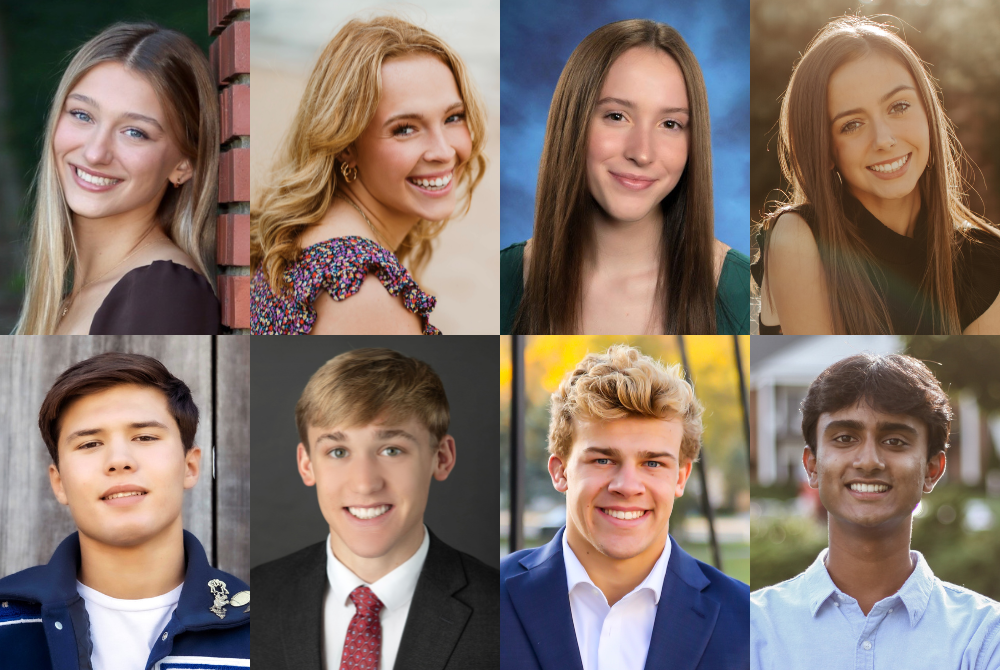
The Michigan High School Athletic Association has selected eight student-athletes from Class B member schools to receive scholarships through the MHSAA/Farm Bureau Insurance Scholar-Athlete Award program.
 Farm Bureau Insurance, in its 34th year of sponsoring the award, will give $2,000 college scholarships to 32 individuals who represent their member schools in at least one sport in which the Association sponsors a postseason tournament. The first 30 scholarships are awarded proportionately by school classification and the number of student-athletes involved in those classes; also, there are two at-large honorees who can come from any classification.
Students applying for the Scholar-Athlete Award must be carrying at least a 3.5 (on a 4.0 scale) grade-point average and have previously won a letter in a varsity sport in which the Michigan High School Athletic Association sponsors a postseason tournament. Other requirements for the applicants were to show active participation in other school and community activities and produce an essay on the importance of sportsmanship in educational athletics.
The 32 scholarship recipients will be recognized March 25 during the MHSAA Boys Basketball Finals at the Breslin Student Events Center in East Lansing.
The Class B Scholar-Athlete Award honorees are Jordan Richie, Bloomfield Hills Cranbrook Kingswood; Carney Salo, Escanaba; Anna Smith, Clawson; Allison Tate, Whitehall; Jacob Fenbert, Dundee; Camden Johnecheck, Williamston; Isaiah Pelc, Portland; and Sreejay Ramakrishnan, Ada Forest Hills Eastern.
Overviews of the scholarship recipients of the Class B Scholar-Athlete Award follow. A quote from each recipient's essay also is included:
(NOTE: If an athlete intended to play and was part of a spring sports team in 2020, that sport is counted among the athlete’s total although the season was canceled due to COVID-19.)
 Jordan Richie, Bloomfield Hills Cranbrook Kingswood
Played four seasons of varsity volleyball, playing third of varsity basketball and will compete in fourth of track & field this spring. Served as captain of all three teams and earned all-county and all-region recognition in track while running on multiple school record-setting relays. Participating in fourth year in Cranbrook Business Club, including as president for second year, and co-founded and serves as president of school’s DECA chapter – and earned all-state recognition in the latter. Carrying 4.2 GPA and achieved highest possible score on three Advanced Placement tests. Will attend University of Texas and study chemical engineering.
Essay Quote: “We have all lost. Every athlete has experienced the frustration of a devastating loss, the pain of seeing a medal in another’s hands and not one’s own. I have never played a perfect game or run a perfect race. I have watched helplessly as a volleyball flew off my hand and into the net on a game point. I have stood idle as a player blew by me to score a buzzer-beater. But, when the final score favors my competitor, I know that taking accountability for my mistakes and appreciating the heart and hustle of the winner will teach me greater lessons than a simple scoreboard.”
 Carney Salo, Escanaba
Played three seasons of varsity volleyball, is playing her third of varsity basketball and will play her third of varsity softball this spring. Helped softball and basketball teams to Regional championships and softball team reach Division 2 Semifinals in 2022; also helped volleyball team to multiple District titles. Earned all-state honorable mention and academic all-state in softball and all-league honors in volleyball and basketball, and served as team captain in all three sports. Serving second year on MHSAA Student Advisory Council and participating in second year of National Honor Society. Serving first year on student council, as class vice president. Participating in fourth year of Business Professionals of America and has qualified for state competition, and served as social media liaison for BPA chapter. Is undecided where she will attend college, but intends to study business administration.
Essay Quote: “Players are yelling at coaches, parents are heckling refs, and student sections are getting personal. I believe sportsmanship goes hand and hand with respect. You should treat others the way you want to be treated. Following this simple concept will ensure core values like caring, responsibility, and most importantly respect are being displayed.”
 Anna Smith, Clawson
Played four seasons of varsity volleyball, playing third of varsity basketball and will play fourth of varsity soccer this spring. Earned all-league and all-District honors in soccer and all-league in volleyball, and earned all-state academic recognition and made league’s all-academic team. Helped all three varsity teams to league titles. Participating in second year of National Honor Society and third on student government, this year as secretary. Also serving fourth year on student senate and Trojans Leadership Council. Playing fourth year in school orchestra and attended Eastern Michigan University Honors Orchestra. Earned Clawson Youth Assistance Recognition Award. Will attend University of Michigan and study kinesiology.
Essay Quote: “The essence of an impressive sportsman stems back to one concept: the willingness to assist teammates. In order for a team to run cohesively, every player must sacrifice themselves for the good of the whole. This notion became extremely apparent following the diagnosis of my season-ending (knee) injury. Not only did I endlessly provide my own support throughout the next sports seasons, I felt that same emotion reciprocated. While I made an effort to attend all practices and games, ensuring my presence was not only seen, but felt, my teammates were displaying the same respect and encouragement towards myself.”
 Allison Tate, Whitehall
Ran four seasons of varsity cross country and competed in two seasons of track & field. Also played junior varsity tennis. Earned all-conference in cross country and all-conference academic honors in cross country and track. Served as captain of both teams. Also has figured skated competitively throughout high school. Participating in second year of National Honor Society, and for legacy project restarted school’s youth cross country camp. Carrying 4.2 GPA and on track to graduate as class valedictorian. Earned AP Scholar with Honor and National Merit Rural/Small Town Recognition. Serving fourth year as class president and also as student council president as a senior. Competed in three years on school’s National History Day and debate teams. Named National Endowment for the Humanities Scholar. Served as senior class representative of White Lake Interact Club, co-president of school’s environmental club, co-captain of quiz bowl team and school representative on Muskegon Community Foundation Youth Advisory Council. Undecided where she will attend college, but intends to study international relations.
Essay Quote: “And that is the very definition of sportsmanship ... the ability to compete as the best version of oneself, despite everything else. So, I suppose that, for me, sportsmanship is — in all of its forms — maintaining the tenacity, drive, determination, and self-awareness to ride out the cutting edges in the face of any and all adversity.”
 Jacob Fenbert, Dundee
Played two seasons of varsity football, is wrestling his fourth season on varsity and will compete in his third season of track & field this spring. Earned all-state in wrestling, helping that team to three straight Division 3 championships and reaching Individual Finals twice. Earned all-league in football and helped team to playoffs, and qualified for 2022 MHSAA Track & Field Finals in pole vault. Served as wrestling team captain. Earned National Merit Rural/Small Town Recognition and is on track to graduate as class valedictorian. Participating in second year of National Honor Society. Participated in Boy Scouts throughout high school, and was selected to Order of the Arrow Honor Society and National Eagle Scout Association. Earned State of Michigan Conservation Award. Will attend Michigan Technological University and study mechanical engineering.
Essay Quote: “Sportsmanship is not just shaking someone’s hand after a game or playing with courtesy and positive intentions toward others. Sportsmanship involves giving back to those within the athletic community so that they too can enjoy sports as much as I have. … I have only one (wrestling) season left and have come to appreciate all the wonderful memories the sport has given me. It is important to ensure my younger teammates get all they can out of the sport …”
 Camden Johnecheck, Williamston
Ran four seasons of varsity cross country, wrestling his fourth season and will compete in fourth of track & field this spring. Earned all-state and academic all-state in both cross country and wrestling and reached MHSAA Cross Country Finals three times. Served or will serve at least two seasons as captain of all three varsity teams. Attended American Legion Auxiliary Boys State and was elected Speaker of the House. Participating in second year of Mu Alpha Theta mathematics honor society and as chapter vice president, and participating in fourth year of school’s math and science academy and had research project selected for publication in science journal. Is unsure where he will attend college, but intends to study civil engineering.
Essay Quote: “As (wrestling) practices wore on, we continued to push each other. But my attitude had changed. Now I encouraged him and even thanked him for not holding back. I understood that we were just trying to make each other better. … Retrospectively, I understand how much I learned from this part of my life. In the beginning, I forced myself to return my partner’s kindness, even when I didn’t want to, which is the foundation sportsmanship. The more I did this the easier it became.”
 Isaiah Pelc, Portland
Wrestling fourth season this winter, will play his second season of varsity baseball this spring and also played two seasons of subvarsity football. Earned all-state in wrestling and qualified for MHSAA Individual Finals his first three seasons. Earned National Wrestling Coaches Association/U.S. Marine Corps High School Scholar All-American honors three times, and academic all-state in baseball. Served as wrestling and baseball captain. Participating in fourth year of student government and has served as class president and student body president. Participating in third years of National Honor Society and Ionia County Youth Advisory Council, as NHS class trustee and co-chairperson of YAC. Has participated in Boy Scouts throughout high school, earning Eagle Scout rank and serving twice on Mackinac Island Governor’s Honor Guard. Participating in fourth year of BIONIC school suicide prevention and mental health group, serving as co-chairperson. Will attend University of Notre Dame and study business.
Essay Quote: “Throughout my high school career, I have witnessed and been a part of both outstanding sportsmanship and poor sportsmanship. I realized through many competitions that one cannot control their opponents, officials and the calls they make, the outcomes of the competition, and many other factors. But one thing I can control is my composure before, during, and after competition despite the uncontrollable factors that occur.”
 Sreejay Ramakrishnan, Ada Forest Hills Eastern
Played four seasons of varsity tennis and will compete in his second of varsity track & field this spring. Also has played on school’s boys club volleyball team. Earned all-state honors in tennis three times and academic all-state all four seasons. Helped track & field team to Regional championship and 2022 Lower Peninsula Division 2 Finals runner-up finish. Served as captain of tennis team and upperclassmen leader in track. Participating in second year of National Honor Society, serving as chapter president, and third on school’s Student Advisory Council. Participating in fourth year of student government, as co-president. Co-founded school’s Kids Food Basket club and youth action board. Playing fourth year in concert and symphony orchestra, as concert master and first chair violinist, and qualified for state competition in solo ensemble. Participating in third year of Model United Nations and serving as club treasurer. Won Grand Valley State University Teen Entrepreneurship Summer Academy pitch competition. Is unsure where he will attend college, but intends to study business, public policy and psychology.
Essay Quote: “Sportsmanship is a pillar of integrity, virtue, ethics, and morale – though it is merely a choice. … It is commendable when an athlete shows composure and respect to their opponents. Learning from a loss and congratulating an opponent on a victory shows growth. Winning with humility and class is inspiring.”
Other Class B girls finalists for the Scholar-Athlete Award were Elaina Bortolini, Kingsford; Claire Filpus, Houghton; Rylie Haist, Big Rapids; Lauren Harrold, Flint Powers Catholic; Devin Johnston, Almont; Tiffany Keller, Frankenmuth; Molly McNitt, Paw Paw; Matelyn Midkiff, Midland Bullock Creek; Rachel Niskanen, Negaunee; Ainsley VandenBrink, Holland Christian; Ella Wagner, Essexville Garber; and Chesney Wilke, Tecumseh.
Other Class B boys finalists for the Scholar-Athlete Award were Michael App, Grand Rapids Catholic Central; Aldo Barba, Tecumseh; Matthew Bowman, Milan; Evan Jose Evans, Bloomfield Hills Cranbrook Kingswood; Grant H. Harkness, Newaygo; Nathan Hooker, Bloomfield Hills Cranbrook Kingswood; John Kersh, Bloomfield Hills Cranbrook Kingswood; Nicholas Liparoto, Pontiac Notre Dame Prep; Philip Nelson, Negaunee; James Oosterhouse, Holland Christian; Jacob Pallo, Ada Forest Hills Eastern; Aiden Eric Smith, Adrian.
The Class C/D scholarship award recipients were announced Feb. 7, and the Class A honorees will be announced Feb. 21.
Farm Bureau Insurance of Michigan was founded in 1949 by Michigan farmers who wanted an insurance company that worked as hard as they did. Those values still guide the company today and are a big reason why it is known as Michigan’s Insurance Company, dedicated to protecting the farms, families, and businesses of this great state. Farm Bureau Insurance agents across Michigan provide a full range of insurance services—life, home, auto, farm, business, retirement, Lake Estate®, and more—protecting nearly 500,000 Michigan policyholders.
The MHSAA is a private, not-for-profit corporation of voluntary membership by more than 1,500 public and private senior high schools and junior high/middle schools which exists to develop common rules for athletic eligibility and competition. No government funds or tax dollars support the MHSAA, which was the first such association nationally to not accept membership dues or tournament entry fees from schools. Member schools which enforce these rules are permitted to participate in MHSAA tournaments, which attract more than 1.3 million spectators each year.