


Rules Changes Minimize Health Risks
August 3, 2017
By Geoff Kimmerly
Second Half editor
A pair of football rules changes taking effect this season build on continuing work to minimize health risks in all interscholastic sports as 2017-18 fall practices begin next week for member schools of the Michigan High School Athletic Association.
Practice in football must begin on Aug. 7 for all schools wishing to begin regular-season games the weekend of Aug. 24-26. Schools must have 12 days of preseason practice at all levels before their first game, over a period of 16 calendar days before the first kickoff.
Practice sessions for all other sports begin Wednesday (Aug. 9). In golf and tennis, competition may commence no earlier than after three separate days of team practice, and not before seven calendar days. The first day competition may take place in golf and tennis is Aug. 16. In all other fall sports, contests can take place after seven days of practice for the team and not before nine calendar days. The first day competition may take place in cross country, soccer, swimming & diving, and volleyball is Aug. 18.
This fall, two football game dates again precede Labor Day, and a number of MHSAA schools will play their first varsity games on Thursday, Aug. 24. In Week 1, 141 varsity games will be played on Thursday, 153 contests will be played on Friday, and 16 games will be played on Saturday. In the second week, four games will be played Wednesday, 238 games will take place Thursday, 64 will be played Friday, and five contests are Saturday.
A change to the allowable level of contact on a blindside block in football is one of the latest rules changes aimed at increasing player safety. A blindside block involves contact by a blocker against an opponent who, because of physical positioning and focus of concentration (for example, while following a ball carrier on a kickoff return), is vulnerable to injury by a block coming from outside his field of vision. Blindside blocks now must be initiated with open hands only; blindside contact that is forceful and initiated with other parts of the body outside of the free blocking zone will be penalized as excessive and unnecessary.
In addition to redefining the blindside block, the National Federation of State High School Associations (NFHS) sought to also minimize risk by eliminating the pop-up kick – that is, any free kick during which the kicker drives the ball immediately to the ground, causing it to bounce only once and into the air similar to the flight of a ball kicked directly off the tee. Kicks off a tee that bounce multiple times and then pop into the air remain allowed.
A few other notable rules changes in football will be apparent this fall:
• A defensive player will be called for encroachment for striking the offensive snapper’s hand or arm, or the ball, prior to the snapper releasing the ball to begin a play.
• Non-contact face guarding is no longer considered pass interference.
• A team accepting a penalty during the final two minutes of either half now will have the option of re-starting the clock at the snap of the ball rather than the referee’s ready-for-play signal.
While most fall sports face at least minor rules changes this season, a few more of the most noticeable adjustments will come in boys soccer and girls swimming & diving.
• In boys soccer, overtime periods and shootouts during the regular season have been eliminated. Leagues and conferences are allowed an overtime option for their end-of-season bracketed tournaments, but overtime in those cases must not exceed two 10-minute periods plus a shootout. Multi-team regular-season tournaments also may receive waivers to employ a shootout if it is used to determine the winner of a game.
• Also in soccer, kickoffs may now travel in any direction from the center of the field. Previously, kickoffs at the high school level were required to move forward down the field of play.
• In girls swimming & diving, a diver will need only four regular-season wins (instead of the previous five) to qualify for the Regional Diving Qualification Meet. A diver also may qualify if she places ahead of all divers from opposing schools in varsity competition in at least four meets, even if she does not finish ahead of her teammates.
• Also in swimming & diving, to promote safer take-offs during relays, the second, third and fourth swimmers must have at least one foot in contact with the starting platform in front of the starting block wedge during take-off. Those second, third and fourths swimmers may not take off with both feet on top of the starting block wedge.
The 2017 fall campaign culminates with postseason tournaments beginning with the Upper Peninsula Girls Tennis Finals the week of Sept. 25 and wraps up with the 11-Player Football Playoff Finals on Nov. 24 and 25. Here is a complete list of fall tournament dates:
Cross Country
U.P. Finals – Oct. 21
L.P. Regionals – Oct. 27 or 28
L.P. Finals – Nov. 4
11-Player Football
Selection Sunday – Oct. 22
Pre-Districts – Oct. 27 or Oct. 28
District Finals – Nov. 3 or 4
Regional Finals – Nov. 10 or 11
Semifinals – Nov. 18
Finals – Nov. 24-25
8-Player Football
Selection Sunday – Oct. 22
Regional Semifinals – Oct. 27 or Oct. 28
Regional Finals – Nov. 3 or 4
Semifinals – Nov. 11
Finals – Nov. 17
L.P. Girls Golf
Regionals – Oct. 11 or 12 or 13 or 14
Finals – Oct. 20-21
Soccer
Boys L.P. Districts – Oct. 16-21
Boys L.P. Regionals – Oct. 24-28
Boys L.P. Semifinals – Nov. 1
Boys L.P. Finals – Nov. 4
L.P. Girls Swimming & Diving
Diving Regionals – Nov. 9
Swimming/Diving Finals – Nov. 17-18
Tennis
U.P. Girls Finals – Sept. 27-30
L.P. Boys Regionals – Oct. 12 or 13 or 14
L.P. Finals – Oct. 20-21
Girls Volleyball
Districts – Oct. 30-Nov. 4
Regionals – Nov. 7 & 9
Quarterfinals – Nov. 14
Semifinals – Nov. 16-17
Finals – Nov. 18
Awards Honor Those Lending a Hand
April 12, 2017
By Geoff Kimmerly
Second Half editor
Sports often make up a significant, although singular part of the lives of Michigan’s high school student-athletes and coaches.
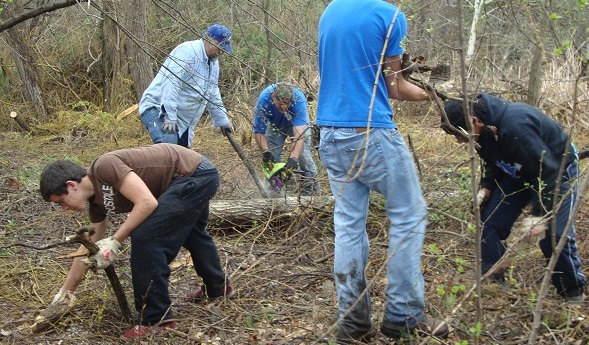
 Many also find ways to have significant impacts on the lives of others – and we’d like to tell the rest of our state how they’re making a difference.
The Michigan High School Athletic Association, together with Lake Trust Credit Union, will award this spring the inaugural Community Service Awards to recognize individuals and teams that have worked to benefit their communities.
Each winner will receive a $1,000 award to be applied toward an individual college scholarship, credited to a team’s account with its athletic department or even gifted to the group helped by our honoree.
Please help us get the word out. Encourage a student, coach or administrator to tell us about a completed or ongoing community service project. Any student, team or coach currently participating in interscholastic athletics at an MHSAA member high school can apply. Applications should be e-mailed both to the school’s athletic director and MHSAA’s Kurt Tiesman at [email protected].
The deadline for applications is May 1, and multiple winners will be selected and notified by May 12. Click for more information.
We hear and read about these contributions and successes throughout the school year. Thank you in advance for your help in allowing us to honor some of this great work in the community by those who also shine on the field.
PHOTO: Members of the Adrian boys track & field team help clean up after a tornado in Dexter in 2012.