


Be the Referee: 7-Person Football Crews
November 12, 2015
This week, MHSAA assistant director Mark Uyl discusses why seven-person football crews are used for MHSAA Semifinals and Finals.
Be The Referee is a series of short messages designed to help educate people on the rules of different sports, to help them better understand the art of officiating, and to recruit officials.
Below is this week's segment - 7-Person Football Mechanics - Listen
Last fall, the MHSAA used seven-person football officiating crews at the Semifinal and Final levels of our tournament for the very first time. These larger crews replaced the traditional five-person crews in the 24 most important games of the football season.
Seven-person crews, which for many years were the size of NCAA and NFL crews, provide for much better coverage in the passing and running games with all of the spread offenses and wide-open attacks that have become commonplace with football in the year 2015 and beyond. By adding the two extra officials on each deep sideline, coaches have now two officials to communicate with on each sideline to answer questions and address concerns.
Past editions:
Nov. 5: Make the Call: Personal Fouls - Listen
Oct. 29: Officials Demographics - Listen
Oct. 15: Make the Call: Intentional Grounding - Listen
Oct. 8: Playoff Selection - Listen
Oct. 1: Kick Returns - Listen
Sept. 24: Concussions - Listen
Sept. 17: Automatic First Downs - Listen
Sept. 10: Correcting a Down - Listen
Sept 3: Spearing - Listen
Aug. 27: Missed Field Goal - Listen
Be the Referee: Basketball Measurements
By
Sam Davis
MHSAA Director of Officials
January 4, 2023
Be The Referee is a series of short messages designed to help educate people on the rules of different sports, to help them better understand the art of officiating, and to recruit officials.
Below is this week's segment – Basketball Measurements - Listen
If you’ve seen the movie “Hoosiers,” you know that a basketball rim is 10 feet above the ground. That’s the same if you are in the gym at Beaver Island High School or at Little Caesars Arena. But what are the other court dimensions?
To start – courts are typically 84 feet long but can be up to 94 feet long. They are 50 feet wide.
The free throw line is 15 feet from the face of the backboard and the high school 3-point line is 19 feet, 9 inches from the basket.
Each hoop is a circle, 18 inches in diameter.
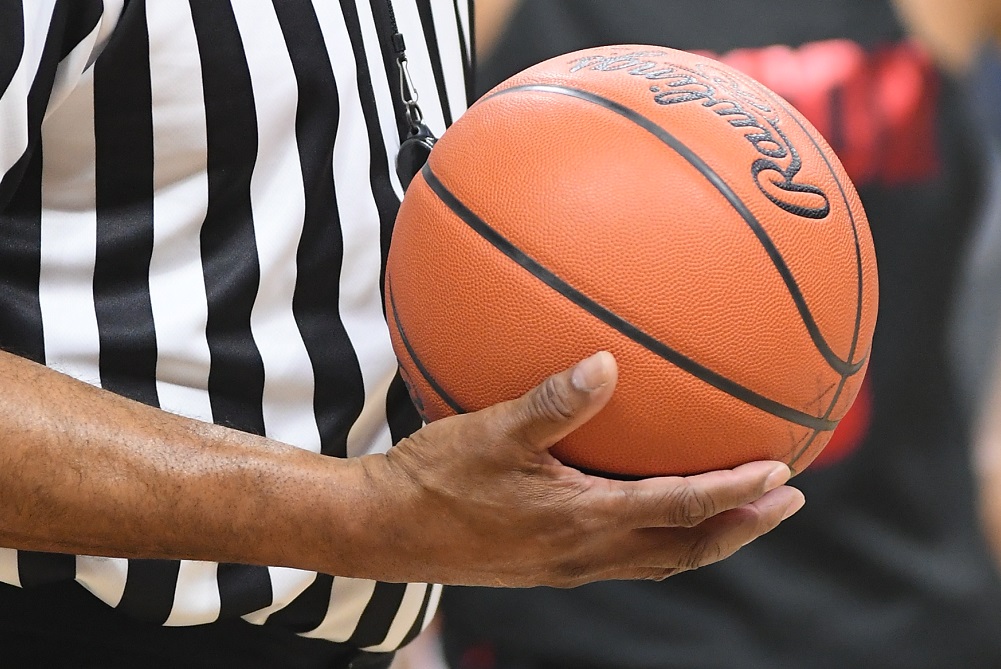
The boys play with a basketball 29½ inches in circumference, the girls with one 28½ inches in circumference.
And believe it or not, two girls balls will go through a standard rim at the same time.
Previous Editions:
Dec. 13: Pregame Dunks - Listen
Dec. 6: Gymnastics Judges - Listen
Nov. 22: Football Finals Replay - Listen
Nov. 15: Back Row Illegal Blocker - Listen
Nov. 8: Swim Turn Judges - Listen
Nov. 1: Soccer Referee Jersey Colors - Listen
Oct. 25: Cross Country Tie-Breaker - Listen
Oct. 18: Soccer Shootouts - Listen
Oct. 11: Safety in End Zone - Listen
Oct. 4: Football Overtime Penalty - Listen
Sept. 27: Kickoff Goal - Listen
Sept. 20: Soccer Timing - Listen
Sept. 13: Volleyball Replays - Listen
Sept. 6: Switching Sides - Listen
Aug. 30: Play Clock - Listen
Aug. 23: Intentional Grounding Change - Listen