

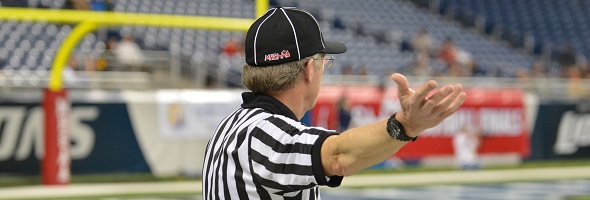
Be the Referee: 7-Person Mechanics
November 18, 2014
This week, MHSAA assistant director Mark Uyl explains the addition of two officials for this season's MHSAA Football Semifinals and Finals.
"Be the Referee" is designed to help educate people on the rules of different sports, to help them better understand the art of officiating and to recruit officials. The segment can be heard on Mondays, Wednesdays and Fridays during the school year on The Drive With Jack Ebling on WVFN-AM, East Lansing.
Below is this week's segment - 7-Person Mechanics - Listen
Today we are going to talk about a significant change for the MHSAA Semifinal and Final football playoff games this year, and that’s the size of the officiating crew.
Traditionally, five officials have been used for most high school games, comprised of a Referee, Umpire, Head Linesman, Line Judge and Back Judge. The change this year is moving from five officials to seven officials for all Semifinal and Final games, the two new positions being a Field Judge and a Side Judge.
These officials, stationed on each sideline 20 yards downfield from the line of scrimmage, will give us much better coverage when it comes to officiating spread offenses and the passing game which has been a huge area of growth in high school football over the last decade.
Past editions
Nov. 12 - Blocking Below the Waist - Listen
Nov. 5 - Tournament Selection - Listen
Oct. 29 - Uncatchable Pass - Listen
Oct. 22 - Preparation for Officials - Listen
Oct. 15 - Automatic First Downs - Listen
Oct. 8 - Officials & Injuries - Listen
Oct. 1 - Overtime - Listen
Sept. 25 - Field Goals - Listen
Sept. 18 - Tackle Box - Listen
Sept. 11 - Pass Interference - Listen
Aug. 25 - Targeting - Listen
Be the Referee: Vern L. Norris Award
April 30, 2015
This week, MHSAA assistant director Mark Uyl discusses the MHSAA's highest honor awarded annually to officials.
Be The Referee is a series of short messages designed to help educate people on the rules of different sports, to help them better understand the art of officiating, and to recruit officials.
Below is this week's segment - Vern L. Norris Award - Listen
The Vern Norris Award is the most prestigious award the MHSAA has for officials. The Norris Award, named after former MHSAA Executive Director and long-time official Vern Norris, doesn’t just go to the official of the year. The award is for leaders in the officiating industry, those who have recruited new people into officiating and have been leaders in the areas of training and preparing young new officials.
This year’s winner, right here from the Lansing area, is Sam Davis, a long-time wrestling leader and official, and we could not be more proud of Sam as this year’s winner of the Vern Norris Award.
Past editions
March 23 - Deciding the Game - Listen
March 16 - Block/Charge Call - Listen
March 9 - Dive on the Floor - Listen
March 2 - Primary Areas - Listen
Feb. 23 - Too Much TV - Listen
Feb. 16 - Video Clip Library - Listen
Feb. 9 - Cheer Safety - Listen
Feb. 2 - Basketball PA Announcers - Listen
Jan. 26 - Wrestling Health Concerns - Listen
Jan. 19 - Basketball Physical Contact - Listen
Jan. 12 - Video Review Part 2 - Listen
Dec. 29 - Video Review Part 1 - Listen
Dec. 17 - Registration Part 2 - Listen
Dec. 10 - Registration Part 1 - Listen
Dec. 3 - Legacy Program - Listen
Nov. 26 - Sideline Management - Listen
Nov. 19 - 7-Person Mechanics - Listen
Nov. 12 - Blocking Below the Waist - Listen
Nov. 5 - Tournament Selection - Listen
Oct. 29 - Uncatchable Pass - Listen
Oct. 22 - Preparation for Officials - Listen
Oct. 15 - Automatic First Downs - Listen
Oct. 8 - Officials & Injuries - Listen
Oct. 1 - Overtime - Listen
Sept. 25 - Field Goals - Listen
Sept. 18 - Tackle Box - Listen
Sept. 11 - Pass Interference - Listen
Aug. 25 - Targeting - Listen