

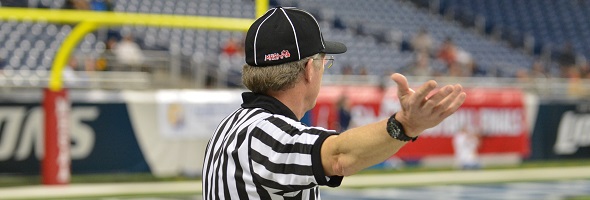
Be the Referee: Always 1st-and-Goal
October 3, 2018
This week, MHSAA assistant director Brent Rice explains how every series of high school football overtime in Michigan begins with 1st-and-Goal.
Be The Referee is a series of short messages designed to help educate people on the rules of different sports, to help them better understand the art of officiating, and to recruit officials.
Below is this week's segment – Always 1st-and-Goal - Listen
In Michigan, football overtime for each team starts with 1st-and-goal at the 10-yard line. Other states which allow overtime to begin anywhere from the 10 to the 25-yard line, and in some of those states, you could actually pick up a first down while on offense.
But Michigan is always 1st-and-goal. Even in those situations where a dead ball foul from the end of the first team’s possession in an overtime may start the second team’s series at the 25 – it is still 1st-and-goal.
The only way a team on offense can pick up a first down in overtime is on a penalty providing yardage plus an automatic first down, and those are only the roughing calls – roughing the passer, the kicker, the holder and the long snapper.
Past editions
September 27: Unique Kickoff Option - Listen
September 20: Uncatchable Pass - Listen
September 13: Soccer Rules Change - Listen
September 6: You Make the Call: Face Guarding - Listen
August 30: 40-Second Play Clock - Listen
August 23: Football Rules Changes - Listen
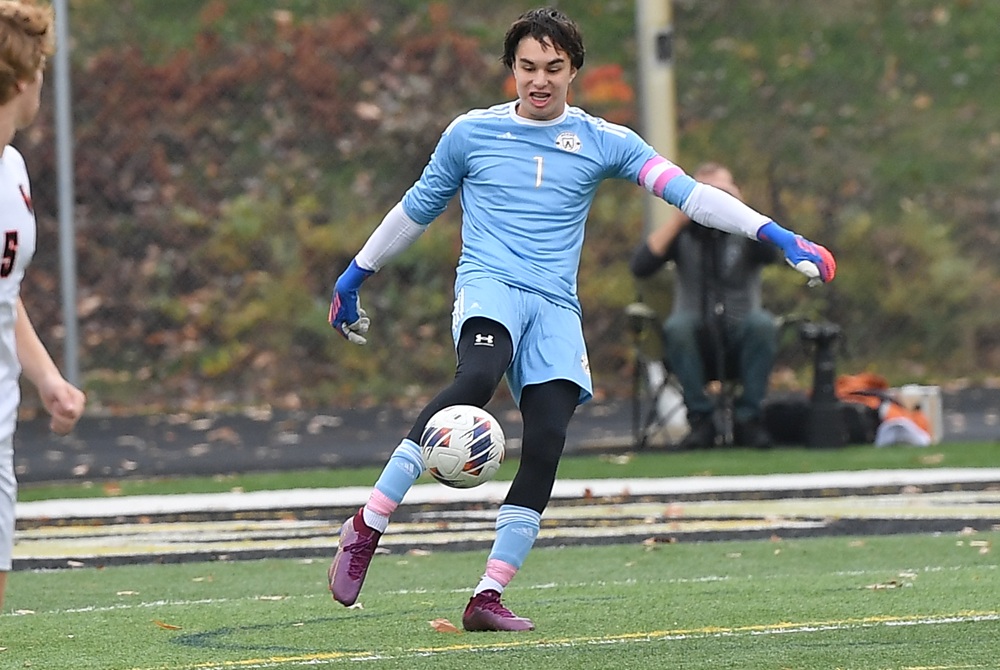
Be the Referee: Soccer Changes
By
Paige Winne
MHSAA Director of Brand Management
September 22, 2026
Be The Referee is a series of short messages designed to help educate people on the rules of different sports, to help them better understand the art of officiating, and to recruit officials.
Below is this week's segment – Soccer Changes - Listen
New this year in high school soccer, goalkeepers will have more time available to them before having to release the ball.
Now – once a keeper establishes possession of the ball – they will have eight seconds before having to play the ball. Previously, keepers had six seconds before having to release it.
The penalty for failing to release the ball in time is also changing.
A goalkeeper who is whistled for hanging on to the ball for longer than eight seconds will now see the opponent awarded a corner kick. The old rule awarded an indirect free kick.
So remember – starting this year – keepers get up to eight seconds before having to release the ball, and failure to do so will result in a corner kick for the opposing team.
Previous 2026-27 editions
Sept: 15: Dead Ball Penalty - Listen
Sept. 8: Libero Ejected - Listen
Sept. 1: Soccer Foul After Shot on Goal - Listen
Aug. 25: Fumble Out of Bounds - Listen