

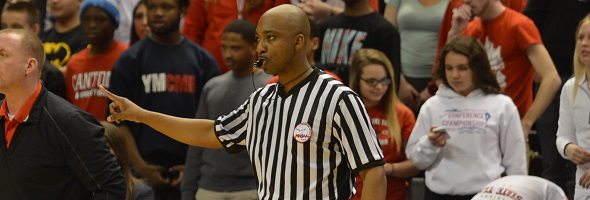
Be the Referee: Block/Charge Calls
March 29, 2016
This week, MHSAA assistant director Mark Uyl explains what is often considered the most difficult call to make in all of sports officiating.
Be The Referee is a series of short messages designed to help educate people on the rules of different sports, to help them better understand the art of officiating, and to recruit officials.
Below is this week's segment - Block/Charge - Listen
It’s often been said that the most difficult call to make in all of sports officiating is the block/charge in basketball.
When you’re watching your next basketball game, the key for the official in getting the play correct is determining whether or not the defender gets in a legal guarding position. Many times we’ll hear announcers and commentators talk about the defender having his feet planted and stationary; that actually isn’t required by the rule. The rules require the defender to be in a legal guarding position, which is a position where it’s facing the offensive player and they’ve established a position in advance of the offensive player.
If the defender is in illegal position, the contact is now a charge.
Past editions:
March 10: Ball Stuck on the Rim - Listen
March 3: Three Seconds - Listen
Feb. 25: Deciding the Game - Listen
Feb. 18 : Cheer Safety - Listen
Feb. 11: Primary Areas - Listen
Feb. 4: Block/Charge Calls - Listen
Jan. 28: Dive on the Floor - Listen
Jan. 21: Hockey Officials' Options - Listen
Jan. 14: Recruiting Officials - Listen
Jan. 7: Wrestling Weight Monitoring - Listen
Dec. 31: Respect for Referees - Listen
Dec. 24: Basketball Instant Replay - Listen
Dec. 17: Basketball Communication - Listen
Dec. 10: Basketball Excessive Contact - Listen
Nov. 26: Pregame Communication - Listen
Nov. 19: Trick Plays - Listen
Nov. 12: 7-Person Football Mechanics - Listen
Nov. 5: Make the Call: Personal Fouls - Listen
Oct. 29: Officials Demographics - Listen
Oct. 15: Make the Call: Intentional Grounding - Listen
Oct. 8: Playoff Selection - Listen
Oct. 1: Kick Returns - Listen
Sept. 24: Concussions - Listen
Sept. 17: Automatic First Downs - Listen
Sept. 10: Correcting a Down - Listen
Sept 3: Spearing - Listen
Aug. 27: Missed Field Goal - Listen
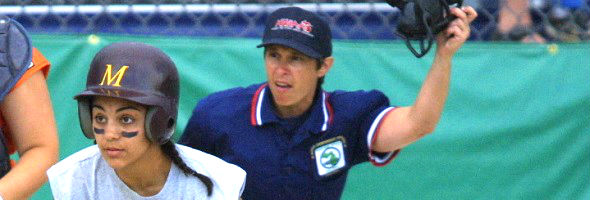
Be the Referee: Non-Glare Helmets
May 7, 2015
This week, MHSAA assistant director Mark Uyl explains why high-glare helmets are prohibited for softball and baseball.
Be The Referee is a series of short messages designed to help educate people on the rules of different sports, to help them better understand the art of officiating, and to recruit officials.
Below is this week's segment - Non-Glare Helmets - Listen
A new rule change this year in high school baseball and high school softball deals with helmets.
As many of us sat around over the holidays watching various college football bowl games, we saw what we often call the “Oregon Effect” – teams wearing a very shiny, high gloss helmet to try and catch a kid’s attention with the wow factor.
In both baseball and softball, these high glare-high gloss helmets can be a safety issue, where the sun can reflect off a batter’s or baserunner’s helmet, or even a catcher’s helmet, which could create a safety issue for those kids playing defense. These high gloss helmets are no longer legal starting with this season.
Past editions
April 27 - Vern L. Norris Award - Listen
March 23 - Deciding the Game - Listen
March 16 - Block/Charge Call - Listen
March 9 - Dive on the Floor - Listen
March 2 - Primary Areas - Listen
Feb. 23 - Too Much TV - Listen
Feb. 16 - Video Clip Library - Listen
Feb. 9 - Cheer Safety - Listen
Feb. 2 - Basketball PA Announcers - Listen
Jan. 26 - Wrestling Health Concerns - Listen
Jan. 19 - Basketball Physical Contact - Listen
Jan. 12 - Video Review Part 2 - Listen
Dec. 29 - Video Review Part 1 - Listen
Dec. 17 - Registration Part 2 - Listen
Dec. 10 - Registration Part 1 - Listen
Dec. 3 - Legacy Program - Listen
Nov. 26 - Sideline Management - Listen
Nov. 19 - 7-Person Mechanics - Listen
Nov. 12 - Blocking Below the Waist - Listen
Nov. 5 - Tournament Selection - Listen
Oct. 29 - Uncatchable Pass - Listen
Oct. 22 - Preparation for Officials - Listen
Oct. 15 - Automatic First Downs - Listen
Oct. 8 - Officials & Injuries - Listen
Oct. 1 - Overtime - Listen
Sept. 25 - Field Goals - Listen
Sept. 18 - Tackle Box - Listen
Sept. 11 - Pass Interference - Listen
Aug. 25 - Targeting - Listen