

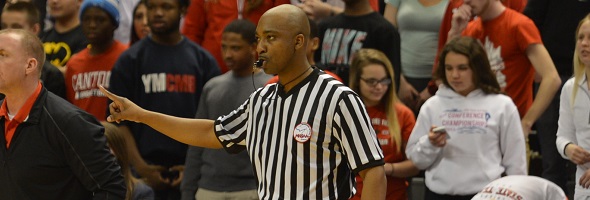
Be the Referee: Block/Charge Calls
February 4, 2016
This week, MHSAA assistant director Mark Uyl clears up the confusion concerning what is required for a charge to be called in basketball.
Be The Referee is a series of short messages designed to help educate people on the rules of different sports, to help them better understand the art of officiating, and to recruit officials.
Below is this week's segment - Block/Charge Calls - Listen
Today we’re going to talk about one of the great myths in all of basketball rules that a defensive player must be completely stationary to take a charging foul against an offensive player either on the drive or on the dribble.
The reality is that a defender only has to obtain what is called a legal guarding position. A legal guarding position is when the defender is facing the offensive player and has essentially beaten him or her to that spot on the floor.
Once the defender is in this legal guarding position, the defender can be moving, and can even have one or both feet off the floor at the time that contact occurs.
Past editions:
Jan. 28: Dive on the Floor - Listen
Jan. 21: Hockey Officials' Options - Listen
Jan. 14: Recruiting Officials - Listen
Jan. 7: Wrestling Weight Monitoring - Listen
Dec. 31: Respect for Referees - Listen
Dec. 24: Basketball Instant Replay - Listen
Dec. 17: Basketball Communication - Listen
Dec. 10: Basketball Excessive Contact - Listen
Nov. 26: Pregame Communication - Listen
Nov. 19: Trick Plays - Listen
Nov. 12: 7-Person Football Mechanics - Listen
Nov. 5: Make the Call: Personal Fouls - Listen
Oct. 29: Officials Demographics - Listen
Oct. 15: Make the Call: Intentional Grounding - Listen
Oct. 8: Playoff Selection - Listen
Oct. 1: Kick Returns - Listen
Sept. 24: Concussions - Listen
Sept. 17: Automatic First Downs - Listen
Sept. 10: Correcting a Down - Listen
Sept 3: Spearing - Listen
Aug. 27: Missed Field Goal - Listen
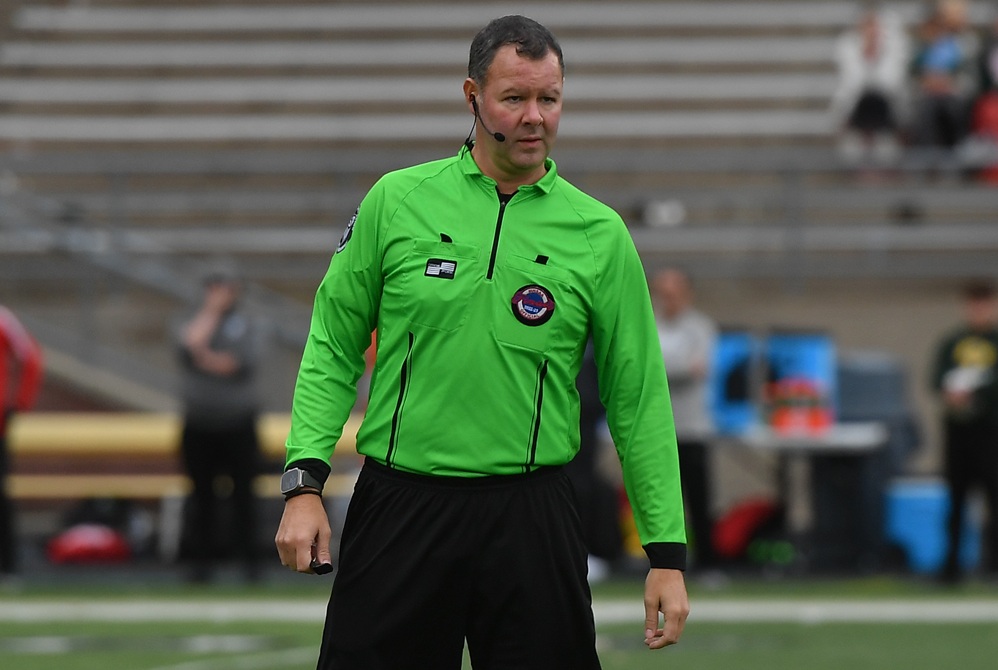
Be the Referee: Soccer Advantage
By
Paige Winne
MHSAA Director of Brand Management
October 13, 2026
Be The Referee is a series of short messages designed to help educate people on the rules of different sports, to help them better understand the art of officiating, and to recruit officials.
Below is this week's segment – Soccer Advantage - Listen
We’re on the soccer field today, where Team A has possession. A player from Team A is carelessly tackled by a Team B player in the middle of the field. The referee applies advantage because the fouled player quickly gets up and retains possession. However, a Team B defender intercepts the ball and kicks it out of bounds. What’s the call?
- Is it a throw-in for Team A since Team B kicked it out?
- Is it a free kick for Team A at the point of the foul?
- Or is it a free kick for Team A and a caution to Team B for kicking the ball away?
If you said a free kick for Team A at the point of the foul, you are correct. Advantage allows officials to keep play moving when the fouled team benefits from continuing. Here, that advantage never materialized, so the referee goes back to the original foul.
Previous 2026-27 editions
Oct. 6: Defensive Holding - Listen
Sept. 29: Minimum Number of Volleyball Players - Listen
Sept 22: Soccer Changes - Listen
Sept: 15: Dead Ball Penalty - Listen
Sept. 8: Libero Ejected - Listen
Sept. 1: Soccer Foul After Shot on Goal - Listen
Aug. 25: Fumble Out of Bounds - Listen