

Be the Referee: Clipping Clipped
August 25, 2016
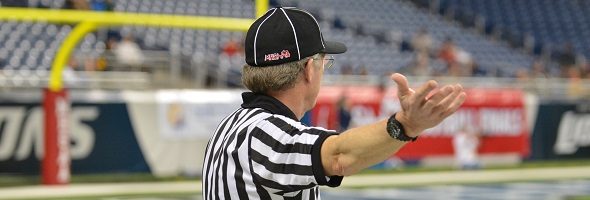
MHSAA assistant director Mark Uyl opens a new year of “Be the Referee” by explaining the latest rules change affecting blocking in football.
Be The Referee is a series of short messages designed to help educate people on the rules of different sports, to help them better understand the art of officiating, and to recruit officials.
Below is this week's segment – Clipping in the Free Blocking Zone - Listen
Most of the recent rules changes in high school football have all dealt with increasing player safety. The most significant change for the 2016 season focuses on safety, especially for offensive and defensive linemen.
For many years, the free blocking zone (the area between the two offensive tackles) was an area where two types of blocks – blocks below the waste and clipping, that are illegal on other parts of the field – were legal if done by linemen initially at the start of a play. For this season, clipping is now an illegal block, even in the free blocking zone, while blocks below the waste continue to be legal from in front.
Be the Referee: Trickery & Communication
October 24, 2018
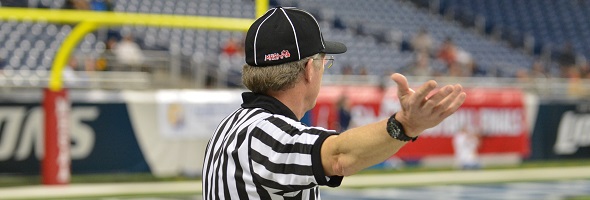
This week, MHSAA officials coordinator Sam Davis explains a key piece of communication that takes place between football referees and coaches during pregame.
Be The Referee is a series of short messages designed to help educate people on the rules of different sports, to help them better understand the art of officiating, and to recruit officials.
Below is this week's segment – Trickery & Communication - Listen
One of the long-time strategies in the game of football is deception. It has lots of other names, and most often goes these days by the name of trickery. Catching an opponent off-guard can break a game wide open. But catching the officiating crew off-guard is something you don’t want to have happen or else your big play may be blown dead inadvertently.
That’s why during the pre-game meeting the officiating crew has with each head coach, one of the questions that will be asked is – “Coach, do you have any trick plays we should be watching for?” And coaches, who are usually tight lipped about a lot of their strategies, will be very open and describe in detail anything fancy that’s in the playbook for that game.
This type of communication gets coaches and officials on the same page and ensures that when trickery comes visiting, only the opponents are surprised.
Past editions
October 18: Punts & Missed Field Goals - Listen
October 11: What Officials Don't Do - Listen
October 4: Always 1st-and-Goal - Listen
September 27: Unique Kickoff Option - Listen
September 20: Uncatchable Pass - Listen
September 13: Soccer Rules Change - Listen
September 6: You Make the Call: Face Guarding - Listen
August 30: 40-Second Play Clock - Listen
August 23: Football Rules Changes - Listen