

Be the Referee: Correcting a Down
September 10, 2015
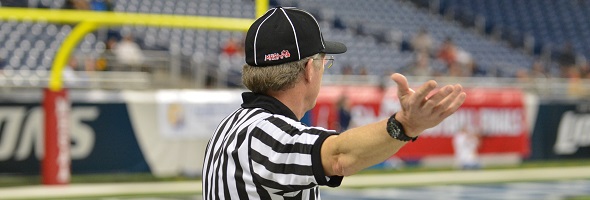
This week, MHSAA assistant director Mark Uyl discusses how officials at the high school level have the authority to correct an error in what down is being played.
Be The Referee is a series of short messages designed to help educate people on the rules of different sports, to help them better understand the art of officiating, and to recruit officials.
Below is this week's segment - Correcting a Down - Listen
For anyone who has followed football for a long time, perhaps the most famous “5th down” game was back in 1990 between Colorado and Missouri.
In that game, the officials mistakenly gave Colorado an extra down while trailing by four points. On the “fifth down” play, Colorado scored a touchdown on the final play of the game to win 33-31.
Under high school rules, the officiating crew has the ability to correct an error of the wrong down as long as it is done before the next snap. For example, if the crew realizes a team has been given an extra down, that play would be nullified and the ball would correctly go over to the other team.
Past editions:
Sept 3: Spearing - Listen
Aug. 27: Missed Field Goal - Listen
Be the Referee: Video Review Success
December 5, 2019
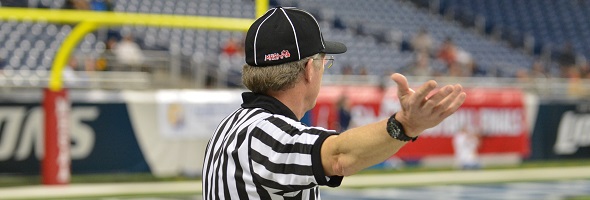
This week, MHSAA assistant director Brent Rice discusses the video review utilized for the first time at last weekend's Football Finals, and how it was successful.
Be The Referee is a series of short messages designed to help educate people on the rules of different sports, to help them better understand the art of officiating, and to recruit officials.
Below is this week's segment - Video Review Success - Listen
For the first time in MHSAA history, video review was utilized to confirm or correct judgment calls on the field for our Football Finals. While there is always some apprehension when adding new technologies to sports, the MHSAA’s approach to a limited replay process, reviewing only those plays that involved turnovers or scores, proved to be a terrific success.
There were a few instances where very close but consequential plays were overturned. However, the biggest confirmation replay provided was something we already knew – that is, that MHSAA officials are putting in hard work and dedication and getting the vast majority of their plays correct in real-time live action.
When needed though, competent replay officials were right on top of the situation to correct the plays without challenges, without controversy and with very little delay in the process.
Past editions
Nov. 28: More Injury Time - Listen
Nov. 21: Football Review - Listen
Nov. 14: Sideline Safety - Listen
Nov. 7: Officials Playlist - Listen
Oct. 31: Most Important Line - Listen
Oct. 24: Automatic 1st Downs - Listen
Oct. 17: Catch Momentum - Listen
Oct. 10: Golf Rules Changes - Listen
Oct. 3: No Tackle Box - Listen
Sept. 26: You Make the Overtime Call - Listen
Sept. 19: Swimming Finishing Touch - Listen
Sept. 12: Curbing Gamesmanship By Substitution - Listen
Sept. 5: Football Safety Rules Changes - Listen
Aug. 29: 40-Second Play Clock - Listen