

Be the Referee: Correcting a Down
September 10, 2015
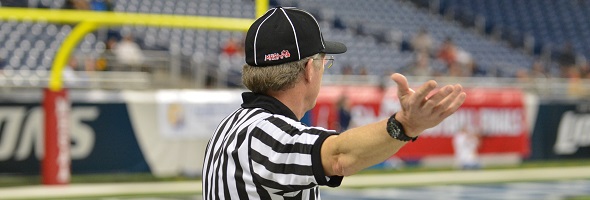
This week, MHSAA assistant director Mark Uyl discusses how officials at the high school level have the authority to correct an error in what down is being played.
Be The Referee is a series of short messages designed to help educate people on the rules of different sports, to help them better understand the art of officiating, and to recruit officials.
Below is this week's segment - Correcting a Down - Listen
For anyone who has followed football for a long time, perhaps the most famous “5th down” game was back in 1990 between Colorado and Missouri.
In that game, the officials mistakenly gave Colorado an extra down while trailing by four points. On the “fifth down” play, Colorado scored a touchdown on the final play of the game to win 33-31.
Under high school rules, the officiating crew has the ability to correct an error of the wrong down as long as it is done before the next snap. For example, if the crew realizes a team has been given an extra down, that play would be nullified and the ball would correctly go over to the other team.
Past editions:
Sept 3: Spearing - Listen
Aug. 27: Missed Field Goal - Listen
Be the Referee: Equipment Responsibility
December 21, 2017
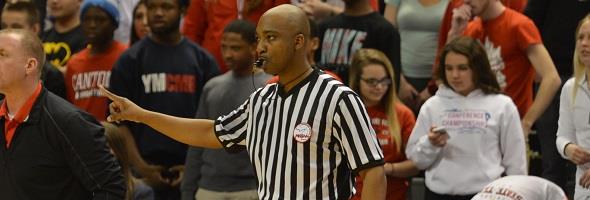
In this week's edition, assistant director Mark Uyl explains that coaches are responsible for making sure their players are properly equipped.
Be The Referee is a series of short messages designed to help educate people on the rules of different sports, to help them better understand the art of officiating, and to recruit officials.
Below is this week's segment – Coaches Responsible for Equipment - Listen
Over the past decade, just about all new playing rules have tended to focus on improving the health and safety of those playing the game. In all sports, it’s the responsibility of the head coach to make sure that his or her players are properly equipped according to the rules of the game.
It’s generally one of the first things the official will ask the head coach before play begins. This can cover everything from bats in baseball and softball, to helmets and face masks in football or ice hockey, or to those sports where mouth guards are required. This is to ensure that each school and the head coach is taking responsibility when it comes to the equipment being worn and keeping those playing the game safe.
Past editions
December 14: Mentoring New Officials - Listen
December 7: Dive on the Floor - Listen
November 30: Wrestling Weight Monitoring - Listen
November 23: Ejections - Listen
November 16: Toughest Call - Listen
November 9: Hurdling - Listen
November 2: The Survey Says - Listen
October 26: Helmet Comes Off - Listen
October 19: Goal Line Rules - Listen
October 12: No 1st-Year Fee - Listen
October 5: Athletic Empty Nesters - Listen
September 28: Misunderstood Football Rules: Kicking - Listen
September 21: Preparation for Officials - Listen
September 14: Always Stay Registered - Listen
September 7: Other Football Rules Changes - Listen
August 31: Pop-Up Onside Kicks - Listen
August 24: Blindside Blocks - Listen