


Be the Referee: Deciding the Game
March 2, 2017
This week, MHSAA assistant director Mark Uyl discusses why officials must make calls even in the final moments of a close game during tournament time.
Be The Referee is a series of short messages designed to help educate people on the rules of different sports, to help them better understand the art of officiating, and to recruit officials.
Below is this week's segment – Deciding the Game - Listen
Every American sports fan knows when the calendar turns to March, it’s time to start thinking about basketball tournament games.
With all of the pundits out there talking about the matchups and who may advance on the brackets, the comment gets made every single year that we simply hope the players decide the outcome of every game – and not a referee’s call.
The fact of the matter is that in the last 10 seconds of a tied game, when a player drives down the lane and gets hit and get knocked to the floor, an official has to make that foul call because the players did decide the outcome of that game. For the officials to simply swallow their whistles and let one team break the rules for a clear advantage is not letting those players decide the outcome.
Past editions
Feb. 23: Pitch Counts - Listen
Feb. 16: Recruiting Officials - Listen
Feb. 9: Ejections - Listen
Feb. 2: Wrestling & Technology - Listen
Jan. 26: Post Play - Listen
Jan. 19: Ice Hockey Overtime - Listen
Jan. 12: Free Throw Change - Listen
Jan. 5: Ratings - Listen
Dec. 22: Video Review - Part 2 - Listen
Dec. 15: Video Review - Part 1 - Listen
Dec. 8: Registration - Part 2 - Listen
Dec. 1: Registration - Part 1 - Listen
Nov. 24: You Make the Call - Sleeper Play - Listen
Nov. 17: Automatic 1st Downs - Listen
Nov. 10: Uncatchable Pass - Listen
Nov. 3: The Goal Line - Listen
Oct. 27: Help Us Retain Officials - Listen
Oct. 20: Point After Touchdown - Listen
Oct. 13: Untimed Down - Listen
Oct. 6: Soccer Penalty Kick Change - Listen
Sept. 29: Preparation for Officials - Listen
Sept 22: You Make the Call: Returning Kickoffs - Listen
Sept. 15: Concussions - Listen
Sept 8: Equipment Covering the Knees - Listen
Sept. 1: Play Clock Experiment - Listen
Aug. 25: Clipping in the Free Blocking Zone - Listen
Be the Referee: Over the Back
By
Sam Davis
MHSAA Director of Officials
January 31, 2023
Be The Referee is a series of short messages designed to help educate people on the rules of different sports, to help them better understand the art of officiating, and to recruit officials.
Below is this week's segment – Over the Back - Listen
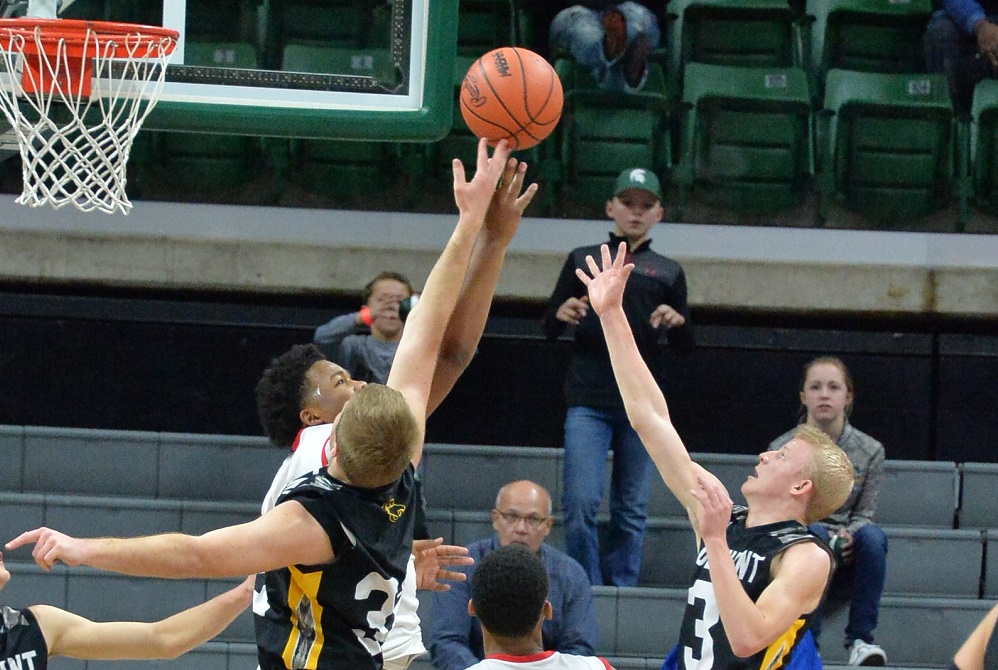
Did you know there is no such thing as “over the back” in basketball? If two players are going for a rebound and the player behind another player is able to grab it over the top of the player in front – that’s not necessarily a foul. He or she did not go over the back.
The player behind another player may have committed a foul such as bumping the player in front, or pushing that player – gaining an advantage to grab the rebound – but that would be whistled for a push or grab. Not over the back.
A taller player or player who can jump higher grabbing a rebound is not a foul. It’s only a foul if they create an advantage by pushing, bumping, or any other kind of illegal contact while in the process of going for a rebound. Fans yell over the back all the time, but an official will never call a foul for going over the back.
Previous Editions:
Jan. 24: Competitive Cheer Judges - Listen
Jan. 17: More Lines - Listen
Jan. 10: On the Line - Listen
Jan. 3: Basketball Measurements - Listen
Dec. 13: Pregame Dunks - Listen
Dec. 6: Gymnastics Judges - Listen
Nov. 22: Football Finals Replay - Listen
Nov. 15: Back Row Illegal Blocker - Listen
Nov. 8: Swim Turn Judges - Listen
Nov. 1: Soccer Referee Jersey Colors - Listen
Oct. 25: Cross Country Tie-Breaker - Listen
Oct. 18: Soccer Shootouts - Listen
Oct. 11: Safety in End Zone - Listen
Oct. 4: Football Overtime Penalty - Listen
Sept. 27: Kickoff Goal - Listen
Sept. 20: Soccer Timing - Listen
Sept. 13: Volleyball Replays - Listen
Sept. 6: Switching Sides - Listen
Aug. 30: Play Clock - Listen
Aug. 23: Intentional Grounding Change - Listen