


Be the Referee: Dive on the Floor
January 28, 2016
This week, MHSAA assistant director Mark Uyl explains the rule misunderstandings that occur when a basketball player dives on the floor for a loose ball.
Be The Referee is a series of short messages designed to help educate people on the rules of different sports, to help them better understand the art of officiating, and to recruit officials.
Below is this week's segment - Dive on the Floor - Listen
In just about every single basketball game that’s played during the season, a player will hustle and dive for a loose ball that’s on the floor. As that player dives and tries to gain possession of the ball on the floor, yells from every corner of the gym come, screaming for a call of traveling. This is one of the more misunderstood situations under basketball rules.
Once that player dives for the loose ball on the floor and gains possession, there are two ways in which they’re guilty of a traveling violation: The first is if the player takes the ball and attempts to stand up; or the second, the player rolls over from their back to the front or front to back. Other than that, that’s a legal play, and the ball remains in play.
Past editions:
Jan. 21: Hockey Officials' Options - Listen
Jan. 14: Recruiting Officials - Listen
Jan. 7: Wrestling Weight Monitoring - Listen
Dec. 31: Respect for Referees - Listen
Dec. 24: Basketball Instant Replay - Listen
Dec. 17: Basketball Communication - Listen
Dec. 10: Basketball Excessive Contact - Listen
Nov. 26: Pregame Communication - Listen
Nov. 19: Trick Plays - Listen
Nov. 12: 7-Person Football Mechanics - Listen
Nov. 5: Make the Call: Personal Fouls - Listen
Oct. 29: Officials Demographics - Listen
Oct. 15: Make the Call: Intentional Grounding - Listen
Oct. 8: Playoff Selection - Listen
Oct. 1: Kick Returns - Listen
Sept. 24: Concussions - Listen
Sept. 17: Automatic First Downs - Listen
Sept. 10: Correcting a Down - Listen
Sept 3: Spearing - Listen
Aug. 27: Missed Field Goal - Listen
Be the Referee: Switching Sides
By
Sam Davis
MHSAA Director of Officials
September 6, 2022
Be The Referee is a series of short messages designed to help educate people on the rules of different sports, to help them better understand the art of officiating, and to recruit officials.
Below is this week's segment – Switching Sides - Listen
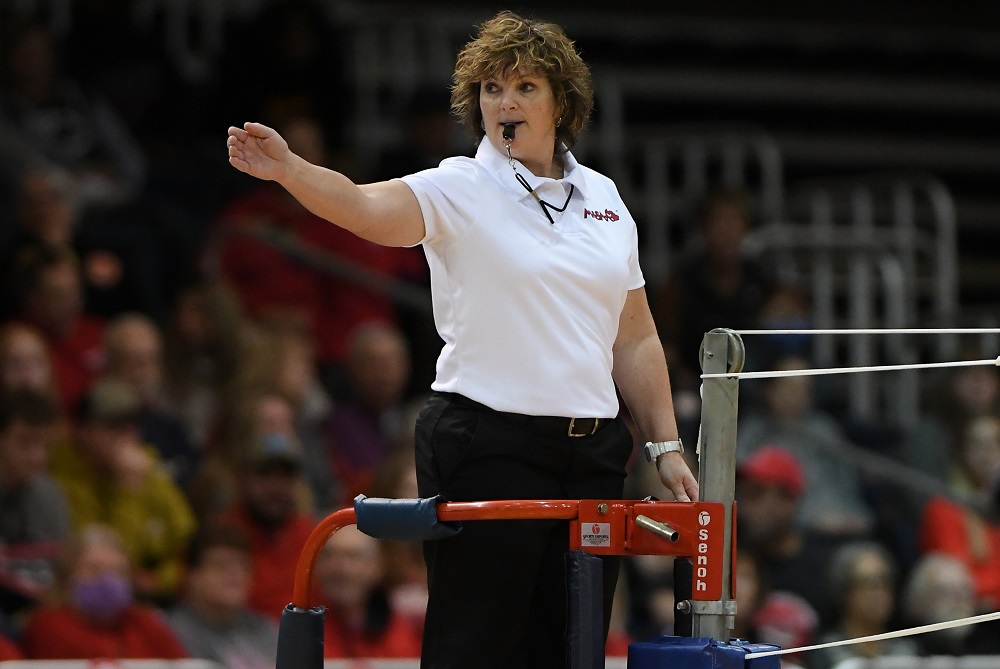
In volleyball, a rules modification that came about during COVID has been instated as a permanent change - with overwhelming support from coaches and officials.
Previously, teams would switch sides after each set, sometimes creating a traffic jam as players and coaches move benches from side to side. Unless there is a clear competitive advantage, there is no switching now. Coaches like having a dedicated home bench and the improved pace of the match.
Things that would necessitate teams switching would be less serving room on one end of the court, a window on one side with the sun shining in, or an overhead obstruction on one end.
It’s up to the official to determine if an advantage exists and if teams will switch at the end of each set – or stay on the same side for the entirety of the match.
Previous Editions:
Aug. 30: Play Clock - Listen
Aug. 23: Intentional Grounding Change - Listen