

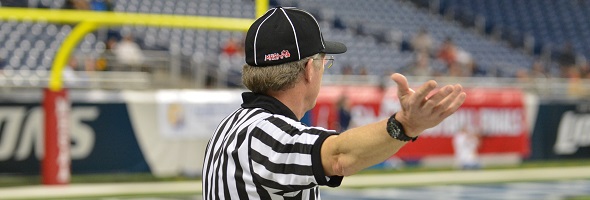
Be the Referee: Football Rules Changes
August 23, 2018
In this week's edition, assistant director Brent Rice discusses a pair of rules changes coming to high school football this fall.
Be The Referee is a series of short messages designed to help educate people on the rules of different sports, to help them better understand the art of officiating, and to recruit officials.
Below is this week's segment – Football Rules Changes - Listen
The biggest rules changes in high school football across the country this year involve player safety.
When any required player equipment is missing or worn improperly, an official's time-out shall be declared, and the player must come out of the game for one down. This includes players not wearing knee or thigh pads or rolling their pant legs up over their knees and equipment such as shoulder pads or back pads being exposed.
The other change continues to hone the definition of a defenseless player, this time affecting the quarterback once he has thrown the ball and becomes a passer. Until that time, he is defined as a runner. As a passer, he continues to be defenseless until the pass ends or he moves to participate in the play.
The penalty for hitting a defenseless player is 15 yards.
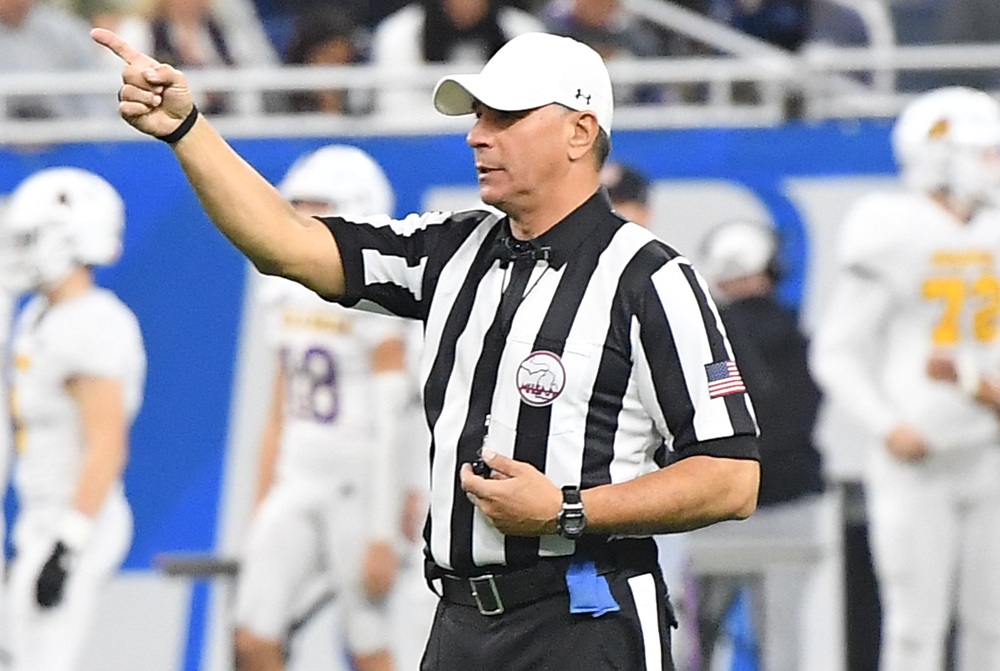
Be the Referee: Dead Ball Penalty
By
Paige Winne
MHSAA Director of Brand Management
September 15, 2026
Be The Referee is a series of short messages designed to help educate people on the rules of different sports, to help them better understand the art of officiating, and to recruit officials.
Below is this week's segment – Dead Ball Penalty - Listen
We’ve got 4th-and-10 on the football field today. Team A has the ball on their own 40 and is going for it.
The quarterback scrambles and is pushed out of bounds at the 49-yard line, one yard short of a first down.
A defensive player from Team B hits the quarterback after he’s been pushed out of bounds and is flagged for a dead-ball personal foul. Where should the ball be marked and who has possession?
Is it 1st-and-10 for Team A at Team B’s 36-yard line? Or does the defense get the ball, 1st-and-10 for Team B at their own 36?
If you said Team B’s ball, you are correct. The personal foul was a dead-ball penalty that is enforced after the change of possession.
Previous 2026-27 editions
Sept. 8: Libero Ejected - Listen
Sept. 1: Soccer Foul After Shot on Goal - Listen
Aug. 25: Fumble Out of Bounds - Listen