

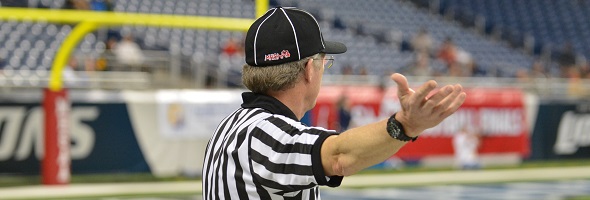
Be the Referee: Football Targeting
August 22, 2014
The series features MHSAA assistant director Mark Uyl's insights on officiating. These weekly messages can be heard on Mondays, Wednesdays and Fridays during the school year on The Drive With Jack Ebling on WVFN-AM, East Lansing.
Below is this week's segment:
"Be The Referee"
Aug. 25 - Targeting - Listen
Today we are going to talk about one of the new rules changes for this fall’s high school football season, targeting. This is yet another example of player safety being the number one priority in our game.
Targeting deals with getting the “head” out of the game of football. Many times when you will see a targeting foul is when a player will use the top or the crown of his helmet to launch or propel himself into an opposing player, making that helmet to helmet contact, which can be so dangerous for both players involved.
When a targeting foul happens, the officials, if they judge it to be flagrant, can not only enforce a 15-yard penalty but also can eject the offending player.
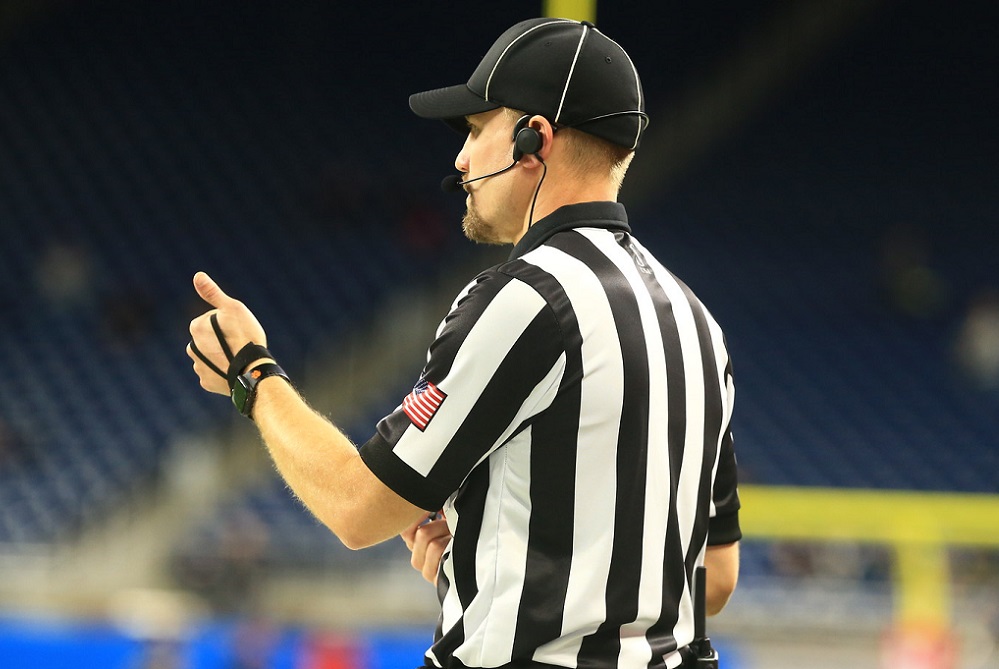
Be the Referee: Football Overtime Penalty
By
Sam Davis
MHSAA Director of Officials
October 4, 2022
Be The Referee is a series of short messages designed to help educate people on the rules of different sports, to help them better understand the art of officiating, and to recruit officials.
Below is this week's segment – Football Overtime Penalty - Listen
What happens when the defense commits a penalty on an extra point try in overtime?
First, the set up. Team A starts with the ball 1st-and-Goal from the 10. On their very first play, they score a touchdown. The extra point is good – but the defense roughs the kicker. What are Team A’s options?
They can accept the penalty, move the ball closer to the goal line and maybe go for two.
Or, they can take the result of the kick and have the penalty enforced when Team B takes over — which means that instead of 1st-and-Goal from the 10 with a chance to tie the game and send it to a second overtime, Team B would have 1st-and-Goal from the 25.
This costly penalty will certainly have an impact on the next possession, where Team B will need a touchdown.
Previous Editions:
Sept. 27: Kickoff Goal - Listen
Sept. 20: Soccer Timing - Listen
Sept. 13: Volleyball Replays - Listen
Sept. 6: Switching Sides - Listen
Aug. 30: Play Clock - Listen
Aug. 23: Intentional Grounding Change - Listen