


Be the Referee: Hockey Hits
March 9, 2017
This week, MHSAA assistant director Mark Uyl discusses how illegal hockey hits have no place in the game and how they're being watched for closely.
Be The Referee is a series of short messages designed to help educate people on the rules of different sports, to help them better understand the art of officiating, and to recruit officials.
Below is this week's segment – Hockey Hits - Listen
At the high school level in all contact sports, there continues to be a focus on protecting players and preserving player safety. This year in ice hockey, hits to the head and fighting are never to be considered part of the game at the high school level.
Hits from behind, high elbows, forearms, high sticks or shoving the head or neck area have no value to the game and only increase the risk of injury to players. The game of hockey is one of great skill, speed and finesse; and these dirty and unnecessary hits are now clearly illegal.
Past editions
March 2: Deciding the Game - Listen
Feb. 23: Pitch Counts - Listen
Feb. 16: Recruiting Officials - Listen
Feb. 9: Ejections - Listen
Feb. 2: Wrestling & Technology - Listen
Jan. 26: Post Play - Listen
Jan. 19: Ice Hockey Overtime - Listen
Jan. 12: Free Throw Change - Listen
Jan. 5: Ratings - Listen
Dec. 22: Video Review - Part 2 - Listen
Dec. 15: Video Review - Part 1 - Listen
Dec. 8: Registration - Part 2 - Listen
Dec. 1: Registration - Part 1 - Listen
Nov. 24: You Make the Call - Sleeper Play - Listen
Nov. 17: Automatic 1st Downs - Listen
Nov. 10: Uncatchable Pass - Listen
Nov. 3: The Goal Line - Listen
Oct. 27: Help Us Retain Officials - Listen
Oct. 20: Point After Touchdown - Listen
Oct. 13: Untimed Down - Listen
Oct. 6: Soccer Penalty Kick Change - Listen
Sept. 29: Preparation for Officials - Listen
Sept 22: You Make the Call: Returning Kickoffs - Listen
Sept. 15: Concussions - Listen
Sept 8: Equipment Covering the Knees - Listen
Sept. 1: Play Clock Experiment - Listen
Aug. 25: Clipping in the Free Blocking Zone - Listen
Be the Referee: Primary Areas
March 5, 2015
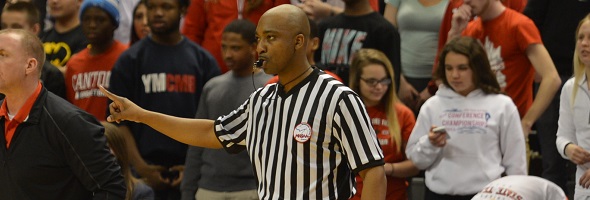
This week, MHSAA assistant director Mark Uyl explains how seeing the right angle is the most important part of officials making the right call.
Be The Referee is a series of short messages designed to help educate people on the rules of different sports, to help them better understand the art of officiating, and to recruit officials.
Below is this week's segment - Primary Areas - Listen
In just about every single basketball game ever played, there are times where fans will turn to each other and wonder, “why did that official make the call when there was another member of the crew that was a whole lot closer to the play?”
The most important thing in all of officiating and especially basketball officiating is: angle is the most important element for an official.
There will be many times during the game that the official that is closest to the play actually has the worst look or the worst angle. Many times the player is going up in the lane for that shot, and the whistle will come from one of the two outside officials because they had the perfect angle to see all the elements of the play and can rule correctly.
Past editions
Feb. 23 - Too Much TV - Listen
Feb. 16 - Video Clip Library - Listen
Feb. 9 - Cheer Safety - Listen
Feb. 2 - Basketball PA Announcers - Listen
Jan. 26 - Wrestling Health Concerns - Listen
Jan. 19 - Basketball Physical Contact - Listen
Jan. 12 - Video Review Part 2 - Listen
Dec. 29 - Video Review Part 1 - Listen
Dec. 17 - Registration Part 2 - Listen
Dec. 10 - Registration Part 1 - Listen
Dec. 3 - Legacy Program - Listen
Nov. 26 - Sideline Management - Listen
Nov. 19 - 7-Person Mechanics - Listen
Nov. 12 - Blocking Below the Waist - Listen
Nov. 5 - Tournament Selection - Listen
Oct. 29 - Uncatchable Pass - Listen
Oct. 22 - Preparation for Officials - Listen
Oct. 15 - Automatic First Downs - Listen
Oct. 8 - Officials & Injuries - Listen
Oct. 1 - Overtime - Listen
Sept. 25 - Field Goals - Listen
Sept. 18 - Tackle Box - Listen
Sept. 11 - Pass Interference - Listen
Aug. 25 - Targeting - Listen