

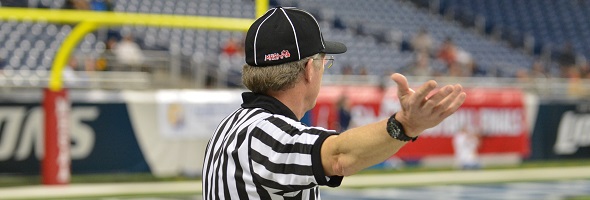
Be the Referee: Hurdling
November 9, 2017
In this week's edition, assistant director Mark Uyl explains when hurdling a defender is and isn't allowed in football.
Be The Referee is a series of short messages designed to help educate people on the rules of different sports, to help them better understand the art of officiating, and to recruit officials.
Below is this week's segment – Hurdling - Listen
While we don’t see it very often, one of most unique football rules at the high school level deals with the prohibition about a runner hurdling over a defender.
Whenever a ball carrier is moving down the field and a defender is coming over to make that tackle, the only time that ball carrier can hurdle the defender – and by hurdle we mean trying to go over the top of the defender, leading with their foot first – the only time they can hurdle that defender is when the defender is contacting the ground with more than just their feet and hands.
So if that defender is lying on the ground, a hurdle is a legal move. However, if that defender is still on their feet, hurdling would result in a foul.
Past editions
November 2: The Survey Says - Listen
October 26: Helmet Comes Off - Listen
October 19: Goal Line Rules - Listen
October 12: No 1st-Year Fee - Listen
October 5: Athletic Empty Nesters - Listen
September 28: Misunderstood Football Rules: Kicking - Listen
September 21: Preparation for Officials - Listen
September 14: Always Stay Registered - Listen
September 7: Other Football Rules Changes - Listen
August 31: Pop-Up Onside Kicks - Listen
August 24: Blindside Blocks - Listen
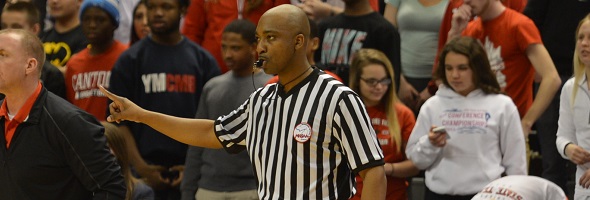
Be the Referee: Basketball Contact
January 22, 2015
This week, MHSAA assistant director Mark Uyl explains new rules that further define contact fouls in high school basketball.
Be The Referee is a series of short messages designed to help educate people on the rules of different sports, to help them better understand the art of officiating, and to recruit officials.
Below is this week's segment - Basketball Physical Contact - Listen
One of the most challenging jobs for any basketball official is determining how much physical contact to allow over the course of the game. This year, new rules in high school basketball better define what contact against the dribbler or ball handler now results in a foul.
First, it is a foul whenever a defender places two hands at the same time on the dribbler. Second, whenever a defender places an extended arm bar on the dribbler. The third automatic foul is when that defender extends and places and keeps a hand on that dribbler for an extended period of time; and lastly, it’s an automatic foul whenever the defender contacts that dribbler more than once with either the same hand or with alternating hands.
Past editions
Jan. 12 - Video Review Part 2 - Listen
Dec. 29 - Video Review Part 1 - Listen
Dec. 17 - Registration Part 2 - Listen
Dec. 10 - Registration Part 1 - Listen
Dec. 3 - Legacy Program - Listen
Nov. 26 - Sideline Management - Listen
Nov. 19 - 7-Person Mechanics - Listen
Nov. 12 - Blocking Below the Waist - Listen
Nov. 5 - Tournament Selection - Listen
Oct. 29 - Uncatchable Pass - Listen
Oct. 22 - Preparation for Officials - Listen
Oct. 15 - Automatic First Downs - Listen
Oct. 8 - Officials & Injuries - Listen
Oct. 1 - Overtime - Listen
Sept. 25 - Field Goals - Listen
Sept. 18 - Tackle Box - Listen
Sept. 11 - Pass Interference - Listen
Aug. 25 - Targeting - Listen