

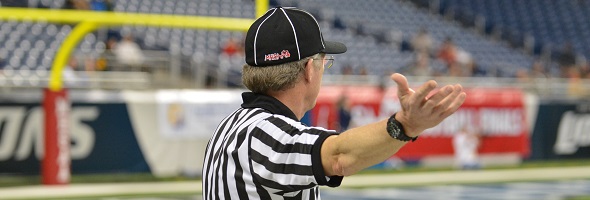
Be the Referee: Kick Returns
October 1, 2015
This week, MHSAA assistant director Mark Uyl explains the difference in high school kick return rules from those in the college and professional games.
Be The Referee is a series of short messages designed to help educate people on the rules of different sports, to help them better understand the art of officiating, and to recruit officials.
Below is this week's segment - Kick Returns - Listen
One of the biggest differences in high school football rules and those in college and pro deal with kick returns. In the high school game, once a kick (a punt or kickoff) breaks the plane of the goal line, the ball is dead and a touchback is awarded.
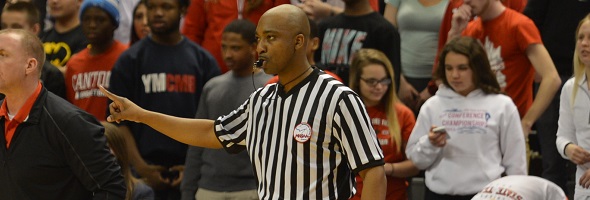
Be the Referee: Excessive Contact
December 10, 2015
This week, MHSAA assistant director Mark Uyl explains rules new this basketball season designed to limit physical contact with ball-handlers.
Be The Referee is a series of short messages designed to help educate people on the rules of different sports, to help them better understand the art of officiating, and to recruit officials.
Below is this week's segment - Basketball Excessive Contact - Listen
The game of basketball is a game of finesse and skill. The basketball playing rules' emphasis and focus for this year continue to work at getting the unnecessary rough and physical play out of basketball.
The acts that constitute a foul when committed against a ball-handler are when a defender…..a) places two hands on the ball handler; b) places an extended arm bar on the ball handler; c) places and keeps a hand on the ball handler; and d) contacts the ball handler more than once with the same hand or alternating hands.
Officials will deem these as automatic fouls, and consistent enforcement will keep the game of basketball a game of skill, not brute force.
Past editions:
Nov. 26: Pregame Communication - Listen
Nov. 19: Trick Plays - Listen
Nov. 12: 7-Person Football Mechanics - Listen
Nov. 5: Make the Call: Personal Fouls - Listen
Oct. 29: Officials Demographics - Listen
Oct. 15: Make the Call: Intentional Grounding - Listen
Oct. 8: Playoff Selection - Listen
Oct. 1: Kick Returns - Listen
Sept. 24: Concussions - Listen
Sept. 17: Automatic First Downs - Listen
Sept. 10: Correcting a Down - Listen
Sept 3: Spearing - Listen
Aug. 27: Missed Field Goal - Listen