


Be the Referee: No 1st-Year Fee
October 12, 2017
In this week's edition, assistant director Mark Uyl explains the minimal costs of becoming an official and how the MHSAA further helps those signing up for the first time by the waiving registration fee.
Be The Referee is a series of short messages designed to help educate people on the rules of different sports, to help them better understand the art of officiating, and to recruit officials.
Below is this week's segment – No 1st-Year Fee - Listen
We often get asked the question – exactly how much does it cost to become an official?
The first step in the process includes registering with the MHSAA, which costs roughly $50. With this $50, an official gets rules books, case books, mechanics manuals and over $1 million in liability insurance coverage.
For anyone registering for the first time, the MHSAA waives that fee in the first year. With someone who is new to officiating, the cost of purchasing a uniform, equipment, and attending some camps and clinics are going to be first-year expenditures – which is why that first year is free on the MHSAA.
Past editions
October 5: Athletic Empty Nesters - Listen
September 28: Misunderstood Football Rules: Kicking - Listen
September 21: Preparation for Officials - Listen
September 14: Always Stay Registered - Listen
September 7: Other Football Rules Changes - Listen
August 31: Pop-Up Onside Kicks - Listen
August 24: Blindside Blocks - Listen
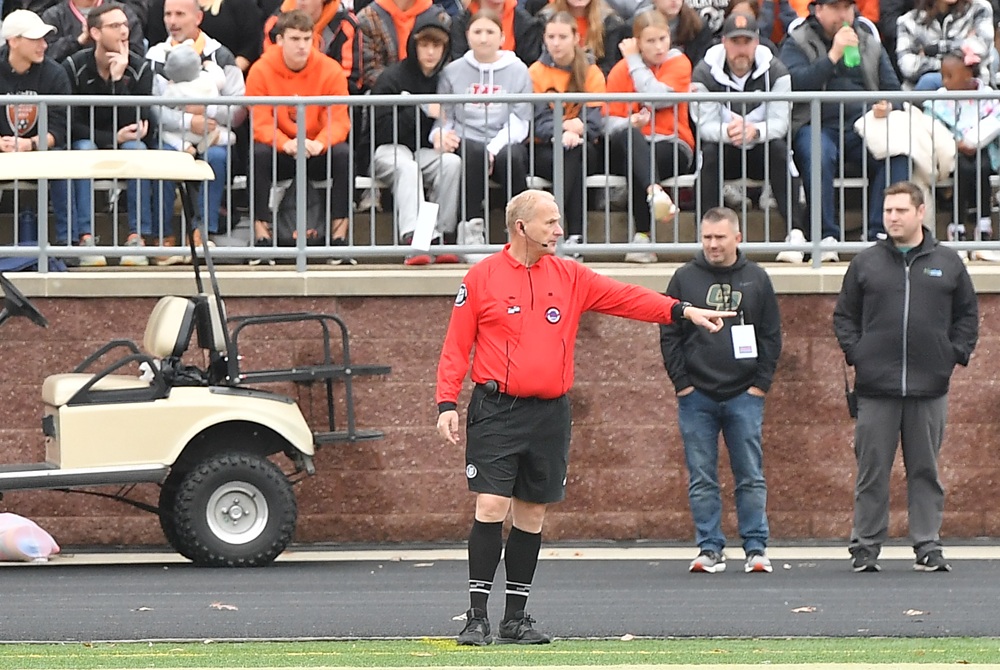
Be the Referee: Soccer Foul After Shot on Goal
By
Paige Winne
MHSAA Director of Brand Management
September 2, 2026
Be The Referee is a series of short messages designed to help educate people on the rules of different sports, to help them better understand the art of officiating, and to recruit officials.
Below is this week's segment – Soccer Foul After Shot on Goal - Listen
We’re on the soccer field today, and the home team has the ball and is on the attack.
The ball makes it around to a forward from the home team, who is on-side and within the penalty area. His shot just misses – going wide for a goal kick.
However, just after the ball crossed the goalline, a player from the away team tackles the home team forward with excessive force.
What’s the call?
Because excessive force was used, it’s a red card for the away team player, which is an automatic ejection. But because it happened after the ball crossed the goalline and not at the time of the shot, it’s still a goal kick for the away team, not a penalty kick for the home team.
Previous 2026-27 editions
Aug. 25: Fumble Out of Bounds - Listen