

Be the Referee: Officials Demographics
October 29, 2015
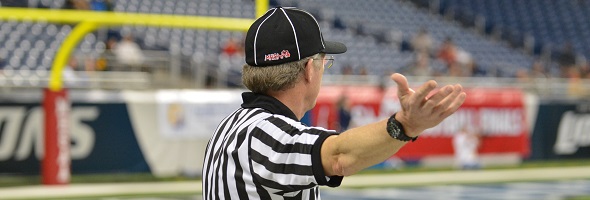
This week, MHSAA assistant director Mark Uyl discusses the importance of recruiting young officials so they may gain experience now and prepare to replace veterans wearing the whistle.
Be The Referee is a series of short messages designed to help educate people on the rules of different sports, to help them better understand the art of officiating, and to recruit officials.
Below is this week's segment - Officials Demographics - Listen
A daily activity of the MHSAA is to recruit more officials in all of our sports. There is an urgency to try and bring new, younger people into the game as the current average age of an MHSAA registered official is 51.86.
Young officials are needed now so they can gain experience and be ready to step into the varsity and tournament ranks when many of our aging officials are ready to hang up the whistle. With players getting bigger and faster all of the time, it is important that our officials keep up with the pace of play, and the more younger, athletic officials we can recruit, the better off all of our games will be.
Past editions:
Oct. 15: Make the Call: Intentional Grounding - Listen
Oct. 8: Playoff Selection - Listen
Oct. 1: Kick Returns - Listen
Sept. 24: Concussions - Listen
Sept. 17: Automatic First Downs - Listen
Sept. 10: Correcting a Down - Listen
Sept 3: Spearing - Listen
Aug. 27: Missed Field Goal - Listen
What's My Why: Official Sam Davis
July 15, 2026
Sam Davis, Lansing
Davis serves as the MHSAA Director of Officials and has been on staff since 2017, and previously taught and worked as a school administrator for 32 years and in law enforcement for more than a decade. He also recently completed his 46th year as an MHSAA-registered official and has long been considered one of the state's best on the mat. He received the MHSAA's Vern L. Norris Leadership in Officiating Award in 2015.
When I leave the office, the opportunity to go out and be on the mat …
To watch the competition.
To feel the cheers and the excitement from the crowd.
To work with my colleagues.
To impart rules and regulations.
To make sure kids are safe.
To get paid.
What a great opportunity. I enjoy – no, I love – officiating.
“What’s My Why” is a weekly feature telling the stories of MHSAA-registered officials in their own words. If you’re an MHSAA official and would like to share your reason why, please submit a 15 to 45-second video, taken horizontally, to director of officials Sam Davis at [email protected].
Don't miss Officiate Michigan Day 2026, July 25 in Grand Rapids! Check out MHSAA.com/OMD to register and learn more.
What's My Why
July 9: Candace Cox, Quincy - Watch
July 1: Robert Williams, Redford - Watch
June 24: Will Godfrey, Jackson - Watch
June 19: Jarrett Skorup, Midland - Watch
June 12: Brady Driver, Sturgis - Watch
June 8: Cindy Tyzo, West Bloomfield - Watch
June 3: Jeff Spedoske, DeWitt - Watch
June 1: Mike Carrier, Commerce Township - Watch
May 27: Stan Wright, Warren - Watch
May 26: Murray Rose, Zeeland - Watch
May 22: Mike VanLaan, Alto - Watch
May 18: Clint Abbott, Newaygo - Watch