


Be the Referee: Overtime Differences
November 1, 2018
This week, MHSAA officials coordinator Sam Davis explains how high school football overtime differs from extra play at the college level.
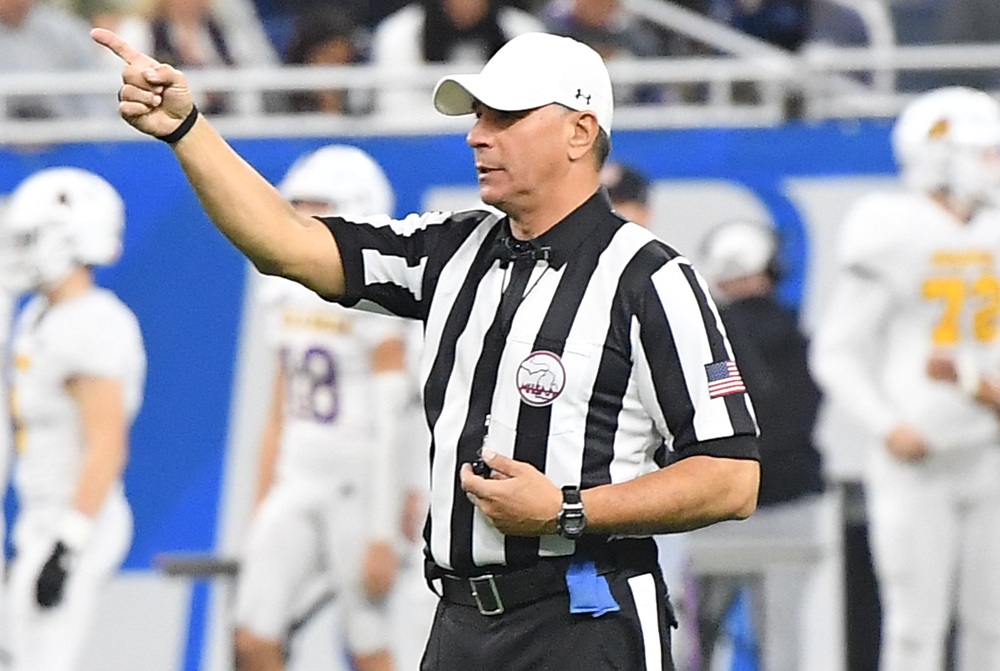
Be The Referee is a series of short messages designed to help educate people on the rules of different sports, to help them better understand the art of officiating, and to recruit officials.
Below is this week's segment – Overtime Differences - Listen
There are a few differences in high school football overtime compared to college games.
During overtime in high school football, each team begins its offensive series 1st-and-Goal from the 10- yard line as opposed to 1st–and-10 at the 25. The only way a team can pick up a first down is on a roughing foul – roughing the passer, the holder, the center or the kicker.
A lost fumble or intercepted pass ends a team’s offensive series, (and on) a try for an extra point following a touchdown, the defense cannot return the ball for a score. And unlike college football, there is never a requirement that a team go for a 2-point conversion. What is common between the two levels is that each team gets one timeout per overtime, and unused timeouts don’t carry over from regulation or from overtimes.
Past editions
October 25: Trickery & Communication - Listen
October 18: Punts & Missed Field Goals - Listen
October 11: What Officials Don't Do - Listen
October 4: Always 1st-and-Goal - Listen
September 27: Unique Kickoff Option - Listen
September 20: Uncatchable Pass - Listen
September 13: Soccer Rules Change - Listen
September 6: You Make the Call: Face Guarding - Listen
August 30: 40-Second Play Clock - Listen
August 23: Football Rules Changes - Listen
Be the Referee: Dead Ball Penalty
By
Paige Winne
MHSAA Director of Brand Management
September 15, 2026
Be The Referee is a series of short messages designed to help educate people on the rules of different sports, to help them better understand the art of officiating, and to recruit officials.
Below is this week's segment – Dead Ball Penalty - Listen
We’ve got 4th-and-10 on the football field today. Team A has the ball on their own 40 and is going for it.
The quarterback scrambles and is pushed out of bounds at the 49-yard line, one yard short of a first down.
A defensive player from Team B hits the quarterback after he’s been pushed out of bounds and is flagged for a dead-ball personal foul. Where should the ball be marked and who has possession?
Is it 1st-and-10 for Team A at Team B’s 36-yard line? Or does the defense get the ball, 1st-and-10 for Team B at their own 36?
If you said Team B’s ball, you are correct. The personal foul was a dead-ball penalty that is enforced after the change of possession.
Previous 2026-27 editions
Sept. 8: Libero Ejected - Listen
Sept. 1: Soccer Foul After Shot on Goal - Listen
Aug. 25: Fumble Out of Bounds - Listen