


Be the Referee: Penalty Kick Change
October 6, 2016
This week, MHSAA assistant director Mark Uyl explains how soccer penalty kick rules have been changed this year to dissuade players from hesitating before taking the kick.
Be The Referee is a series of short messages designed to help educate people on the rules of different sports, to help them better understand the art of officiating, and to recruit officials.
Below is this week's segment – Soccer Penalty Kick Change - Listen
In the game of soccer, goals are tough to come by. That’s why in some of the most important games, we see those contests head into overtime and ultimately get decided by penalty kicks – or P-Ks.
The rules dealing with penalty kicks have changed for this year. In years past, whenever a player would hear the referee’s whistle and start to move toward the ball to make a penalty kick, any hesitation, delay or stutter-step would make that kick illegal. In past years, that player always got an opportunity to take a re-kick.
But this year, there is no opportunity for that player to take an additional re-kick.
Past editions
Sept. 29: Preparation for Officials - Listen
Sept 22: You Make the Call: Returning Kickoffs - Listen
Sept. 15: Concussions - Listen
Sept 8: Equipment Covering the Knees - Listen
Sept. 1: Play Clock Experiment - Listen
Aug. 25: Clipping in the Free Blocking Zone - Listen
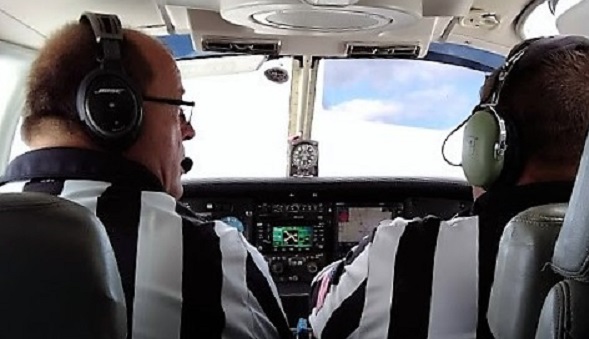
The Official View: Eyes in the Sky
By
Brent Rice
MHSAA Assistant Director
September 10, 2018
By Brent Rice
MHSAA Assistant Director
Welcome to “Official View,” a weekly feature on the MHSAA’s Second Half website designed to deliver must-know information to Michigan’s 10,000 high school officials – while also showing administrators, athletes and fans a slice of the officiating life from those in the avocation.
Each edition will include a rule of the week, present an “It’s Your Call” segment, keep our officials up to date on important news and notices and provide a behind-the-scenes glance at officials making our games possible.
It’s Your Call
SOCCER In the video clip below, a player takes control of the ball in the area at the top of the goal box and behind two defending players and fires a shot toward the net. Is this player offside?
(Click the video play button below; you'll then need to click again to view on YouTube, starting at 2:20 and ending at 2:39.)
You make the call: No, the player is not offside. The ball was last played by an opponent – in this case through the air on a header – and the player receiving the ball only would’ve been off-side if receiving the ball from a teammate. Rule 11-4-1b (included paragraph).
Rule of the Week
VOLLEYBALL The right-side hitter on Team S spikes the ball to the opposing side floor for a point. As she comes back to the ground following her leap, she both strikes the net and steps completely across the center line. The ball touches the floor before the hitter lands.
Ruling: This is a legal point. In order for either violation to be called, the ball must still be in play.

It’s Official!
Deadline for Tournament Consideration Requirements: Both the 2018-19 Rules Meeting and the Sport Rules Exams must be completed by Sept. 13. Check your Rules Meeting and Rules Exam status on MHSAA.com by logging in, clicking “Official Services” and then selecting the links for Exams and Rules Meetings.
If you haven’t already, get your current season schedules into the MHSAA and confirm your MIGS (Member in Good Standing) status on the MHSAA website to make certain you are eligible for postseason consideration. You must complete all of the above requirements to ensure your eligibility.
Official View
In the photo at the top of this edition, pilot Dean Lefebrve flies his football crew to its Week 2 varsity game, Negaunee at Calumet. The crew also included, just above, Dean Nelson, Rich Lundholm, Paul Angeli and Andrew Lewis.