


Be the Referee: Playoff Selection
October 7, 2015
This week, MHSAA assistant director Mark Uyl explains how officials are chosen to work football playoff games.
Be The Referee is a series of short messages designed to help educate people on the rules of different sports, to help them better understand the art of officiating, and to recruit officials.
Below is this week's segment - Playoff Selection - Listen
As the regular season reaches the halfway point, the MHSAA begins to look ahead to the five weeks of the football playoffs. Crews and officials are selected at mid-season for the tournament based on a number of factors.
Each official receives a rating from both schools following every game worked, and this rating average serves as the starting point for selection with the highest rated crews being considered first. The MHSAA also considers experience of the crew, recommendations for leagues and officials associations, football rule exam score (from a test) each official completes as well as the strength of the schedule the crew has worked during the season.
All of these factors are considered when selecting the very best officials to work the most important games of the season.
Be the Referee: Back Row Illegal Blocker
By
Sam Davis
MHSAA Director of Officials
November 15, 2022
Be The Referee is a series of short messages designed to help educate people on the rules of different sports, to help them better understand the art of officiating, and to recruit officials.
Below is this week's segment – Back Row Illegal Blocker - Listen
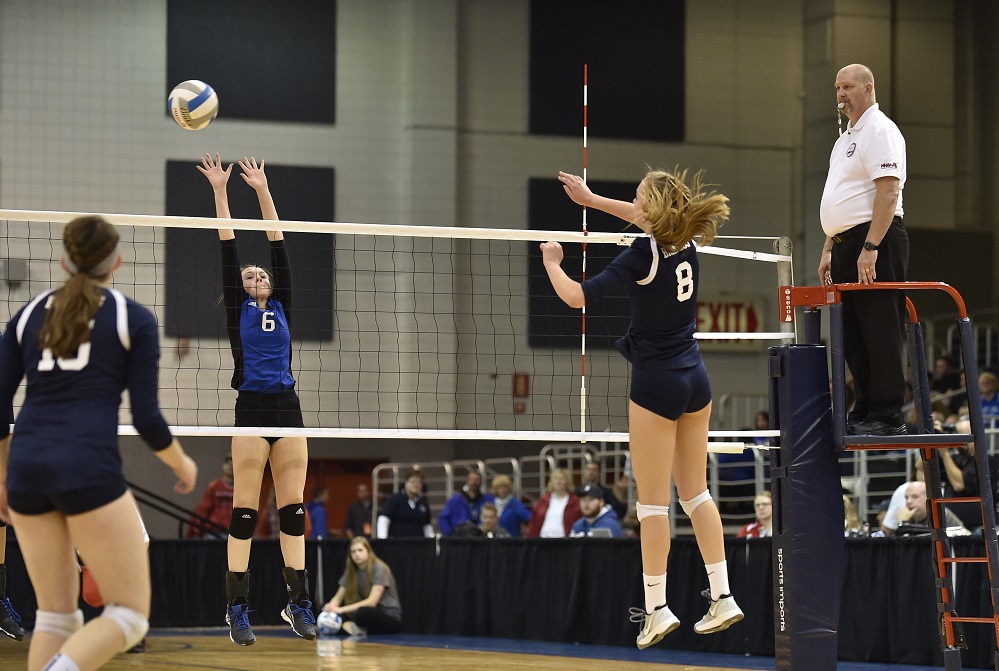
We’re on the volleyball court today where Team A’s back-row setter is in the front zone near the net and jumps to try to make the team’s second contact. The ball enters the plane of the net where Team A’s back-row setter and Team B’s front row player simultaneously touch the ball above the top of the net. What’s the call?
Illegal block on Team A’s back-row setter.
A back-row player attempting to play a ball in the space directly above the net is considered an illegal blocker if the ball is attacked or blocked by an opponent into the back-row player while reaching above the height of the net.
Team B would receive a point and would be next to serve.
Previous Editions:
Nov. 4: Swim Turn Judges - Listen
Oct. 25: Soccer Referee Jersey Colors - Listen
Oct. 18: Cross Country Tie-Breaker - Listen
Oct. 11: Soccer Shootouts - Listen
Oct. 11: Safety in End Zone - Listen
Oct. 4: Football Overtime Penalty - Listen
Sept. 27: Kickoff Goal - Listen
Sept. 20: Soccer Timing - Listen
Sept. 13: Volleyball Replays - Listen
Sept. 6: Switching Sides - Listen
Aug. 30: Play Clock - Listen
Aug. 23: Intentional Grounding Change - Listen