

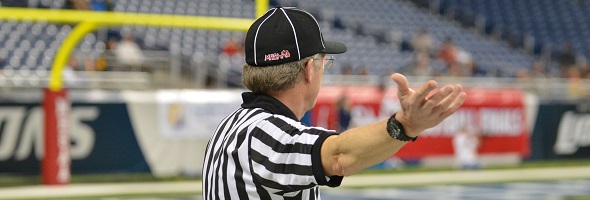
Be the Referee: Playoff Selection
October 7, 2015
This week, MHSAA assistant director Mark Uyl explains how officials are chosen to work football playoff games.
Be The Referee is a series of short messages designed to help educate people on the rules of different sports, to help them better understand the art of officiating, and to recruit officials.
Below is this week's segment - Playoff Selection - Listen
As the regular season reaches the halfway point, the MHSAA begins to look ahead to the five weeks of the football playoffs. Crews and officials are selected at mid-season for the tournament based on a number of factors.
Each official receives a rating from both schools following every game worked, and this rating average serves as the starting point for selection with the highest rated crews being considered first. The MHSAA also considers experience of the crew, recommendations for leagues and officials associations, football rule exam score (from a test) each official completes as well as the strength of the schedule the crew has worked during the season.
All of these factors are considered when selecting the very best officials to work the most important games of the season.
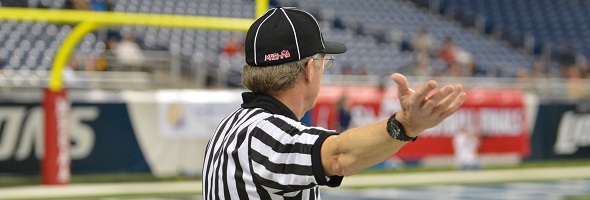
Be the Referee: Pregame Communication
November 27, 2015
This week, MHSAA assistant director Mark Uyl discusses how officials prepare for an upcoming football game.
Be The Referee is a series of short messages designed to help educate people on the rules of different sports, to help them better understand the art of officiating, and to recruit officials.
Below is this week's segment - Pregame Communication - Listen
Just like teams and coaches prepare all week for a football game, officials also spend hours every week preparing for their upcoming assignment that Friday night or on Saturday.
Many of our officials around the state are accessing a system called Hudl, which is a video sharing system in which schools are sharing game film with officials to review last week’s performance, as well as look ahead at the style of play that the upcoming opponents will be using.
Also, officials spend a great deal of time pregaming as a crew; talking about rules, mechanics, coverages, and how to best communicate with each sideline during the game.
Past editions:
Nov. 19: Trick Plays - Listen
Nov. 12: 7-Person Football Mechanics - Listen
Nov. 5: Make the Call: Personal Fouls - Listen
Oct. 29: Officials Demographics - Listen
Oct. 15: Make the Call: Intentional Grounding - Listen
Oct. 8: Playoff Selection - Listen
Oct. 1: Kick Returns - Listen
Sept. 24: Concussions - Listen
Sept. 17: Automatic First Downs - Listen
Sept. 10: Correcting a Down - Listen
Sept 3: Spearing - Listen
Aug. 27: Missed Field Goal - Listen