

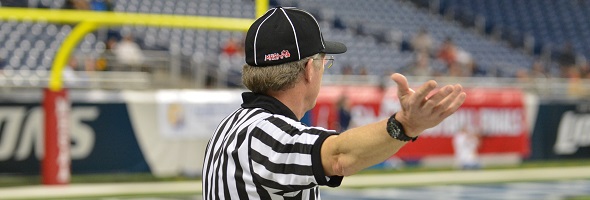
Be the Referee: Point After Touchdown
October 20, 2016
This week, MHSAA assistant director Mark Uyl explains how high school rules differ from those used by colleges when it comes to what's allowed after extra-point tries.
Be The Referee is a series of short messages designed to help educate people on the rules of different sports, to help them better understand the art of officiating, and to recruit officials.
Below is this week's segment – Point After Touchdown - Listen
For many years at the pro and college levels of football, the P-A-T or the extra point kick, really became a ho-hum play.
Last year in the NFL, they tried to make the play more exciting by moving the kickers back, making it almost the distance of a medium-range field goal.
Under college rules, they allow the other team – the defense, whenever they get the ball – to try to return it all the way to the other end with the ability to score two points.
The next high school game you’re at, know this: that once the defensive team gets possession of the ball on an extra point or try for point, the try is over and the defense cannot score any points.
Past editions
Oct. 13: Untimed Down - Listen
Oct. 6: Soccer Penalty Kick Change - Listen
Sept. 29: Preparation for Officials - Listen
Sept 22: You Make the Call: Returning Kickoffs - Listen
Sept. 15: Concussions - Listen
Sept 8: Equipment Covering the Knees - Listen
Sept. 1: Play Clock Experiment - Listen
Aug. 25: Clipping in the Free Blocking Zone - Listen
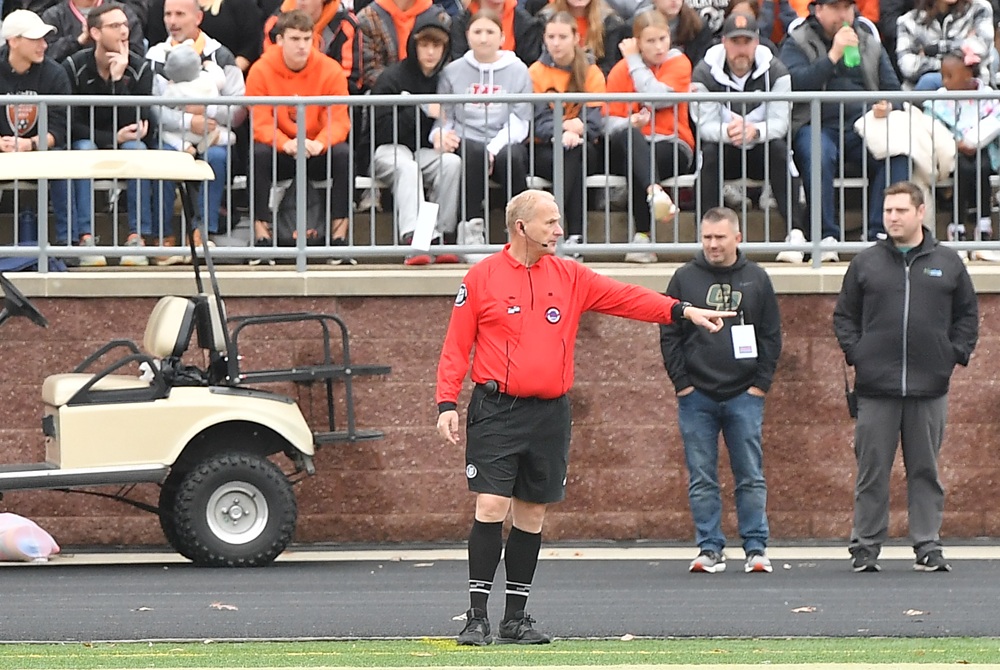
Be the Referee: Soccer Foul After Shot on Goal
By
Paige Winne
MHSAA Director of Brand Management
September 2, 2026
Be The Referee is a series of short messages designed to help educate people on the rules of different sports, to help them better understand the art of officiating, and to recruit officials.
Below is this week's segment – Soccer Foul After Shot on Goal - Listen
We’re on the soccer field today, and the home team has the ball and is on the attack.
The ball makes it around to a forward from the home team, who is on-side and within the penalty area. His shot just misses – going wide for a goal kick.
However, just after the ball crossed the goalline, a player from the away team tackles the home team forward with excessive force.
What’s the call?
Because excessive force was used, it’s a red card for the away team player, which is an automatic ejection. But because it happened after the ball crossed the goalline and not at the time of the shot, it’s still a goal kick for the away team, not a penalty kick for the home team.
Previous 2026-27 editions
Aug. 25: Fumble Out of Bounds - Listen