


Be the Referee: Punts & Missed FGs
October 18, 2018
This week, MHSAA assistant director Brent Rice explains how high school rules differ from collegiate and professional when it comes to these kick scenarios.
Be The Referee is a series of short messages designed to help educate people on the rules of different sports, to help them better understand the art of officiating, and to recruit officials.
Below is this week's segment – Punts & Missed Field Goals - Listen
One of the differences between high school football rules and rules at the collegiate and professional levels deals with punts and missed field goals.
Essentially, the place kick is treated like a punt as it relates to team possession from the goal line and out of bounds. If either goes out of bounds from inside the field of play, the defensive team takes possession at that spot. If either goes into the end zone, the defensive team may not return the kick.
And a missed field goal in high school that goes into or through the end zone, resulting in a touchback, has the defense taking over, first and 10, at their own 20, regardless of the previous spot.
Past editions
October 11: What Officials Don't Do - Listen
October 4: Always 1st-and-Goal - Listen
September 27: Unique Kickoff Option - Listen
September 20: Uncatchable Pass - Listen
September 13: Soccer Rules Change - Listen
September 6: You Make the Call: Face Guarding - Listen
August 30: 40-Second Play Clock - Listen
August 23: Football Rules Changes - Listen
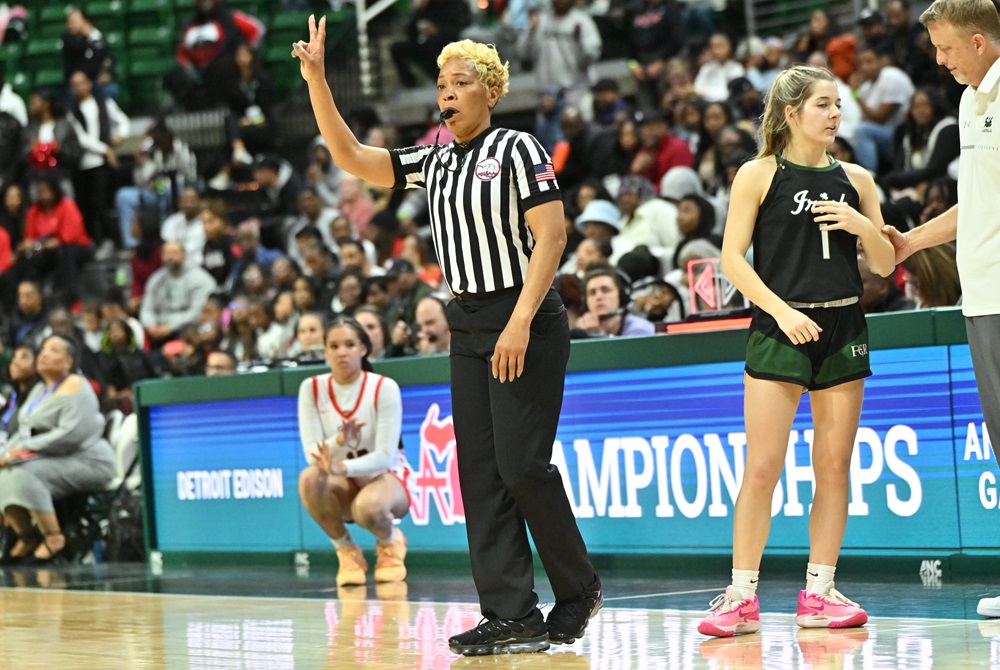
Be the Referee: Basketball Goaltending
By
Paige Winne
MHSAA Director of Brand Management
December 3, 2024
Be The Referee is a series of short messages designed to help educate people on the rules of different sports, to help them better understand the art of officiating, and to recruit officials.
Below is this week's segment – Basketball Goaltending - Listen
In basketball, what’s the difference between goaltending and defensive basket interference?
Goaltending is when a defensive player touches the ball when it is on its way down toward the basket, or after the ball has hit the backboard and is in a downward trajectory towards the hoop.
Defensive basket interference is when a defender touches the rim or net while the ball is within or on the cylinder. However, if the defender touches only the net and does not affect the shot in any way, then basket interference is not called.
In both instances – goaltending and basket interference – the outcome is treated like a made basket: two points to the offense unless the shot came from behind the 3-point arc, and then it’s worth three points.
Previous 2024-25 Editions
Nov. 26: 11-Player Finals Replay - Listen
Nov. 19: 8-Player vs. 11-Player Football - Listen
Nov. 12: Back Row Setter - Listen
Nov. 5: Football OT - Listen
Oct. 29: Officials Registration - Listen
Oct. 22: Volleyball Serve - Listen
Oct. 15: "You Make the Call" - Soccer Offside - Listen
Oct. 8: Roughing the Passer - Listen
Oct. 1: Abnormal Course Condition - Listen
Sept. 25: Tennis Nets - Listen
Sept. 18: Libero - Listen
Sept. 10: Cross Country Uniforms - Listen
Sept. 3: Soccer Handling - Listen
Aug. 24: Football Holding - Listen